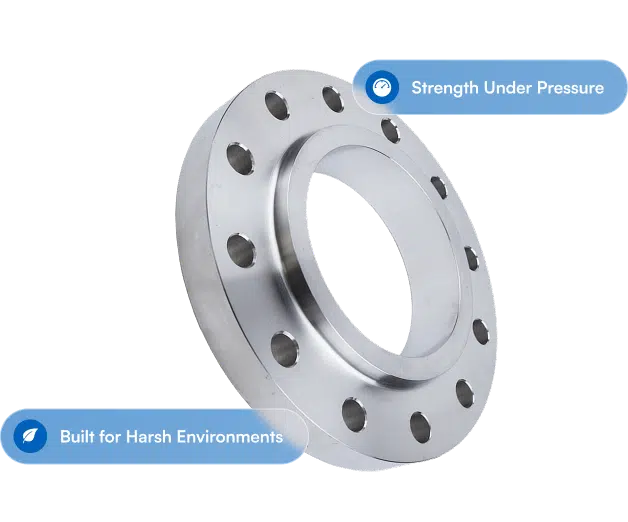
I tell you what, connections through them pipes are a mighty crucial channel for transportin' steam and fluids, along with gas, from refineries to factories or clear across the continents, too. Flanges are one of the best ways we got for hookin' them pipes together. Along with forgin' connections in a pipin' system,
flanges regularly give a worker some good inspection points that make it mighty easy to modify and clean out them systems. Different alloy grades come in real handy to produce all sorts of flanges that make up them pipin' systems down in the gas and oil industry.
So you see, these flanges gotta be more than just tough as an old gator; they gotta be easy to install and keep up with, too.
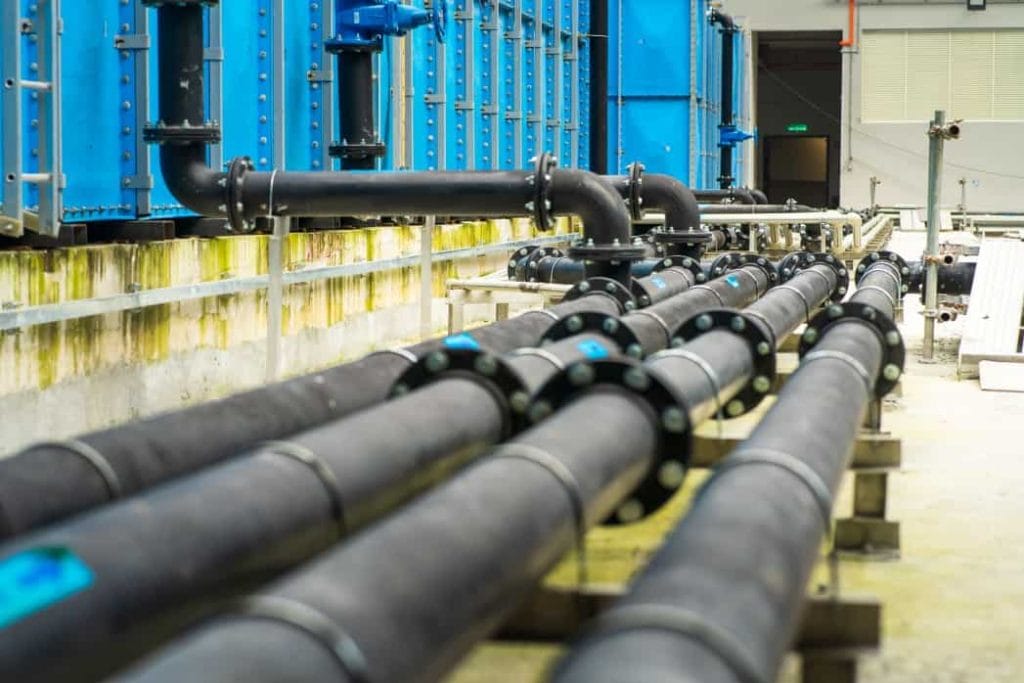
Down below here are a few of the flange types you'll commonly see folks usin' in the gas and oil industry:
Weld Neck Flange
Mighty useful in high-pressure environments, it's easy to spot them weld neck flanges on account of that beveled hub. What's more, weld neck flanges are right well suited for when you got repeat bendin' conditions. Y'all attach these flanges to a pipin' system by weldin' the pipe straight to the flange neck.
Because of that, stainless steel grades with good weldable properties are what folks prefer for makin' 'em. Them weld neck types don't just reduce the stress concentration down at the base of the hub, but they also help transfer that stress right from the flange to the pipe.
Slip-on Flange
Now, slip-on flanges are designed to be used in lower-pressure, low-temperature processes. The engineers down in the gas and oil industry favor 'em 'cause they're a good bit more economical compared to them weld neck flanges.
This kind of flange just slips right over the pipe, and then y'all weld 'em on both the outside and the inside to beef up the strength and keep 'em from leakin'.
Lap joint flange
A lap joint flange is a two-part attachment folks prefer to use when space is tight and you gotta take things apart real frequent. In this type of setup, the lap joint stub end gets welded to the pipe, and that loose backin' flange is used to slip right over the pipe or stub end.
Since that backin' flange ain't touchin' the product inside the pipin' systems, you can get away with moderate corrosion resistance and a less expensive, hard material like carbon steel. But I tell you what, them stub ends need to be made of a mighty corrosion-resistant material with some good mechanical properties.
Threaded Flange
This one's mighty useful when y'all need a quick fix. Threaded flanges, or screwed flanges as some folks call 'em, are made with threaded bores that help you get 'em attached fast and simple.
A threaded flange usually gets attached to the pipe without needin' to strike an arc, thanks to them pre-existin' threads. You'll typically see threaded flanges in systems where the pipes are transportin' water or air. Threaded flanges do their best work in low-pressure environments and temperatures.
Blind Flange
Now, a blind flange is made without no bore in the center, and its main job is to blank off the end of valves, pipin' systems, or even pressure vessel openin's.
Y'all can also use blind flanges along with any other flange to isolate a pipin' system out in the gas and oil industry. What's more, they make a mighty fine manhole, 'specially if they're doin' the job of stoppin' the flow in a vessel or pipin' system.
Socket Weld Flange
Folks recommend usin' this one for low-temperature and low-pressure settings; that socket weld's got a static strength that's right on par with a slip-on flange. A socket-weld connection is made with the pipe by layin' down a filler weld on the outside of the flange.
Socket weld flanges are designed for when y'all need small bore pipin'. But I reckon you oughta avoid 'em in a few processes on account of some corrosion issues.
If y'all still got any doubts about how to pick the right flanges for the oil and gas industry and what to look for, just holler at us in the comment section or give us a call today!