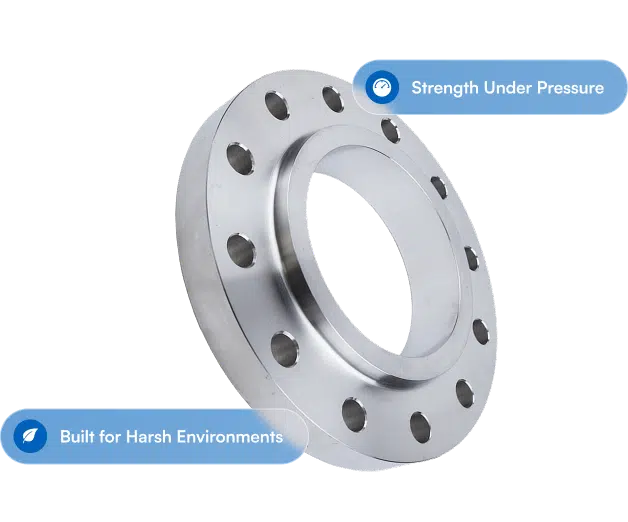
Lap Joint Flanges
Texas Flange stocks Lap Joint Flanges in carbon steel, stainless, and alloy across ASME B16.5 Class 150 clear through 2500, for use with stub ends.
Dimensions and weights|CAD and 3D drawings
For pricing, send dat size, class, and material to sales@texasflange.com or give us a ring at 281-484-8325.
Lap Joint flanges are also known round the industry as Backup flanges, Loose Ring flanges, Loose Hubbed flanges, and Van Stone flanges.
While they're different from structural Rolled Angle Rings, Lap Joint flanges are specially engineered for pressure pipin' systems. They're the perfect choice for jobs dat need frequent takin' apart for inspection or cleanin', 'cause dat design lets you break 'em down right quick without havin' to cut the pipe.
There are two standards to which Texas Flange offers a variety of stub ends to accompany our flanges. The MSS standard is the regular length stub end and the most commonly used in the flange industry. The ASA-type stub end is of a longer length and is less common than the MSS type, though it might be more suitable for your application. MSS Type A stub ends are the industry norm and are utilized with standard flat-face lap joint flanges.
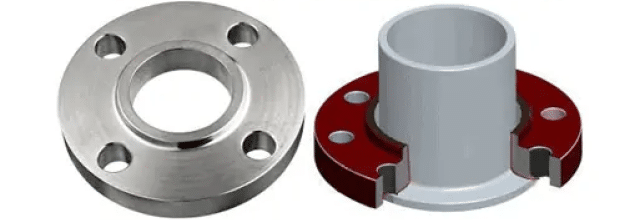
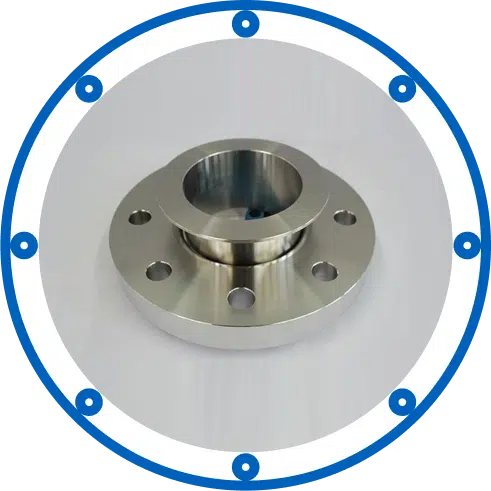
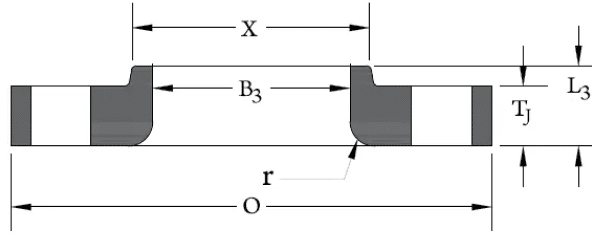
While the hubs on dem Lap Joint flanges are usually longer than what you see on Slip On flanges, 'specially in dem bigger sizes, we can modify 'em to meet your exact needs.
When hub height ain't too critical, or if a 'True Lap Joint' just ain't around, we got a fix called 'Lap Joint to SO LTH' (Slip On Length Thru Hub). Dat's just a Slip On flange machined with a lap joint face and ID radius. Now, if you gotta stick strictly to dat ASME B16.5 length, please specify 'True Lap Joint' so we make sure dem parts ain't cut from Slip On stock.
A key benefit of dat Lap Joint design is dat the flange itself don't touch the process media. Dat allows for some mighty fine cost savin's by pairin' a less expensive flange material with the required grade of stub end, I tell you what.
Lap Joint Flanges and Rolled Angle Rings
A Lap Joint flange serves as a backin' ring in a two-part assembly, designed to slide right over a Stub End dat's butt-welded to the pipe. Dat lets the flange spin freely, makin' bolt alignment a whole lot simpler durin' installation.
Unlike Rolled Angle Rings, which are typically used for tank stiffness or ductin', Lap Joint flanges are built to B16.5 specifications to make sure they hold pressure in your critical pipin' operations.
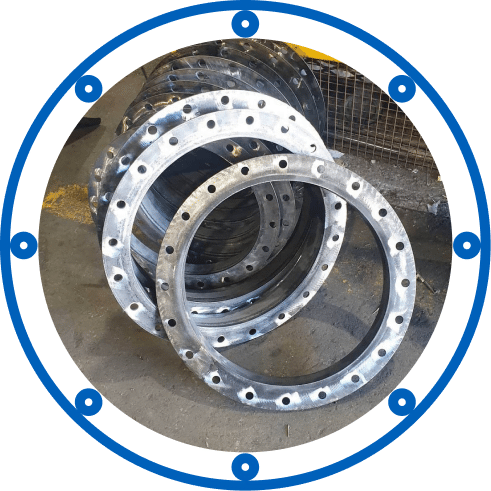
Lap Joint Flanges
1) Dem lap joint flanges are a two-piece design with a backing flange and a rolled angle ring, yessir.
2) It's available in butt-weld and slip-on configurations, yessir.
3) We use different materials for dat backing flange and the rolled angle ring, I tell you what.
4) Dat backing flange makes for easier alignment 'cause it's free to spin right around.
Rolled Angle Rings
1) Rolled angle rings is a two-piece design with a rolled angle ring and a backing flange, I tell you what.
2) It's available in butt-weld configuration, I reckon.
3) Just like dem Lap joint flanges, different materials are used for the rolled angle ring and the backing flange, yessir.
4) Dat backing flange ain't free-to-rotate in roll angle rings compared to dem lap joint flanges, I reckon.
Which Type of Fitting is Right for Y'all?
Choosin' the right flanges for your industrial application is mighty crucial. It entirely depends on the requirement of what y'all are fixin' to use it for.
Lap joint flanges are mighty fine for pipin' systems, allowin' for easy disassembly, while rolled angle rings are good for structural applications to make curved or rounded shapes within various structures; then a lap joint flange is an ideal choice, I reckon.
Y'all lookin' for somethin' a bit more rigid and tough to take apart? A rolled-angle ring is gonna be your best bet, I reckon.
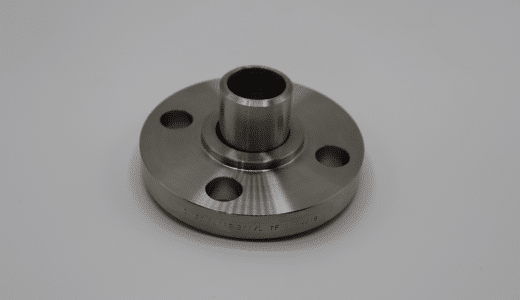
Products
Texas Flange stocks a wide variety of flanges in all sizes and specifications, yessir.
ANSI Flanges
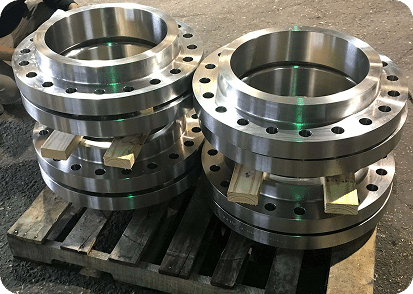
ASME Flanges
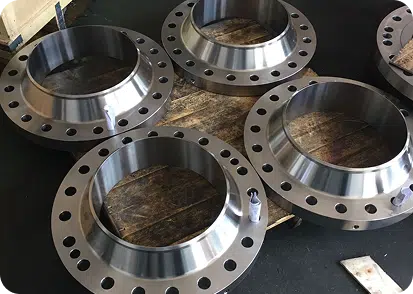
AWWA Flanges
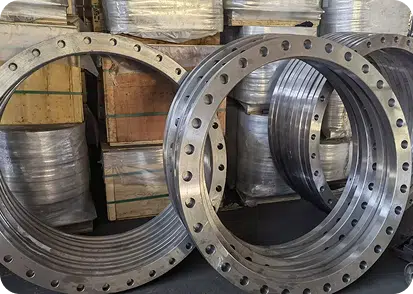
Pipe Flanges
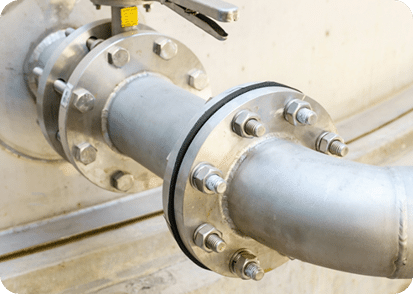
Industrial Flanges
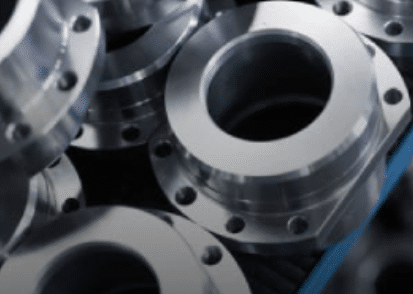
Oil & Gas Industry Flanges
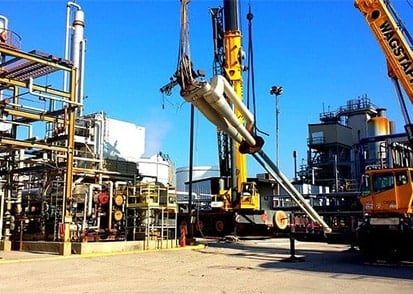
Custom Flanges
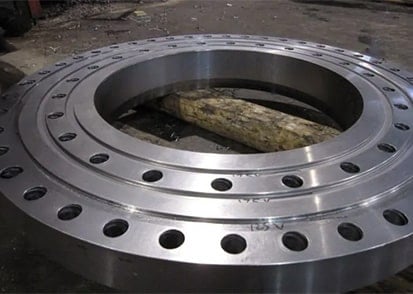
Petrochemical Flanges
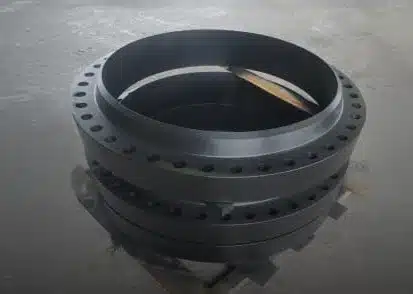
Texas Waterworks Flanges
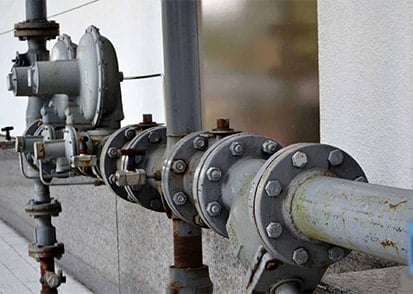
Ring Joint Flanges
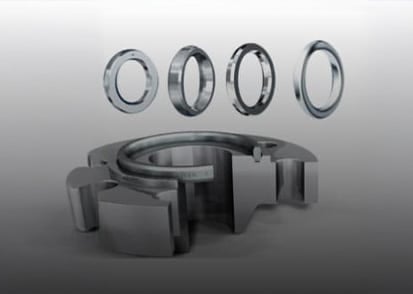
Large Industry Standard Flanges
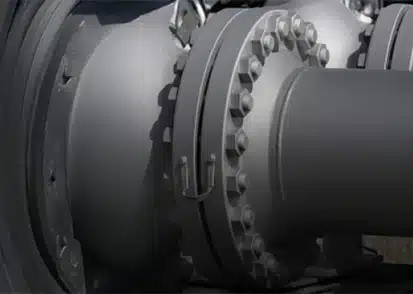
Metric System Flanges
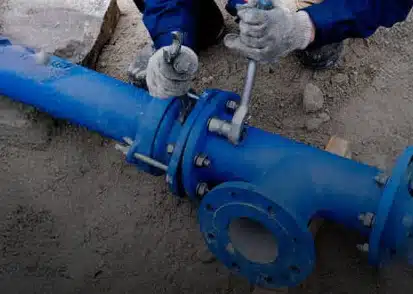
Plumbin' And Mechanical Industries Flanges
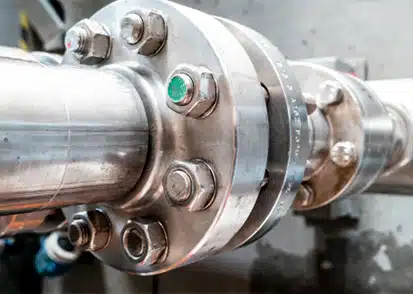
Industrial Pumps, Valves And Vessels
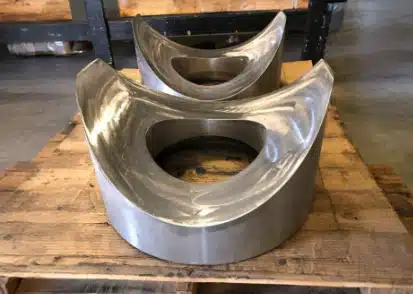
Manufacturin' Industries Flanges
Heating Systems Industries Flanges
Flange Food And Beverage Industries Flanges
Questions Folks Ask Us (FAQs)
The difference between a lap joint flange and a slip-on flange lies in their design and functionality. A lap joint flange consists of two parts: a stub end, which is welded to the pipe, and a loose backin' flange dat can rotate freely right around it.
Now on the other hand, a slip-on flange is a single-piece component dat just slides right over the pipe and gets welded in place, givin' you a simpler and more cost-effective connection. Slip-on flanges are mostly used in low-pressure applications where you ain't gotta take things apart too often.
The difference between a swivel flange and a lap joint flange is dat a swivel flange consists of two separate components: a rotatin' ring flange and a welded hub or collar dat's attached to the pipe.
A lap joint flange also got two parts, but it uses a stub end rather than a welded hub, and its backin' flange is loose rather than fully spinnin' like a swivel flange.
Now, lap joint flanges ain't recommended for high-pressure applications 'cause the design don't give y'all the same strength or seal integrity as other flanges, like welded or slip-on flanges, when you're workin' in high-pressure environments.
In applications where you got severe vibration or a whole lot of movement (like in machinery or dynamic systems), them lap joint flanges might not give you the seal integrity or stability you need, seein' as dat loose flange can shift or loosen up under all dat intense shakin'.
Weld dat stub end (a part of the lap joint flange) nice and secure onto the pipe usin' the right weldin' method. Then just slip the loose flange right over the stub end. Dat loose flange can spin around, lettin' y'all line it up perfect with the bolt holes on the other side of the pipe or flange.
Position dat flange so it fits right over the stub end, makin' sure dem bolt holes line up perfect with the holes on the other flange.
Insert them bolts through the aligned holes of both flanges and tighten 'em up evenly usin' the specified torque, makin' sure you got a secure connection.