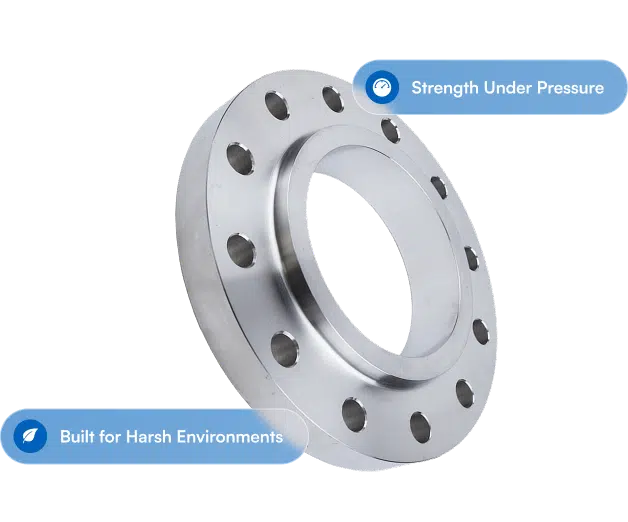
Well now, a flange is a piece stickin' out o' a structure, and mostly it's got holes drilled in it, with a flared or angled end to make a joint. Dem holes are in there so the bolts can hold it down tight. The flange ties together or seals up the different parts o' the structure, I tell you what.
Now here's the main parts of most o' the flanges we make:
How Big Dem Flanges Are
Ever' flange ASME B16.5 comes with a whole mess o' standard dimensions. So if a draftsman in Australia, a work preparer in Japan, or a pipefitter in Canada is talkin' 'bout a Welding neck flange 6” – 150#-S40 ASME B16.5, the spec lays out all dem flange dimension details, plain as day.
When y'all order a flange, the supplier's gonna want to know the material’s quality, oh yeah. For example, ASTM A105 is a forged carbon steel flange, and A182 is the spec for a forged stainless steel flange.
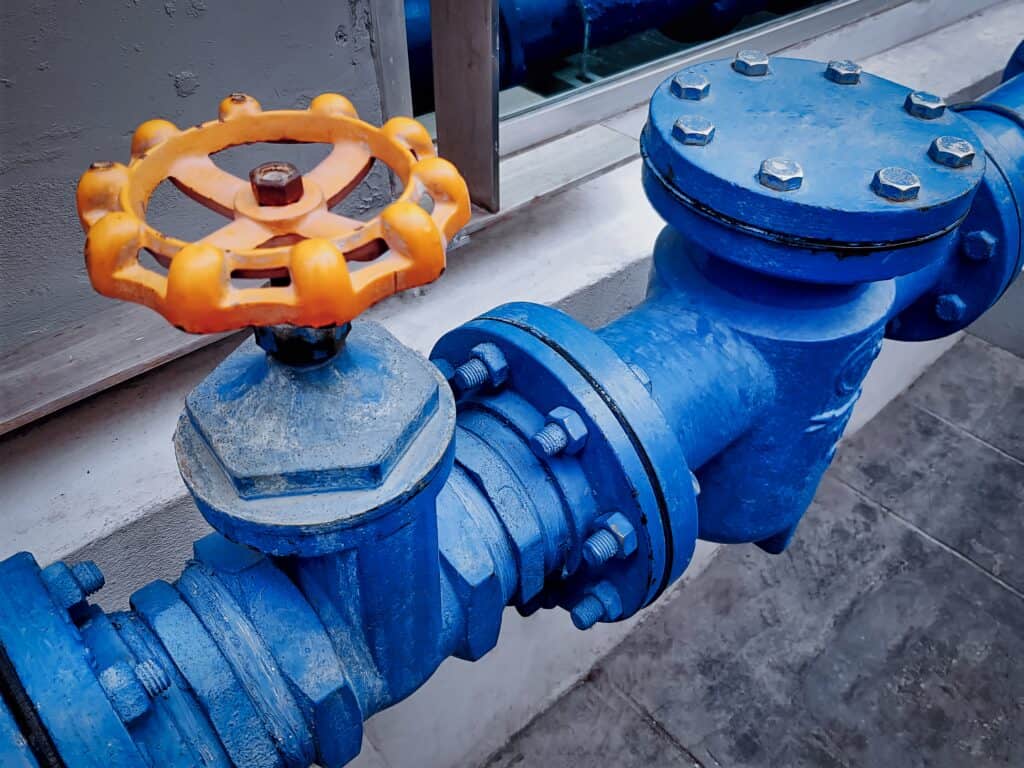
What Y'all Use Flanges For
What a flange is good for depends on how it's built. It can make a structure mighty stronger, like on an iron beam in structural steel. Folks reckon dem are real handy in buildin' houses and other buildin's.
A flange can also work as a guide to keep somethin' right where it belongs. Train wheels got 'em on both sides so the wheels don't wander off the track. But the most common use, y'all, is hookin' up things like pipes. With dem flanges, you can take pipes apart or put 'em together right quick.
What Pipe Flanges Are Made Of
Flanges are usually made o' polymer/plastic, aluminum, carbon steel, and stainless steel.
1. Raw material
2. Material Inspection
3. Material Cutting
Which material you pick depends on what the flange’s fixin' to do. For example, stainless steel flange is a whole lot tougher and mighty important for heavy work in hotter and colder temperatures. Plastic, on the other hand, suits around the house better, 'cause it goes in easy and don't cost much.
Flange Faces
The picture shows a serrated finish on a raised face. The face of a flange is usually made as a groove and tongue, which means hookin' two flat pieces together to make one single surface. Another way to build a flange face is the ring joint.
This kind o' flange covers the whole face, includin' the outside and inside parts where the bolts go. Another one is the raised face, where part o' the flange face sits up higher all around to seal down the flat gasket, yessir.
How a Flange Is Built
One o' the most common flange designs is the welding neck, and it's made for weldin' onto tubing or pipe. Another one is the blind flange.
Now dat one's made with no openin' in the middle, so you use it to seal up a connection or shut it off. A threaded flange has thread on the outside or inside, across from its ring groove, and it's there to match up with a standard threaded pipe.
Flange Standards, Plain and Simple
Ever' flange gets made followin' the standards the industry agrees on. Mostly flanges follow the standards set right here in the country, like dem set by ANSI and API.
Dem standards keep flange dimensions the same all around so they'll swap out with each other. But I'll tell you what, a flange that follows API or ANSI might not fit the standards they use overseas.
Other flange facings dem standards cover are the small and large tongue-and-groove facings and the ring joint facing, which is made special for ring joint type metal gaskets.
Kinds of Flanges
Well, there's three kinds of flange types: optional, integral, and loose.
Blind, lap-joint, socket weld, threaded, slip-on, and welding neck flange all follow standard types. Y'all'll see the flanges in these types look mighty similar to 'em, and all them ‘pros’ and ‘cons’ talked about there go for here too.
Dem types sort flanges into three main groups: optional, integral, and loose. Here's how each one works:
Loose Type Flanges
Dis kind covers designs where the flange ain't connected direct to the pipe wall, vessel, neck, and nozzle, and the way it's attached ain't counted on to give the same mechanical strength as an integral attachment.
Integral Type Flanges
Dis kind covers designs where the flange is forged and cast all in one with the butt welded, pipe wall or vessel, or nozzle neck. Dey get attached by other gas or arc welding, done so the flange and nozzle neck, vessel, or pipe wall counts the same as one integral structure.
Optional Type Flanges
Dis kind covers designs where the flange is attached to the pipe wall, vessel, neck, or nozzle so well that the whole assembly acts like one single unit.
Wrappin' It Up
All that up there covers the basic flange design and its main parts. But keep in mind, friend, there's a whole wide range o' flanges out there in the market, so a body just can't list ever' detail, configuration, and consideration.
If y'all got any more questions or want to know more 'bout the main parts of a flange, go on and holler at Texas Flange today, we'll take good care of you!