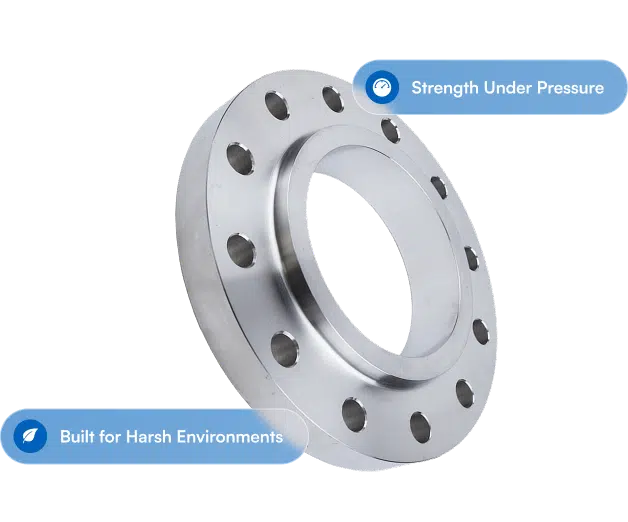
If y'all have been pricin' pipe flanges this past year and noticed them numbers ain't what you remember, you ain't imaginin' things. Them steel tariffs have gone and reshaped the whole cost structure of imported flanges, and for a heap of projects right here in the United States, they've made domestic material more competitive than it's been in decades. For you procurement managers and engineers needin' to understand what in the world is happenin' to flange pricing and why, here's a straight-shootin' breakdown of the current tariff situation and what it means for your next purchase order.
The Section 232 Tariff: Where It Started and Where It's At Now
Understandin' Steel Tariffs and Flange Pricin'
Section 232 of the Trade Expansion Act of 1962 gives the president the power to slap tariffs on imports that threaten national security. Back in 2018, the U.S. government put a 25% tariff on most steel imports usin' that rule. That rate covered a whole mess of steel products, includin' semi-finished steel, plate, bar, structural shapes, and pipe.
Come 2025, that tariff rate on steel got bumped up to 50% for imports from a lot of countries. The United Kingdom is still sittin' at 25%, but for most of them steel-makin' nations, includin' China, India, South Korea, Japan, and a good chunk of Europe, the rate is a flat 50% now. And I tell you what, these ain't just temporary fixes. As of early 2026, they're still goin' strong with no end in sight, even with all them legal fights up in Washington.
How Flanges Got Dragged Into the Mess
At first, Section 232 was just aimin' at raw and semi-finished steel products. Flanges (which fall under HTS heading 7307 as steel pipe fittings) weren't always called out by name. That all changed when the Commerce Department stretched that tariff coverage to include over 400 more HTS codes for derivative steel and aluminum products. Now, forged and cast steel flanges are right smack in the middle of it.
What this means when the rubber meets the road: a forged carbon steel flange brought in from a country gettin' hit with that 50% tariff is gonna have that duty slapped on the steel content right at the port. For somethin' that's pretty much 100% steel (like a forged A105 flange), that duty hits nearly the whole declared value. That's a mighty big price jump that gets passed right on down to the buyer, yessir.
The Math: What 50% Looks Like on a Flange Order
To put this in perspective, just think on a regular order for 12″ Class 150 weld neck flanges in ASTM A105. Before them tariffs, an imported flange like that might've landed at a certain base cost. With a 50% duty on the steel content, that cost jumps up a whole heap before the flange even clears customs. Add in your freight, handlin', and the importer's cut, and the final cost of an imported flange is now goin' toe-to-toe with domestic sourcing.
This shift in cost has been the wildest in them everyday sizes and pressure classes (150# and 300# in NPS 1″ through NPS 24″) where import competition used to drive the tightest margins on big orders. In them larger sizes, higher pressure classes, and specialty alloys, the tariff impact bounces around a bit 'cause the base material cost is a different piece of the pie.
Tariff Stackin': When They Hit You More Than Once
It gets even messier, I reckon. On top of them Section 232 tariffs, a lot of steel-makin' countries are also dealin' with antidumping (AD) and countervailing duty (CVD) orders on certain steel products. China, for instance, is lookin' at both Section 232 duties and some mighty high AD/CVD rates on a lot of steel categories. When them duties stack up on top of each other, the total tariff on an imported Chinese flange can shoot right past 100% of the declared value.
There's also reciprocal tariffs that hit the non-steel parts of derivative products. For a forged steel flange that ain't got no non-steel parts to speak of, this don't matter much. But for assemblies or products mixed with other materials, figurin' out the tariff means splittin' the value between the steel part (which gets them Section 232 rates) and the rest of the value (which gets whatever reciprocal tariff rate applies for that country).

Steel Tariff Layers Hittin' Pipe Flange Imports
Current as of early 2026. Rates might change on ya.
| Tariff Layer | Rate | Applies To |
| Section 232 (most countries) | 50% | Steel content of imported flanges |
| Section 232 (United Kingdom) | 25% | Steel content of UK-origin flanges |
| Antidumping / Countervailing Duty | Varies (0% to 200%+) | Country and product specific, stacks right on top of Section 232 |
| Reciprocal Tariffs | Varies by country | Non-steel content of derivative products |
| Standard MFN Duty | Varies by HTS code | Base customs duty, applies before Section 232 |
Multiple tariff layers can stack up. The total duty on imported flanges from some countries might just top 100%.
What This Means for Domestic Flange Pricin'
This whole tariff situation has pretty much set a price floor for imported flanges. Domestic producers and stockin' distributors got a bit more wiggle room on pricin' than they did before 2018 'cause the imported stuff just don't have the same price structure no more. That said, domestic flange pricin' has its own things to worry about: raw material costs (scrap steel, billet, bar stock), energy costs, labor, and how much folks are demandin' all play a part.
The real result for buyers is that the gap between domestic and import pricin' has shrunk down a whole lot, and in a heap of cases, it's flipped completely. For standard carbon steel flanges in common sizes, domestic material is often the better deal when y'all factor in the tariff, the risk of waitin' on lead times, all that paperwork, and the cost of holdin' inventory while waitin' on uncertain import schedules.
This is mighty important if your project needs domestic compliance under BAA, BABA, or AIS. When the law says you gotta buy domestic (like on most federally funded infrastructure jobs), the tariff question takes a backseat. When y'all got a choice between domestic and import, the tariff math sometimes points right to domestic for standard material. This is real handy when you're thinkin' on origin requirements for your projects, and it also gives a boost to domestic production to help ease up material shortages. The sword cuts both ways, I reckon, as more USA manufacturin' helps us build up more supply lines.

How to Protect Your Budget
For you procurement teams handlin' flange purchases in this tariff mess, there's a few practical steps y'all oughta consider.
First off, get current pricin' every single time. Tariff rates, raw material costs, and market conditions are always shiftin'. A quote from six months ago might not mean a hill of beans today, and budget estimates based on pre-tariff pricin' just ain't reliable.
Second, make sure you confirm the country of origin before you pull the trigger on a purchase. Not every distributor is gonna just up and tell you their inventory is imported. If where it comes from matters for your project (whether for followin' the rules or just watchin' costs), ask 'em straight up and get the paperwork to prove it.
Third, plan your lead times real careful. Imported flanges gettin' hit with tariffs can get hung up at customs, 'specially when them AD/CVD reviews are goin' on or when the importer's bond is gettin' tweaked. Domestic material that's already sittin' on the shelf takes that risk right out of the picture.
Fourth, think on the total cost of ownership. A lower price tag on an imported flange can fool ya if it don't include the tariff duty, longer wait times, missin' paperwork (especially for MTR traceability), and the risk of gettin' rejected on a compliance audit.
What Texas Flange Can Do for Y'all
We carry a mighty big inventory of carbon steel, stainless steel, and alloy flanges in ASME B16.5, B16.47, and API 6A standards. We can tell y'all exactly where our material comes from and hand over the paperwork to prove it, whether you're needin' domestic melt certification for a BABA project or just want to use domestic manufacturin' on a commercial order to help out USA production and cut down on them overseas lead times.
If y'all are quotin' a project and need current pricin', confirmed availability, or just some help understandin' how tariffs are gonna affect your specific material needs, holler at Texas Flange today. We'll give you straight answers on what things cost and why, plain and simple.
Related readin': For the latest word on Section 232 rates, duty base changes, and what they mean for flange pricin' today, take a look at our 2026 tariffs and domestic content update.