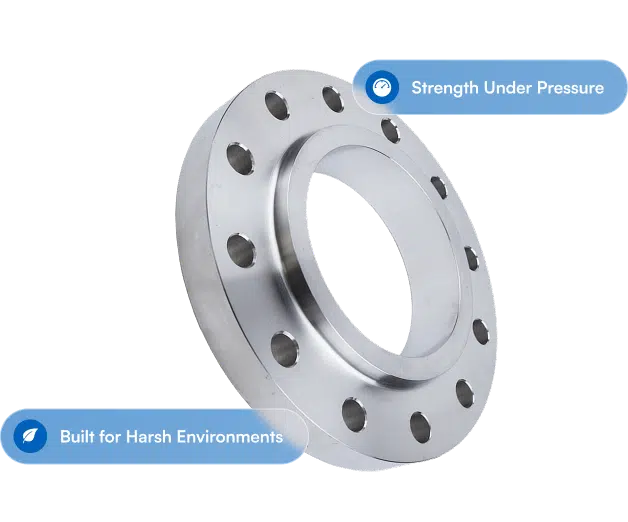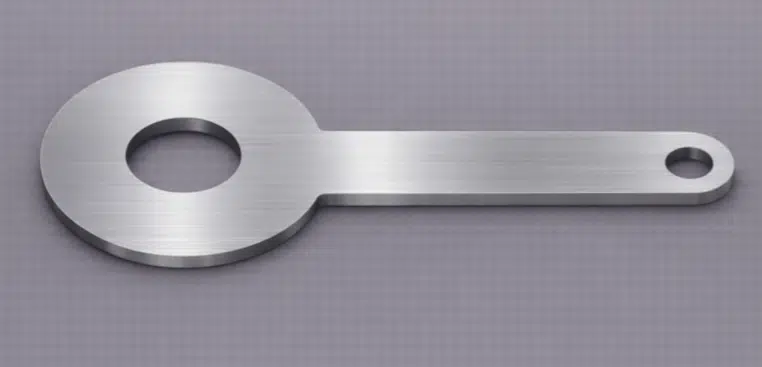
There's a reason ever' refinery, chemical plant, and pipeline down here has a drawer full of what look like giant steel glasses. Spectacle blinds, figure 8 blanks, paddle blinds… whatever nickname y'all want to use… dem ASME line blinds are the unsung heroes of process isolation, I tell you what. When a valve by itself ain't safe enough to keep a crew separated from what's in the pipe, one of dese blinds is what gets put in. This here guide covers the four common styles, how to spec 'em to your flange class, and how to dodge the mistakes that turn a simple isolation into a rework job.
Why Y'all Need Positive Isolation
A closed valve ain't necessarily positive isolation. Valves leak, seats wear out, actuators quit on you. For hot work, confined-space entry, hydrotest isolation, or any time somebody's fixin' to be on the downstream side of a line that used to hold somethin' nasty, OSHA and API 510 usually want a physical blank between the crew and the process. A paddle or spectacle blind drops a solid piece of steel across the bore so nothin' can get through, and dat's all there is to it. It does all dat without takin' up much room, too.
Blinds are specified under ASME B16.48, “Line Blanks,” which covers spectacle blinds, spacers, and paddle styles from ½” through 24″ in classes 150# through 2500#. For wellhead work, blinds are sized to API 6A flanges. Y'all gotta match the sizing to the flange class exactly, because that blind sees the same pressure the flange does.
Four Styles, Oh yeah
Spectacle Blinds
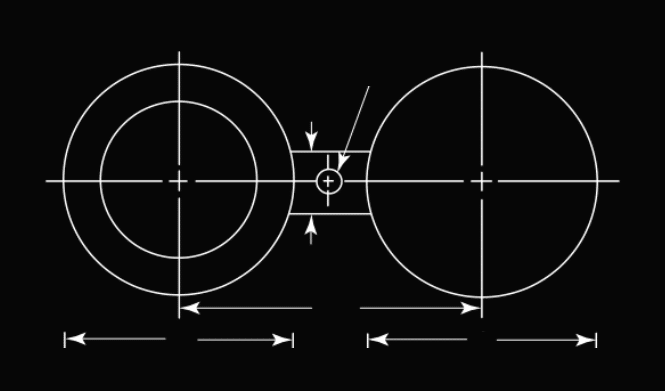
A spectacle blind, sometimes called a spectacle plate or figure-8 blind dependin' on where you're from, is one piece of steel machined into two circles hooked together by a web. One circle is solid (the blank). The other is open with a bore matchin' the pipe ID (the spacer). The whole thing looks just like a pair of glasses, which is how it got its name.
Spectacle blinds get put in permanent between two flanges and turned from one position to the other as needed. Blank side in line: positive isolation. Turn it 180 degrees: process flows like normal. Y'all never lose the blind, 'cause it stays bolted right there in the joint.
Why they're so good: plants with frequent, predictable isolation needs (catalyst changes, heat exchanger cleanin', relief valve testin') run dese when space is tight. The downside is dat the web sticks out past the flange OD and can get in the way if you gotta work around either side of the assembly.
Figure 8 Blanks (also: Figure 8 Plates)
“Figure 8 blank” and “spectacle blind” is the same shape and the same part, I reckon. Which name gets used just depends on the region and the industry, and y'all will see both on refinery drawings. If a drawing says “figure 8 blank,” treat it like a spectacle blind and double-check the ID, thickness, bolt hole pattern, pressure class, and material grade.
Paddle Blinds and Paddle Spacers
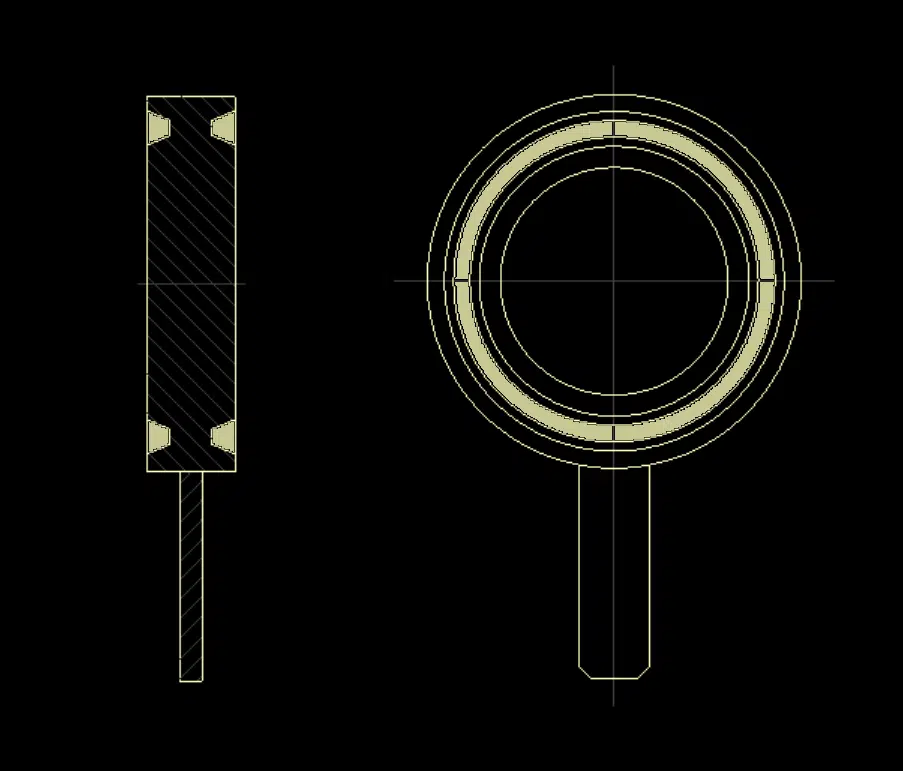
A paddle blind (also called a line blank or slip blind) is half of a spectacle: one circle of steel with a handle (the “paddle”) stickin' out past the flange OD. Slide it in when y'all need to blind the line, pull it out and put in a paddle spacer when you want flow open again.
Paddles come in pairs, yessir: one blank, one spacer. They're easier to put in on crowded piping 'cause you only gotta break the flange enough to slide a thin plate in and out, not turn a whole spectacle. The downside: y'all gotta store the spare somewhere. Lose dat spacer and you can't put the line back in service till you find another one.
Line Blinds (Quick-Release / Hinged Blinds)
For high-cycle isolation, a full spectacle or paddle setup is slow as molasses. Ever' operation means breakin' bolts, swingin' or slidin' the blind, and re-torquin'. That adds up quick on lines dat get isolated ever' week.
Line blinds are engineered assemblies dat ride between two flanges with a built-in mechanism (hinged, cam-operated, or slide-operated) so an operator can change position without tearin' the whole joint apart. Y'all ought to consider 'em for hydrogen service, catalyst regen, relief valve isolations, and anywhere crews are breakin' the same joint more than a couple times a year.
Spec’in’ a Blind to Your Flange
A blind's only as safe as how well it matches the flange it sits between. Four things gotta line up:
Bore size. The spacer (open) side needs to match the pipe inside diameter, not the nominal pipe size. For standard weight (Sch 40) in common sizes dey're close enough, but for schedule 80, XXS, or non-standard bores y'all gotta spec the ID.
Pressure class. A spectacle blind put in between 300# flanges has to be rated 300#. Usin' a 150# blind in a 300# system is a failure just waitin' to happen, I tell you what. ASME B16.48 thickness tables scale up with the class.
Bolt circle and hole pattern. The outer circle of the blind has to match the flange bolt circle so the bolts slide through clean. Dat's why confirmin' the flange standard matters (B16.5 vs. B16.47 Series A vs. Series B change the hole pattern on the bigger sizes).
Face and gasket. Blinds can be supplied flat face or raised face to match the flange. Gasket thickness on either side has to let the blind seat right. For RTJ flanges dere's specific RTJ-compatible blind shapes, since a regular flat spectacle don't have the groove.
Get any one of dese four wrong and the blind either won't bolt up, won't seal, or won't hold pressure. Our existing blind flanges page covers the close cousin of dese parts (standard blind flanges used at dead ends) in more detail.
Styles Side by Side, Quick Look
| Style | Permanent or Removable | Typical Use | Handling |
| Spectacle Blind | Permanent between two flanges | Predictable, occasional isolation | Rotate 180 degrees between blank and spacer |
| Figure 8 Blank | Same as spectacle blind (just a different name) | Same as spectacle blind | Same as spectacle blind |
| Paddle Blind / Spacer | Removable (pair: blank + spacer) | Crowded piping, infrequent isolation | Slide in/out, needs a stored spare |
| Line Blind (hinged/cam) | Permanent engineered assembly | High-cycle isolations, critical service | Operator-actuated without full disassembly |
Materials and Certs, Done Right
Spectacle blinds and paddles are usually supplied in the same material as the flange they go against: A516-70 plain plate for standard carbon, A516-70 normalized and charpy tested for low-temperature service, F316/316L for stainless, F22 or F91 for chrome-moly high-temp. For sour service under NACE MR0175, y'all spec the blind material and hardness to match, and confirm it on the MTR.
Blinds themselves are usually machined from plate 'cause it's practical, and dey don't need any on-site weldin' when they're specified proper.
What We Keep on the Shelf and How to Order
Texas Flange carries spectacle blinds, paddle blinds, and spacer rings in carbon, stainless, and alloy grades from ½” through 24″ in 150# through 2500#. Bigger sizes through 60″ and higher-pressure custom blinds are available on lead time. When y'all ask for a quote, give us:
Size (nominal pipe size), class, flange standard (B16.5, B16.47 Ser A, Ser B, or API 6A), face type (RF, FF, RTJ), material grade, bore (standard or specific), and quantity. If y'all got a piping drawing or an iso with the blind already picked out, attach it to the RFQ and we'll match ever'thing from there.
Bottom Line, y’all
Spectacle blinds and their cousins don't show up in the process flow diagram, but they're the reason a maintenance crew can open up a vessel without wonderin' what might come flowin' into it. Pick the style dat fits how often y'all isolate, spec the class and bore to match the flange, and keep the matchin' spacer in the same drawer as the paddle blind. If y'all need blinds quoted or some help matchin' a blind shape to an unusual flange, get in touch with us and we'll holler back with pricin' and lead time same day.
Texas Flange & Fitting Supply | 281-484-8325 | texasflange.com