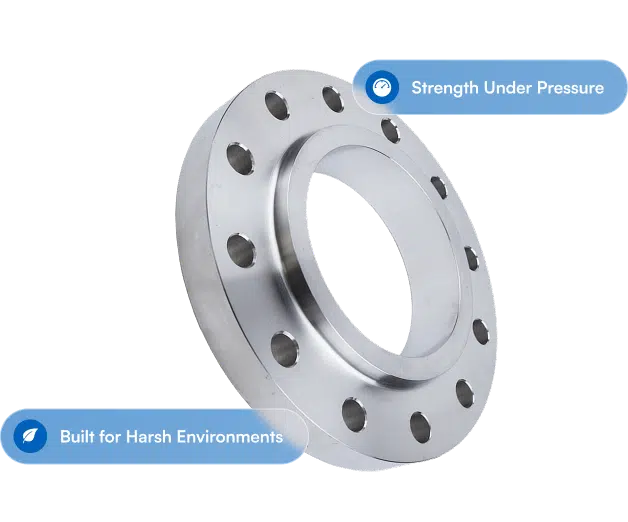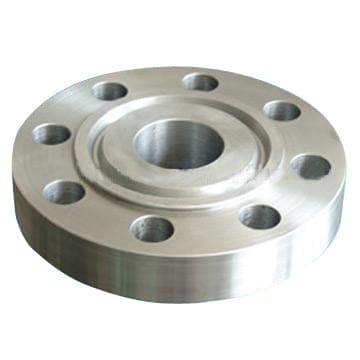
Now a ring joint gasket, dat's a specialized sealin' piece we use in high-pressure and high-temperature work, mostly in the oil and gas, petrochemical, and power industries. These gaskets are built to make a dependable seal between Ring Type Joint (RTJ) flanges and give y'all a solid connection in critical piping systems.
Comes in several ring joint types, like RTJ gaskets and ring gaskets, and I tell you what, they keep your seals leak-proof, which is mighty important for keepin' a system sound. Standards like API 6A govern how dese gaskets get specified and made, so you got safety and performance when conditions get rough.
Why the ring joint gasket matters
Ring type joint flange face surfaces are gettin' more popular ever' yearwhen it comes to flange connections. RTJ Flanges are a good alternative to raised face in certain jobs. Usually, dem higher pressure and temperature projects are where y'all use Ring Type Joints.
They give you a better sealin' solution for media critical pipeline and pressure vessel work. Now, they're only an option in ANSI/ASME class flanges, but they're the required standard surface seal in API specification flanges.
That's on account of API flanges typically runnin' at a higher pressure than their ANSI/ASME flange cousins.
The seal on an RTJ gasket happens under the force of closin' up the bolts and hardware after matin' one flange to another. Usually, the gaskets are made of softer material than the metal of the flanges they're sealin'.
The most common of dese materials is a soft iron. Slow and steady pressure on the hardware of the flange “crushes” the gasket down in the ring joint surface. That helps keep any kind of leakage from happenin' while that flange assembly's workin'.
Ring Type Joint gaskets get called out by an “R” number. R gaskets come in oval type and octagonal configuration. With the smooth sealin' surface on ring joint faces, y'all can just about swap one for the other.
When you ain't sure, higher pressure and temperature jobs usually call for ring joint facings. When you need the best surface seal you can get, ring gasket type joint flanges are the ticket, yessir.
Pickin' the right ring joint gasket is mighty important for gettin' a dependable, leak-free seal in high-pressure places. Whether y’all are workin' with RTJ flanges or other critical piping parts, usin' the correct RTJ gasket can save you from costly failures and downtime.
Always make sure you're followin' industry standards like API 6A when you're pickin' ring gaskets for your jobs, so you get the best performance and safety.
Give us a holler at 281-484-8325 or shoot us an email at sales@texasflange.com with any questions or worries about your order.
Don’t forget to check out dem other free online resources we got!
Questions Folks Ask Us
What is a ring joint gasket?
A ring joint gasket (RTJ gasket) is a precision-engineered metal sealin' piece made to give you a high-integrity, leak-proof connection between RTJ flange faces. Commonly used in high-pressure and high-temperature work all across the oil and gas, petrochemical, and power generation industries, RTJ gaskets are shaped special to fit down in a machined groove on the flange face. The seal comes from controlled deformation of the gasket material — typically softer than the flange metal – -when it's bolted up, so it performs its best under extreme conditions.
What are the different types of ring joint gaskets?
The two most common configurations of RTJ gaskets are oval and octagonal, I reckon.
- Oval ring gaskets give you a traditional seal and work fine for a lot of standard jobs.
- Octagonal ring gaskets seal better in higher-pressure systems on account of their bigger contact area and stiffer structure.
Both types are made to fit standard RTJ flanges, and a lot of times y'all can swap 'em back and forth, dependin' on the flange groove design.
How do I install a ring joint gasket?
Here's how you put an RTJ gasket in right:
- Inspect and clean dem flange faces and ring grooves so there ain't no debris, scale, or damage left on 'em.
- Insert the ring joint gasket down in the groove, and make sure it's lined up just right.
- Tighten the flange bolts gradually and evenly in a crisscross pattern, usin' a calibrated torque wrench.
- Follow manufacturer torque specifications so you don't over-compress or load it uneven, which could ruin your seal.
A gasket that's installed right will deform just a little to fit the groove, makin' a dependable metal-to-metal seal.
What standards govern ring joint gaskets?
RTJ gaskets get made to several strict industry standards so you got quality and performance you can count on.
- API 6A: Lays out requirements for wellhead and Christmas tree equipment, includin' ring gaskets for high-pressure use.
- ASME B16.20: Covers metallic gaskets, includin' RTJ types, for use with flanges per ASME B16.5 and B16.47.
- ISO 10423 (API 6A equivalent): International standard for equipment used in oil and gas production.
Meetin' dese standards guarantees dimensional accuracy, material integrity, and pressure-temperature performance that's mighty essential where sealin' is critical.
What Folks Are Sayin'