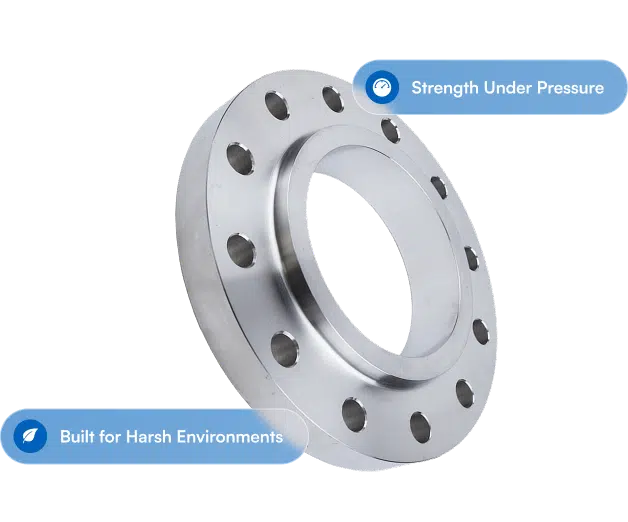
Now, the flange face is dat surface area dat takes the gaskets. The material of the gasket seats right over the flange face and makes a mighty effective seal when it's under pressure.
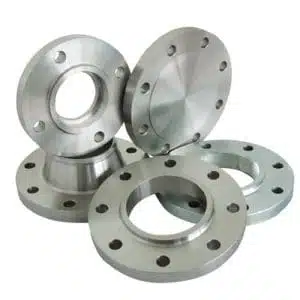
Dat flange face is designed per the ASME B16.5 for flanges up to 24 inches and ASME B16.47 for 26-inch flanges and larger. To keep from havin' leakage problems, we make all sorts of flange faces, I tell you what.
What dat flange face finish means
The ASME B16.5 code says dat flange face (flat face and raised face) needs to come with a specific roughness. Dat makes sure the surface plays nice with the gasket.
It helps give you a high-quality seal. You gotta have a serrated finish, either spiral or concentric, with 30 to 55 groves every inch, yessir.
It comes out with a roughness between 125 and 500 micro inches. Dat allows for a whole bunch of surface finish grades dat flange manufacturers oughta have ready for the gasket contact surface on dem metal flanges.
In this here blog, we're fixin' to learn about all dem different flange faces and the types of flange face finishes.
Types of Flange Faces
Dem ASME B16.47 and ASME B16.5 standards talk about 6 different flange faces. Here they are:
Lap joint flange
Dat lap joint flange comes with a flat side dat ain't much use for sealin' the flange. Instead, the joint makes room for the back of the stub end. The sealin' surface has a stub end and can be either raised or flat, I reckon.
Ring joint flange (RTJ)
Ring-type connection flanges are made for high pressure (class 600 and above) and high-temperature jobs above 800°F (427°C). They got a groove cut right into the faces for dem steel ring gaskets.
When you tighten dem bolts, it forces the gaskets between the flanges right into the groove, and the flanges seal up and deform dat gasket to lock it in tight. It makes a pure metal-to-metal seal, yessir.
Dat RTJ flange comes with a raised face and a machined annular groove. Now, dat raised surface don't act as a sealant itself.
When you're dealin' with O-ring sealin' RTJ flanges, the raised faces of dem flanges get clamped and mated together so they might just touch.
In dat case, the compressed gasket don't usually carry the load past the bolt tension, movement, or vibration. And it ain't gonna crush the gasket or drop dat joint stress any further neither.
Raised face flange (RF)
Raised face flanges are the most common ones you'll see in plant applications. They call it a raised face 'cause dat sealin' face sits up higher than the circular bolt face.
This kind of face lets you use a whole lot more gasket design combinations, like double wall type, spiral wound type, flat ring sheet type, and other metal composite materials.
Flat face flange (FF)
Flat-face flanges got a sealin' surface right on the same plane as the circumferential bolt surface. Because of dat, flat face flanges need to be bolted to raised face flanges.
On top of dat, a soft type (non-metallic) full-face gasket is mighty useful between two flat-face flanges when you're makin' a joint connection. Folks also call this type of flange face a plain face.
Flat-face flanges are what you want for low-pressure jobs. We don't recommend matin' these flanges with an RF flange, no sir.
Male and female flange (M&F)
Male and female flanges need a little adjustin'. The flange face has an area stickin' out past the normal (male) flange face. The matin' flange comes with a matchin' recess (female) machined right into the face.
Dat female face is 3/16” deep, and the male face sits ¼” high. It comes with a nice smooth finish. The outer diameter of dat female face is used to hold and line up the gasket.
You got two versions available: large and small M&F flange. Plus, you'll often find custom male and female shrouds on dem heat exchanger shells dat cover and channel the flanges.
Large and small tongue-and-groove flange (T&G)
It's mighty important dat the groove and tongue surfaces of dem flanges match up. For example, one flange face has a raised ring (Tongue) machined right into it. The matin' flange has a matchin' recess (groove) machined into its face.
Tongue and groove facings come in both small and large sizes. They're a bit different from female and male threads when it comes to the inner diameter of the groove and tongue. It don't stick out into the flange base, keepin' the seal tight at its outer and inner diameters. You'll find these a whole lot on cam and pump covers.
Holler at Texas Flange today if y'all got any questions about a flange's face.