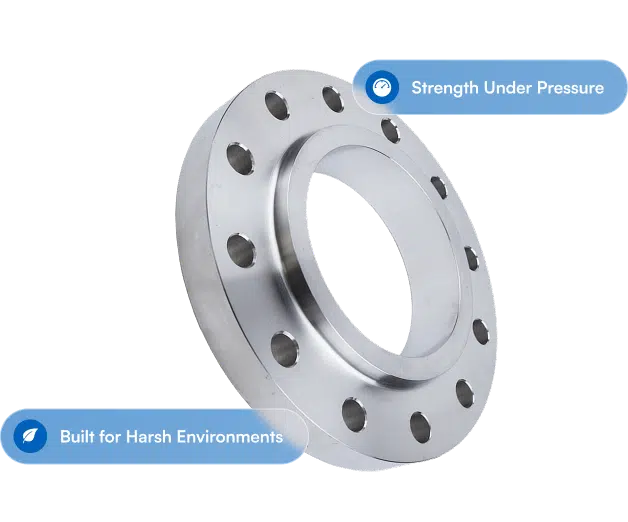
Flanges play a mighty critical role in connectin' pipes with valves, different types of equipment, and other components. It's one of dem popular connectin' techniques after weldin' pipes end to end when reinforced connections ain't necessary. Flanges enhance flexibility and enable effortless disassembly and easy access to system components when you're maintainin' your pipin' systems.
Among the various types of flanges available, two popular choices are lap joint flanges and slip-on flanges. Flanges ain't a one-type-fits-all sort of solution, I tell you what. Factors like size, matchin' the ideal flange design to your pipin' system, and intended usage can help y'all decide which one you choose.
If you're wantin' to know more about lap joints and slip-on flanges, you've landed on the right page. This here blog is fixin' to explain flanges and provide a comprehensive analysis that helps you know which one meets your requirements.
Before we dive into the details, let's take a quick overview of flanges.
What in the World are Flanges?
Flanges are typically somewhat flat, circular metallic discs with bolt holes around the perimeter. They attach to the end of a pipe, allowin' for boltin' to another pipe or component. This connection facilitates easy assembly and disassembly and ensures a secure and leak-resistant joint.
Flanges are robust, bear high pressure, and are used in varyin' temperatures. These characteristics fit 'em for various applications. Different flanges are available in the market, each with unique features and benefits. Among these, lap joint flanges and slip-on flanges stand out for their distinct characteristics as the two types which slide over a pipe or a stub end pipe segment.
Slip-On Flanges: A Quick Overview
Just like the name suggests, slip-on flanges slip right over the end of a pipe. They got a bit larger diameter than the pipe itself, allowin' 'em to slide into place. Once in position, you gotta weld 'em to both the inside and outside of the flange, creatin' a strong and reliable connection.
Slip-on flanges are known for their ease of installation and cost-effectiveness. They're the most popular flange type for low pressure applications.
Advantages of Slip-On Flanges
Easy Installation: Slip-on flanges are incredibly easy to install. Their design allows for quick alignment and weldin', reducin' the overall assembly time.
Lower Cost: These flanges are generally less expensive than other types, makin' 'em economical for projects with budget constraints.
Versatility: Slip-on flanges are suitable for various applications and industries, from low-pressure systems all the way to high-pressure environments.
Smooth Flow Transition: The gradual transition from the pipe to the flange interior reduces turbulence and pressure drop, makin' 'em ideal for applications where a smooth flow is mighty critical.
Lap Joint Flanges: A Quick Overview
Lap joint flanges got two main components: the stub end and the backin' lap joint flange itself. The stub end welds to the pipe, while the backin' flange remains free to rotate around the stub end.
A lap joint flange is then slipped over the stub end and secured in place with bolts.
This unique design offers several advantages in specific applications, yessir.
Advantages of Lap Joint Flanges:
Alignment Flexibility: The rotational capability of the backin' flange provides flexibility in alignin' the bolt holes durin' installation. It's mighty beneficial when dealin' with misaligned or non-standard pipe connections.
Easy Access: Lap joint flanges are the go-to choice when regular inspection or maintenance of the joint is required. You can easily rotate the backin' flange, grantin' access without needin' to disassemble it.
Cost-Effective for Large Pipes: In applications involvin' large pipes or where frequent disassembly is necessary, lap joint flanges can offer significant cost savings over time due to their easy maintenance and reusability.
Prevents Leakage: The stub end’s welded connection prevents leakage around the joint, enhancin' the overall reliability of the flange.
A Head-to-Head Comparison
Now that we've explored the unique features and advantages of slip-on and lap joint flanges, let's put 'em side by side for a comprehensive comparison.
1. Installation:
Slip-On Flanges: These take the lead in terms of installation ease. Their simple design and direct weldin' make 'em quick to assemble, even for folks with limited experience.
Lap Joint Flanges: While slightly more involved due to the stub end and backin' flange components, lap joint flanges offer greater flexibility in alignin' bolt holes, especially when dealin' with non-standard connections.
2. Cost:
Slip-On Flanges: If budget constraints are a primary concern, slip-on flanges are often the more inexpensive option, makin' 'em a popular choice for many projects.
Lap Joint Flanges: While potentially more expensive up front, lap joint flanges can provide long-term cost savings in applications that require frequent maintenance or involve large pipes.
3. Accessibility:
Slip-On Flanges: Once welded in place, slip-on flanges ain't as easily accessible for inspection or maintenance without disassembly.
Lap Joint Flanges: The ability to rotate the backin' flange makes lap joint flanges highly accessible.
This feature is mighty advantageous when regular inspection or quick maintenance is necessary.
4. Applications:
Slip-On Flanges: Their versatility makes slip-on flanges suitable for various applications, from low-pressure systems to high-pressure environments.
Lap Joint Flanges: These are particularly useful in applications with misaligned or non-standard connections and where easy access for maintenance is essential.
When Should We Use a Slip-on Flange and Lap Joint Flanges?
For industrial pipin', folks can use various types of flanges. Each type of flange has its unique advantages. For instance, slip-on flanges are easy to install without puttin' much effort, and 9 times out of 10 they'll be the ideal choice.
They require no weldin' and boltin', and folks can easily insert 'em into place. This attribute of slip-on flanges makes 'em ideal when y'all have time limitations.
However, slip-on flanges ain't as robust, unable to bear high pressure, and tend to leak more quickly. In this case, lap joint flanges can rescue y'all since they're available in the 2500# class with weld necks and blinds.
Conclusion
In the world of flanges, both slip-on flanges and lap joint flanges got unique strengths that cater to different project requirements. Slip-on flanges excel in easy installation and affordability, makin' 'em a practical choice for many scenarios.
On the other hand, lap joint flanges shine when it comes to alignment flexibility, accessibility, and long-term cost savings. When decidin' between these two types of flanges, it's crucial to assess your project's specific needs. Consider factors like installation time, budget, ease of maintenance, and the nature of the pipin' system.
If y'all are still unsure which flange will suit your needs, consult the experts to select the appropriate connection type for your specific application.
Related readin': For background on how lap joints and slip-ons fit into the broader flange family, see our complete guide to pipe flanges.