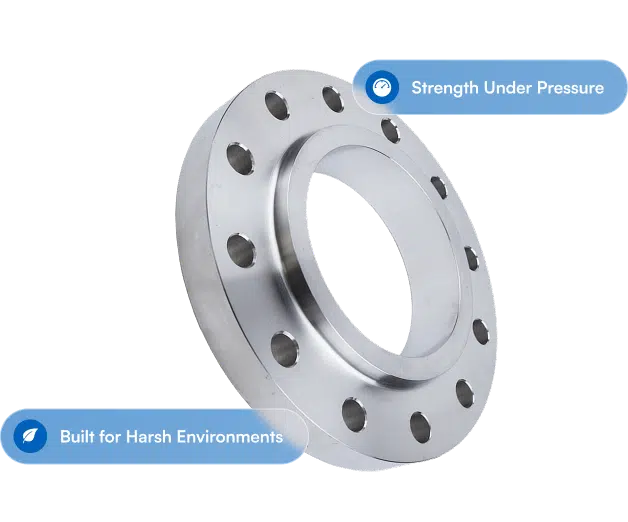
Here’s a story dat plays out more often than anybody in the pipeline business likes to admit: a perfectly good flanged joint corrodes from the inside out, not ’cause the material was wrong or the gasket failed, but ’cause two dissimilar metals got welded and/or bolted together and nobody thought ’bout electrical isolation. Galvanic corrosion is real, it’s expensive, and it’s plumb preventable with the right hardware.
Dat’s where flange insulation kits come in. They electrically isolate one flanged section of pipe from another, breakin’ the galvanic circuit dat drives corrosion. If y’all work with cathodic protection systems, cross-country pipelines, or mixed-metal piping systems, dese kits oughta be somethin’ you’ve already considered for your application.
What a Flange Insulation Kit Actually Is
A flange insulation kit (some folks call it a flange isolation kit) is a set of parts dat fits between two mating flanges to make a complete electrical break across the joint. The kit electrically isolates the bolts, the gasket sealing surface, and the bolt holes so there ain’t no metallic path between the two flanges.
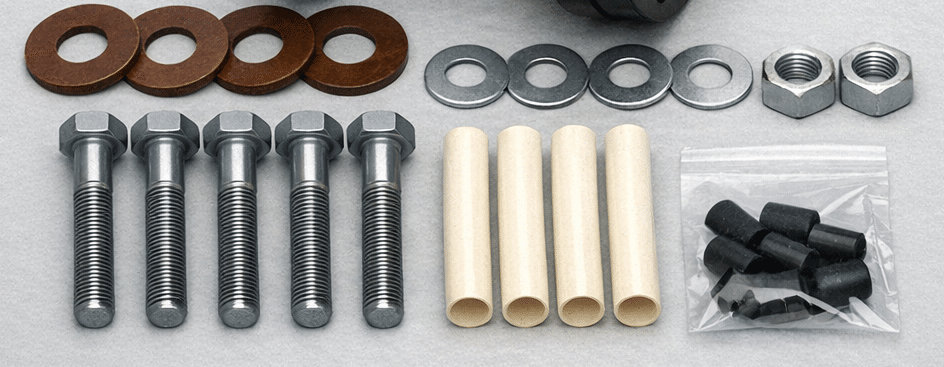
A standard kit comes with four components, I reckon:
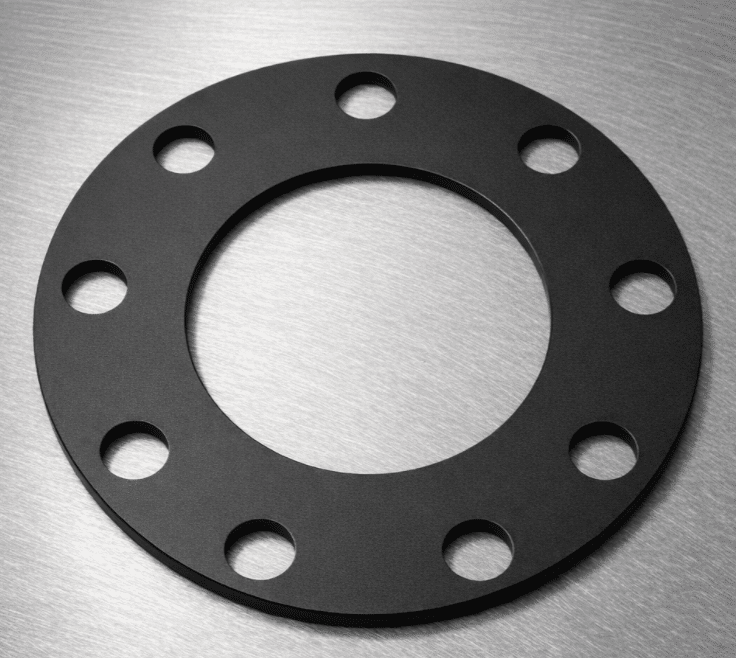
Insulating gasket: The centerpiece of the kit. It seals the flange faces just like a standard gasket but it’s made from non-conductive material. Common types include G-10/G-11 laminate (glass-reinforced epoxy), phenolic, and Type E (a composite of aramid fibers and nitrile binder). The gasket sits between the raised faces and gives you both the seal and the main electrical break.
Insulating sleeves: Full-length sleeves dat slide over each stud bolt or cap screw, keepin’ metal from touchin’ metal between the bolt and the flange bolt holes. Usually made from Mylar (polyester film), G-10 fiberglass, or Nomex, dependin’ on the temperature rating you need.
Insulating washers: Set under each nut (and under the bolt head for cap screws) to keep the fastener hardware from makin’ electrical contact with the flange face. Made from G-10 or similar non-conductive material rated for the service temperature and bolt load.
Steel backing washers (plated): Cadmium or zinc-plated steel washers set between the insulating washer and the nut to spread the bolt load even and protect the insulating washer from damage while y’all are torquin’. Not every kit includes dese, but they’re standard in the higher-quality assemblies.
Why Flange Insulation Matters
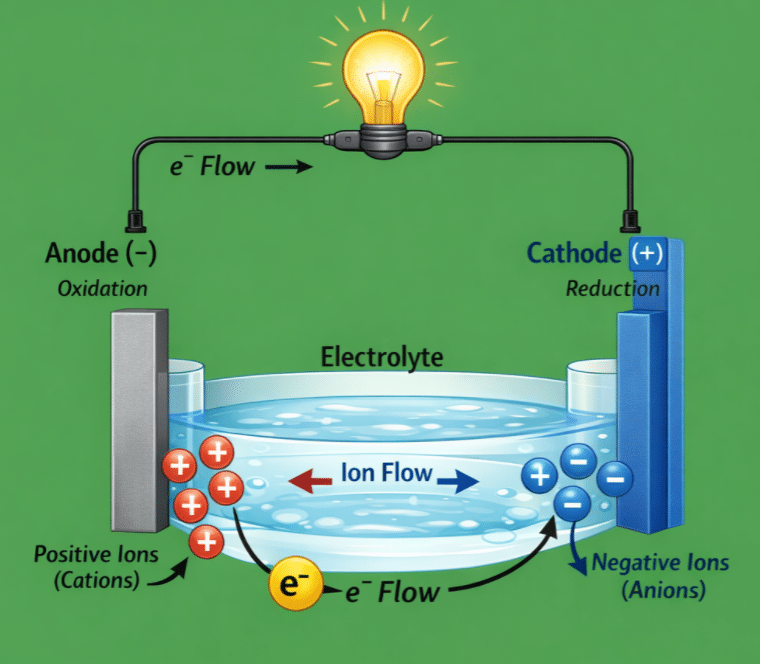
The main reason to put in a flange insulation kit is to stop galvanic corrosion drove by cathodic protection (CP) systems or by dissimilar metals touchin’ each other.
Cathodic protection isolation: Most buried or submerged steel pipelines use cathodic protection to hold off corrosion. CP works by imposin’ a small electrical current dat makes the protected steel a cathode in an electrochemical cell. For CP to work right, the protected section of pipeline needs to be electrically isolated from grounding points, station piping, and other metallic structures. Flange insulation kits make dat isolation at flanged connections, which are natural break points in the system.
Dissimilar metal separation: When carbon steel flanges mate up with stainless steel, copper alloy, or other dissimilar metals, the difference in electrochemical potential drives galvanic corrosion on the less noble metal (usually the carbon steel). An insulatin’ kit breaks the electrical circuit. For more on how dissimilar metals get along in piping systems, check out our post on stainless steel handling, galling, and corrosion prevention.
Stray current protection: In industrial plants and near electrical substations, stray currents can run through piping systems and speed up corrosion at flanged joints. Insulation kits cut off dat path.
Pickin’ the Right Kit: Gasket Types Compared
Now, not all insulatin’ gaskets are created equal. The right pick depends on your pressure class, temperature range, and the fluid in the line.
Insulating Gasket Types Compared
| Gasket Type | Max Temp | Pressure Rating | Best For |
| Type E (Aramid/Nitrile) | 400F | Up to 2500# | General service, oil and gas, water |
| G-10/G-11 (Glass Epoxy) | 285F | Up to 2500# | High dielectric strength, CP isolation |
| Phenolic | 250F | Up to 600# | Low-cost applications, moderate service |
| Type F (PTFE-Based) | 500F | Up to 2500# | Chemical service, high purity, FDA applications |
| Kammprofile with G-10 Core | 750F+ | Up to 2500# | High-temp, high-pressure critical service |
Type E is the gasket folks spec most often for oil and gas work. It handles the full range of ASME B16.5 pressure classes, gives you a good seal on raised face flanges per ASME B16.20, and has solid dielectric properties for CP isolation work, yessir.
For higher temperatures or meaner chemical environments, kammprofile gaskets with insulatin’ cores are gettin’ popular. They put together the sealin’ performance of a metal core gasket with the electrical isolation of a non-conductive layer.
Installation and Testing
Puttin’ in a flange insulation kit is straightforward, but there’s a few things you gotta get right:
Flange face condition matters. The raised face finish needs to be clean and inside the standard surface finish range (125 to 250 AARH per ASME B16.5). Scratches, pittin’, or corrosion on the flange face will spoil both the seal and the insulation integrity, I tell you what.
Sleeve fit is critical. Insulatin’ sleeves gotta run the full length of the bolt hole through both flanges. If the sleeve is too short, the bolt can touch the flange and go right around the insulation altogether. Check dat the sleeve length matches the combined flange thickness plus the gasket.
Test after installation. Use an ohmmeter or megohmmeter to check the electrical isolation across the joint after boltin’ up. A kit put in proper should show megaohm-level resistance between the two flanges. Most CP engineers want a minimum of 1 megaohm across the joint per NACE SP0286 (now AMPP SP21486).
Don’t paint across the joint. Conductive coatings or paint bridgin’ the insulating gasket can short-circuit the isolation. Keep the gap between flange faces clear of anythin’ conductive.
Common Specifications and Standards
Flange insulation kits ain’t got a single dedicated ASME standard, but dey reference and comply with several:
ASME B16.5 governs the flange dimensions the kit must fit. ASME B16.20 covers gasket dimensions for spiral wound and other metallic gaskets (some insulating gaskets follow these dimensions). NACE SP0286 / AMPP SP21486 provides guidelines for electrical isolation of cathodically protected pipelines. ASTM D-149 covers dielectric strength testing of insulating materials. ASTM F-1564 covers gasket performance testing relevant to insulating gaskets.
Kit sizin’ follows standard ASME B16.5 bolt patterns and flange dimensions, so you order by pipe size and pressure class, same as you’d order any flange gasket. Ain’t nothin’ to it.
When Y’all Need a Kit (and When Y’all Don’t)
Flange insulation kits are mandatory at certain spots and optional at others. Required locations typically include: meter stations and custody transfer points on cathodically protected pipelines, transition points between dissimilar metals in any piping system, above-ground to below-ground transition points where CP systems are active, and plant battery limits where piping systems change ownership or protection zones.
Y’all probably don’t need one at every flanged joint in a system. The CP design engineer picks the isolation points based on the cathodic protection design, soil resistivity surveys, and pipeline routin’. Over-isolatin’ can actually chop the pipeline up into sections too small for good CP coverage, so where you put ’em is strategic, I reckon.
Get the Right Kit for Your Application
Flange insulation kits are a small investment dat prevents a mighty expensive problem. Whether you’re buildin’ a new pipeline, retrofittin’ CP on an existin’ system, or separatin’ dissimilar metals in a plant, the right kit gotta match your flange size, pressure class, temperature, and service environment.
Holler at Texas Flange and we’ll get you a source on insulatin’ gaskets and kits in any ASME B16.5 size and class, right quick.
Texas Flange & Fitting Supply | 281-484-8325 | texasflange.com