The “Stainless” Myth
Let’s get one thing straight right off the bat: stainless steel flanges are workhorses, I tell you what. That’s why y’all spec ’em for chemical plants, offshore rigs, food processing, and anywhere else corrosion could turn into a nightmare. But here’s the thing, callin’ it “stainless” don’t mean it’s bulletproof.
We’ve seen it a hundred times. A contractor orders a pretty stainless steel flange, installs it without a second thought, and six months later he’s starin’ at rust stains or, worse, a seized bolt that won’t budge without a cuttin’ torch. The flange didn’t fail. The installation did.
Whether you’re workin’ with a standard metal pipe flange for a water system or a specialized SST flange for a corrosive chemical job, knowin’ how stainless steel really works, and where it can go wrong, will save you time, money, and a whole lotta aggravation. Let’s dig into the two biggest culprits: galling and cross-contamination.
The Nightmare of Galling (Or: Why Your Bolt Just Became Part of the Flange)
If you ever torqued down stainless steel bolts and felt ’em suddenly bind up, freeze, and then snap, well congratulations, you done met galling. And if you ain’t, trust us, you don’t want to.
What Exactly is Galling?
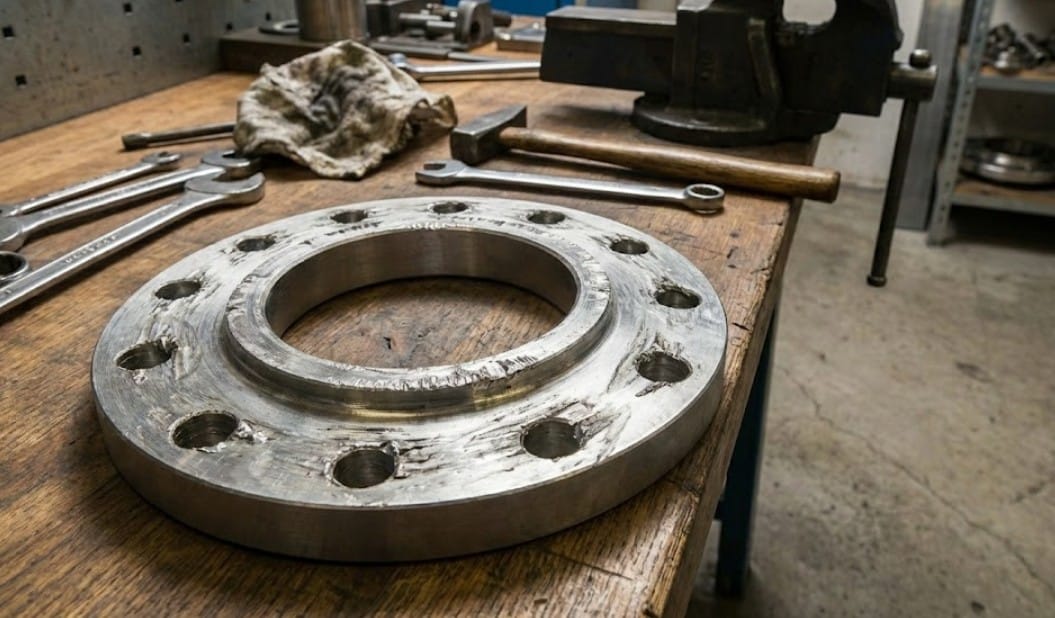
Galling is a kind of cold welding dat happens when two stainless steel surfaces rub together under pressure. The passive layer (we’ll get to dat in a minute) gets scraped off, and the raw metal underneath starts jumpin’ from one surface to the other. Threads lock up, and all of a sudden your wrench won’t turn. Push harder, and the bolt shears off. Now you’re drillin’ out a seized ASTM A193/A194 fastener ’stead of finishin’ the job. Also mighty important to remember: galling risk goes up with higher preload / higher class flanges
This is the number one installation problem we hear ’bout with stainless steel flange pipe connectors. It ain’t a defect in the material, it’s just physics. Stainless steel is softer and more prone to this than carbon steel, ’specially in grades like 304 and 316.
How to Keep Galling from Gettin’ You
The good news? You can just about prevent galling altogether if you follow a few simple rules:
- Use anti-seize lubricant. Always. Nickel-based or copper-based compounds work best. A thin coat on the threads goes a long way, yessir.
- Go slow. Don’t run your bolts down with an impact wrench. Slow, steady torque keeps the heat and thread friction from buildin’ up.
- Use proper torque specs. Over-torquin’ is a fast track to galling. Follow the manufacturer’s torque tables for your flange size and pressure class.
- Match materials careful. If you can, steer clear of stainless-on-stainless contact. Usin’ a different grade for the nut and bolt (like 316 nuts on 304 bolts) can cut down the risk.
Think on it like this: you wouldn’t crank down the lug nuts on your truck without a torque wrench. Same goes when you’re boltin’ up a critical flange connection.
Cross-Contamination: Why is My Stainless Steel Rustin’?
Here’s a question we get all the time: “I bought a stainless steel flange, and now it’s rustin’. Did you sell me the wrong material?”
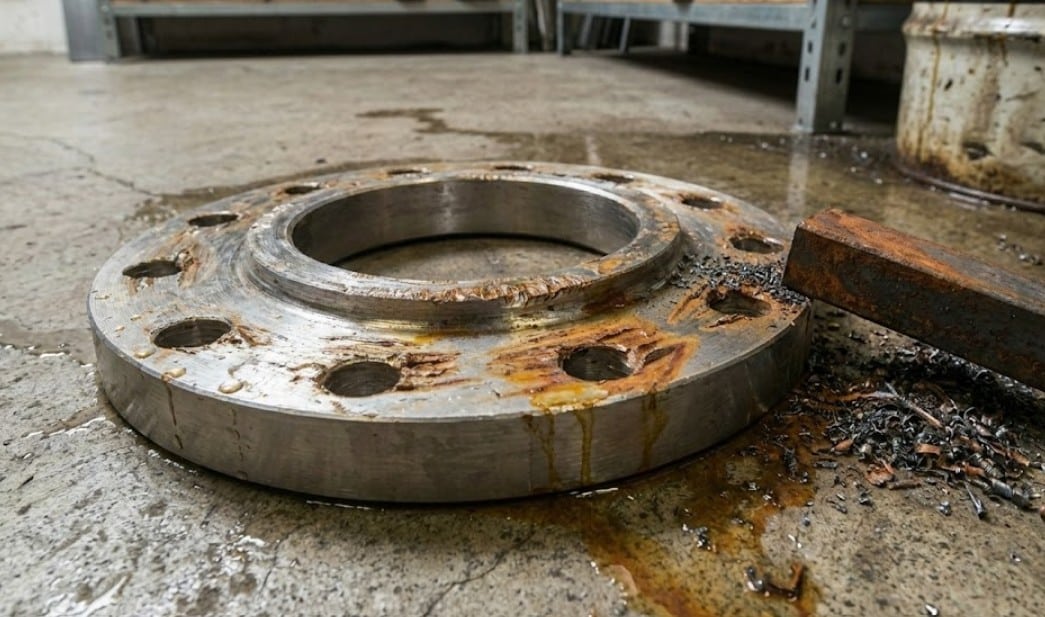
Short answer: No. Long answer: Your stainless ain’t rustin’. The iron particles stuck in it are.
The Iron Particle Problem
Stainless steel don’t rust on its own under normal conditions. But it’ll sure enough show rust if you contaminate it with carbon steel particles. This happens more than y’all would think:
- Wire brushin’ with carbon steel brushes. You clean a weld or prep a surface, and tiny particles get stuck in the stainless. Dem particles rust, and it looks like the whole flange is corrodin’.
- Storage on carbon steel racks. Stack a fresh metal pipe flange on a rusty steel shelf, and you’re askin’ for trouble. Iron rubs off onto the stainless surface and oxidizes.
- Grindin’ or cuttin’ carbon steel nearby. Sparks and grindin’ dust settle on stainless surfaces. Same problem.
The fix? Use brushes and tools made just for stainless steel. Store stainless flanges on wooden pallets, plastic racks, or stainless racks. Keep your work area clean, and keep your carbon steel work separate from your stainless work.
Surface Rust vs. True Corrosion
Not all discoloration is the same. Surface rust from contamination can often be cleaned off with a mild acid wash or stainless steel cleaner. True pitting corrosion, where the base metal is really breakin’ down, is a whole different animal. If you’re seein’ pits or deep corrosion, you got an environment or material selection problem.
The Passive Layer: Stainless Steel’s Secret Weapon
Okay, let’s get a little technical for a minute, but we promise it’s worth it.
What is the Passive Layer?
Stainless steel’s corrosion resistance comes from a thin, invisible layer of chromium oxide that forms on the surface. This passive layer heals itself. Scratch it, and long as there’s oxygen around, it grows right back. Pretty slick, ain’t it?
Dat layer is why a stainless steel flange can sit in a chemical plant for decades without rottin’ out. But it ain’t invincible. Chlorides (like salt water), acids, and stuck iron particles can break it down faster than it can heal.
304 vs. 316: Know Your Grades
- 304 Stainless: Great general-purpose alloy. Good corrosion resistance in most environments, but chlorides will get to it eventually. Don’t use it for seawater or heavy salt exposure.
- 316 Stainless: Contains molybdenum, which makes it a whole lot more resistant to chlorides and acidic environments. This is your go-to for offshore, marine, or chemical work.
If you’re specifyin’ a sst flange for a coastal or high-chloride environment, 316 is worth the extra money. For food processing, pharmaceuticals, or general industrial use, 304 is usually fine.
Passivation: A Factory Finish
Plenty of stainless flanges get passivated at the factory, treated with a mild acid to take off any surface contaminants and build up the passive layer. If you’re weldin’ or machinin’ a flange in the field, you might need to re-passivate it. A citric acid or nitric acid solution does the trick, but follow proper procedures and safety protocols.
What It Means for Flanges: Protectin’ Your Investment
Alright, enough theory. Let’s talk ’bout how this applies to the actual flange pipe connector sittin’ on your jobsite.
Proper Storage
Don’t sell this short. We’ve seen brand-new flanges show up at a site, get tossed in the dirt, and get surface rust inside of days. Here’s how to store ’em right:
- Keep your flanges off the ground. Use pallets, racks, or crates.
- Steer clear of carbon steel contact. That means tools, shelvin’, and other materials too.
- Cover ’em up if they’re gonna sit outside. Rain and humidity won’t hurt stainless, but mix in dirt and contaminants and you’re askin’ for problems.
Even smaller parts like 112 pipe fittings (1-1/2″ fittings) need care. Just ’cause they’re small don’t mean they’re any less prone to contamination.
Boltin’ Techniques for Metal Pipe Flanges
We already covered galling, but it’s worth sayin’ again: proper boltin’ is critical. Here’s a quick checklist:
- Clean the flange faces. Get rid of any dirt, old gasket material, or debris.
- Use new gaskets rated for your service conditions, now.
- Put anti-seize on all your bolt threads.
- Torque in a star pattern so the gasket squeezes down even.
- Don’t go over the recommended torque. More ain’t better.
A flange connection put in right can last decades. A rushed one can fail in months.
Material Certificates (MTRs)
When you order a stainless steel flange from Texas Flange, you oughta get a Material Test Report (MTR) that certifies the grade, heat number, and chemical composition. This ain’t just paperwork, it’s proof you’re gettin’ the material you paid for.
If you’re in a critical application (pressure vessels, chemical processing, food-grade systems), don’t skip this step. Check that the MTR matches your specs, and keep it on file for inspections and audits.
Common Mistakes That Lead to Early Failure
Let’s call out the usual suspects:
- Usin’ the wrong tools. Carbon steel brushes, dirty rags, or grindin’ wheels used on other metals can all bring in contaminants.
- Over-torquin’ fasteners. More torque don’t mean a better seal. It means galled threads and a flange that might warp on you.
- Figurin’ “stainless” means “maintenance-free.” Even the best stainless steel flange needs a lookin’ over and a cleanin’ now and then, ’specially in harsh environments.
- Ignorin’ the environment. If you’re near the ocean, in a chemical plant, or dealin’ with high temperatures, material selection matters. Don’t go cheap on the wrong grade.
We get it, deadlines are tight, budgets are tighter, and sometimes corners get cut. But what a failed flange costs you (downtime, repairs, safety risks) is way more than doin’ it right the first time.
Conclusion: A Little Care Goes a Long Way, friend
Stainless steel is some kinda material. It’s tough, versatile, and corrosion-resistant. But it ain’t magic, and it ain’t indestructible. Galling, cross-contamination, and environmental exposure can all cut short the life of even the best metal pipe flange if you ain’t careful.
The good news? Just about all of these problems can be prevented with proper handlin’, installation, and maintenance. Use the right lubricants. Keep your tools and storage areas clean. Follow torque specs. Pick the right grade for your job. Do dem things, and your stainless steel flange will perform just like it’s supposed to, for years, if not decades.
At the end of the day, we want your project to come out right. Whether you’re puttin’ in a single flange pipe connector or outfittin’ a whole facility with sst flanges, a little know-how and a little care make all the difference.
Ready to Spec the Right Flange?
Whether you need help pickin’ the right grade of stainless steel flange, findin’ specific sizes like 112 pipe fittings, or just want to talk through your job with somebody who knows the material inside and out, Texas Flange is right here to help.
We stock a whole mess of metal pipe flanges in 304, 316, and specialty alloys. Every flange ships with full material traceability and certifications. And if y’all got questions, ’bout galling, passivation, torque specs, or anything else, our team is just a phone call away.
Holler at Texas Flange today. Let’s make sure your next installation gets done right the first time.