ASME B16.47 Flanges Explained: Series A vs. Series B
If you’re workin' with large-diameter piping that runs anything above 24 inches, well, ASME B16.5 ain't your main standard no more. That’s where ASME B16.47 takes over, I tell you what. And once you’re down in B16.47 flange country, you got a choice to make: Series A or Series B.
We get dis question all the time, y'all. The short answer is they’re not interchangeable, they come from different legacy standards, and pickin' the wrong one can cause you some mighty real problems on an installation. Here’s what you actually need to know.
What Is ASME B16.47?
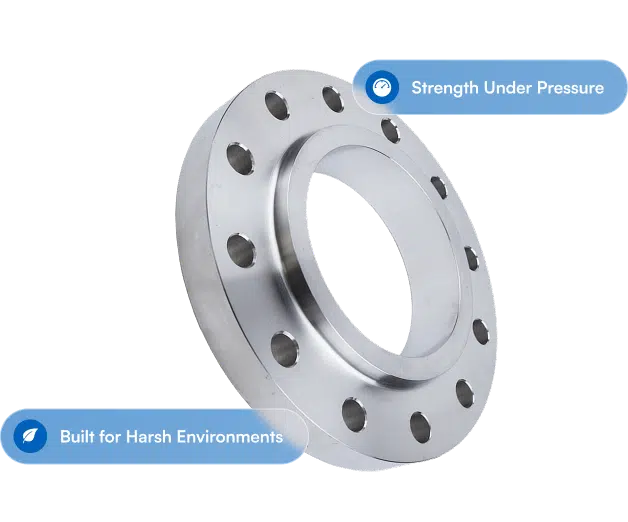
ASME B16.47 is the standard coverin' large-diameter steel pipe flanges, specifically weld neck flanges and blind flanges in sizes 26″ through 60″. It covers pressure classes 75, 150, 300, 400, 600, and 900, and its materials line up with ASME B16.5 (with the exception of nickel alloys), so the same pressure-temperature tables generally apply.
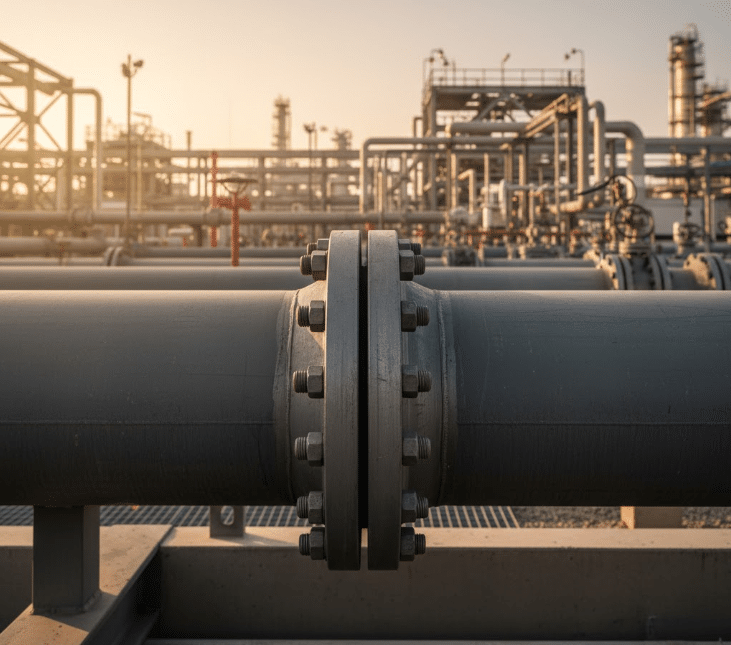
The reason B16.47 exists is plain as day: once you get past NPS 24″, the dimensions in B16.5 just don’t stretch far enough, 'cause the committee never designed 'em that way. Large-diameter piping in pipelines, petrochemical plants, power generation facilities, and water infrastructure needs its own dimensional standard, and that’s ASME/ANSI B16.47.
What sets B16.47 apart from most other flange standards is dat it’s split into two categories, Series A and Series B, each with its own dimensional requirements, bolt counts, and design philosophies.
Series A: The Heavier-Duty Option
ASME B16.47 Series A flanges trace their lineage back to MSS SP-44, a standard developed by the Manufacturers Standardization Society. If you’ve ever worked with big ol' “MSS SP-44 flanges,” dem are now called ASME B16.47 Series A. Same reference dimensions, just an updated name. See our B16.47 Series A dimensions.
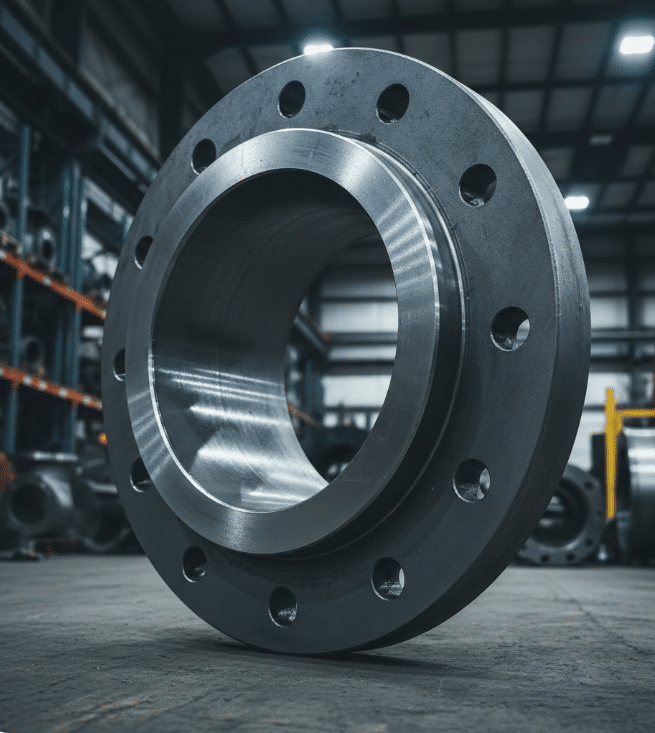
Series A flanges are built heavy, y’all. They got a bigger outside diameter and use fewer bolt holes than their Series B cousins at the same size and pressure class. That bigger OD and bolt circle, along with bigger individual bolts, makes Series A the pick for jobs with higher external loadin' demands — times when the flange assembly gotta handle not just internal pressure but also bendin' moments, thermal stress, and the weight of big-bore pipe. When folks default to one or the other, Series A is the industry standard.
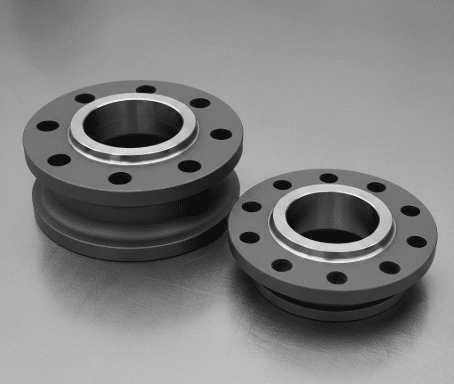
Series A also covers more face types. Ring-type joint (RTJ) flanges are defined under Series A from Class 300 through Class 900. If your project spec calls for RTJ in large-diameter service, Series A is where you’re workin'.
Where Series A flanges are commonly specified:
- New pipeline construction, 'specially in oil and gas transmission
- High-pressure or high-temperature process piping where external loading is a consideration and body weight matters
- Applications that have historically used MSS SP-44 and are keepin' dimensional continuity, including high yield material reference grades
- Projects requiring RTJ face type in large diameters for optimal sealing
Series B: The Leaner, More Bolt-Dense Option
ASME B16.47 Series B flanges come from API 605, the American Petroleum Institute standard for large-diameter carbon steel flanges. Just like Series A, the designation's since been folded into B16.47 — “API 605 flanges” and “B16.47 Series B” mean the very same dimensions. See our B16.47 Series B dimensions.
Series B flanges are lighter dimensionally than Series A, and some of the old hands call 'em “compact flanges.” They got a smaller outside diameter and a smaller bolt circle, but they make up for it by usin' more bolts at a smaller size. More fasteners, sittin' closer together, spread around a tighter circle. What you get is less flange rotation after installation and a stiffer bolted joint, which matters mighty much in systems where gasket creep and joint relaxation are worryin' you.
The tradeoff is dat Series B don’t support RTJ face types within the B16.47 standard, and it ain’t necessarily rated for the same level of external loadin' as Series A. For jobs where the main worry is internal pressure instead of outside forces, dat’s often a fair trade for a lighter, cheaper flange.
Series B also includes Class 75, a pressure class you won't find in Series A, which comes in handy for certain lower-pressure large-diameter jobs. It’s a popular pick for vacuum applications where the weight of an assembly is a big concern.
Where Series B flanges are commonly specified:
- Refurbishment and replacement work on existing systems originally built to API 605
- Large-diameter piping systems where external loads are manageable and internal pressure performance is the priority
- Applications requiring Class 75 pressure rating
- Projects where the smaller bolt circle cuts down flange movement after installation
Series A vs. Series B: The Key Differences at a Glance
| Series A (MSS SP-44) | Series B (API 605) | |
| Legacy standard | MSS SP-44 | API 605 |
| Outside diameter | Larger | Smaller |
| Bolt count | Fewer, larger bolts | More, smaller bolts |
| Bolt circle diameter | Larger | Smaller |
| RTJ face type | Supported (Class 300–900) | Not covered |
| Class 75 available | No | Yes |
| Flange weight | Heavier | Lighter |
| External load rating | Higher | Lower |
| Typical use | New construction, high external loading | Replacement/retrofit, internal pressure focus |
| Cost | Generally higher | Generally lower |
So Which One Do You Need?
The simplest rule is dis: follow the project spec. Even though Series A is more common, if your engineerin' documents call out “ASME B16.47 Series A” or “Series B,” well, dat’s your answer. Series A and Series B flanges are not interchangeable — the bolt patterns are different, the outside diameters are different, and matin' one to the other in a bolted joint ain't gonna work without modifications. For the most common case, see Series A Class 150 dimensions.
If you’re pickin' a series for new design work, here's what usually decides it:
External loading. If your large-bore line takes significant bendin' moments, equipment nozzles, compressor inlets, or thermal expansion, Series A’s heavier build handles dem loads better, I reckon.
System continuity. Replacement or maintenance work on an existing line oughta match whatever series was put in originally. Mixin' series in the same bolted joint ain't an option, no sir.
Face type requirements. If the job calls for ring-type joint facin', you need Series A, plain and simple.
Weight and cost constraints. If your job is mostly pressure-driven with manageable external loads, Series B gives you a lighter, more economical flange that still meets ASME B16.47 requirements.
When in doubt, talk to your piping engineer before you order. Large-diameter flanges ain’t small-dollar items, and gettin' the series wrong means startin' over with new material.
A Note on Flange Types Within B16.47
ASME B16.47 covers weld neck flanges and blind flanges. Dat’s it. If your project needs slip-on flanges or other configurations in large diameters, you’re technically outside of B16.47 and lookin' at other standards such as B16.1 for cast iron, or custom-designed flanges per process requirements. Large diameter slip-ons do exist in our catalog to an “industry standardized design” but outside of ASME code, so your engineer's gonna have to sign off on usin' it for your applications. For large-diameter weld neck and blind flange dimensions and weights across Series A and Series B pressure classes, we got full dimensional data right dere on our website, plus templates for you to use to design your own custom flanges.
The Bottom Line
ASME B16.47 exists just for large-diameter jobs that outgrow B16.5, and the Series A vs. Series B split shows two different engineerin' philosophies that grew up side by side before gettin' folded into one standard. Series A is built heavier with more capacity for external loadin'; Series B is leaner, more bolt-dense, and more often used for replacement work on legacy API 605 systems.
Both series follow ASME B16.47, both are good under the same pressure-temperature ratings, and neither one is categorically “better” — the right answer depends entirely on what your project spec, your piping engineer, and the existing system call for.
If you’re workin' through a large-diameter flange requirement and need a hand confirmin' the right series, pressure class, or dimensional data, holler at the Texas Flange team. We’ve been workin' through dese specifications since 1986 and we can get you to the right answer before material ever hits your dock.