In the high-stakes world of industrial pipin', pickin' the right flange ain't just about linin' up bolt holes. It's about keepin' your whole system leak-free and happy. Here at Texas Flange, we're all about givin' y'all the know-how to build on solid, precise foundations.
This here guide zeros in on the MVP of sealin' solutions, yessir: the Raised Face (RF) flange. It's the go-to for most process plants, friend.
1. Why Raised Face Flanges Rule the Roost
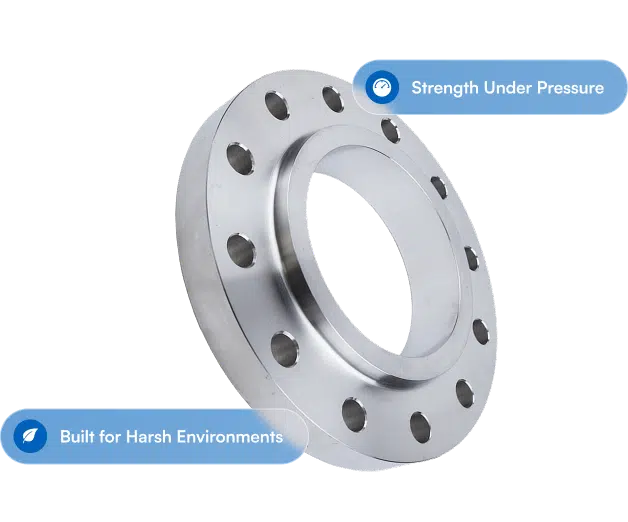
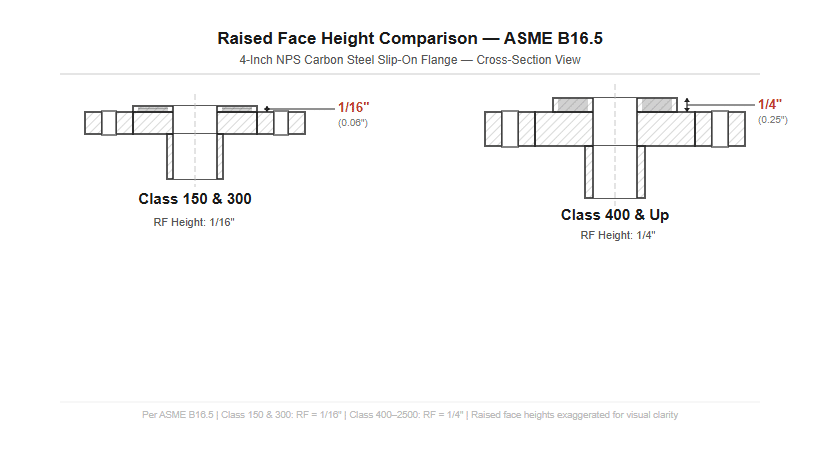
The Raised Face flange earns its name honest, the gasket seatin' surface sits a little proud (raised) above the boltin' circle. That small elevation is pure engineerin' genius, I tell you what.
How It Stops Leaks Like a Boss: By concentratin' bolt force onto a smaller gasket area, the RF design cranks up the sealin' pressure, givin' you a tighter, more reliable joint that holds strong even when things get rough.
- Gasket Superpower: Works with a whole mess of 'em, from flat-ring sheets to spiral-wound and double-jacketed metallic gaskets.
- Serrated Surface Finish: Most RF flanges come with a stock serrated finish (typically 125-250 µin Ra), where them little grooves "bite" into the gasket for grip that fights blowouts and holds up long-term.
2. Pressure Classes: What They Really Mean
ASME B16.5 lays out the pressure classes that say how much a flange can handle at different temps. Ratings ain't fixed, they drop as the heat climbs.
Common Classes at a Glance:
- Class 150: Low-pressure champs for water, HVAC, fire protection, think everyday utilities.
- Class 300 & 400: Solid for moderate industrial and light chemical work.
- Class 600-2500: Big ol' thick-walled beasts built for oil & gas, power gen, high-pressure steam, the extreme stuff.
Quick reality check: A carbon steel Class 150 might rate ~285 psi at room temp but drops to around 80 psi at 800°F. Always check the full PvT tables for your material and conditions, y'all.
3. Material Match-Up: Carbon Steel vs. Stainless Steel
Your flange material is make-or-break for corrosion resistance, strength, and how long it lasts, oh yeah.
Carbon Steel Flanges (e.g., ASTM A105)
- Tough as nails with plenty of load-bearin' muscle.
- Easy on the wallet for non-corrosive, heavy-duty jobs.
- Watch out: Rusts easy, so it often needs galvanizin' or epoxy coatin' outdoors or in wet spots.
Stainless Steel Flanges (e.g., 304/L, 316/L)
- Chromium magic makes a passive oxide layer for mighty fine corrosion resistance, perfect for marine, chemicals, food, or pharma.
- Handles wild temperature swings without breakin' a sweat.
- Hygienic superstar: Top pick where contamination can’t happen.
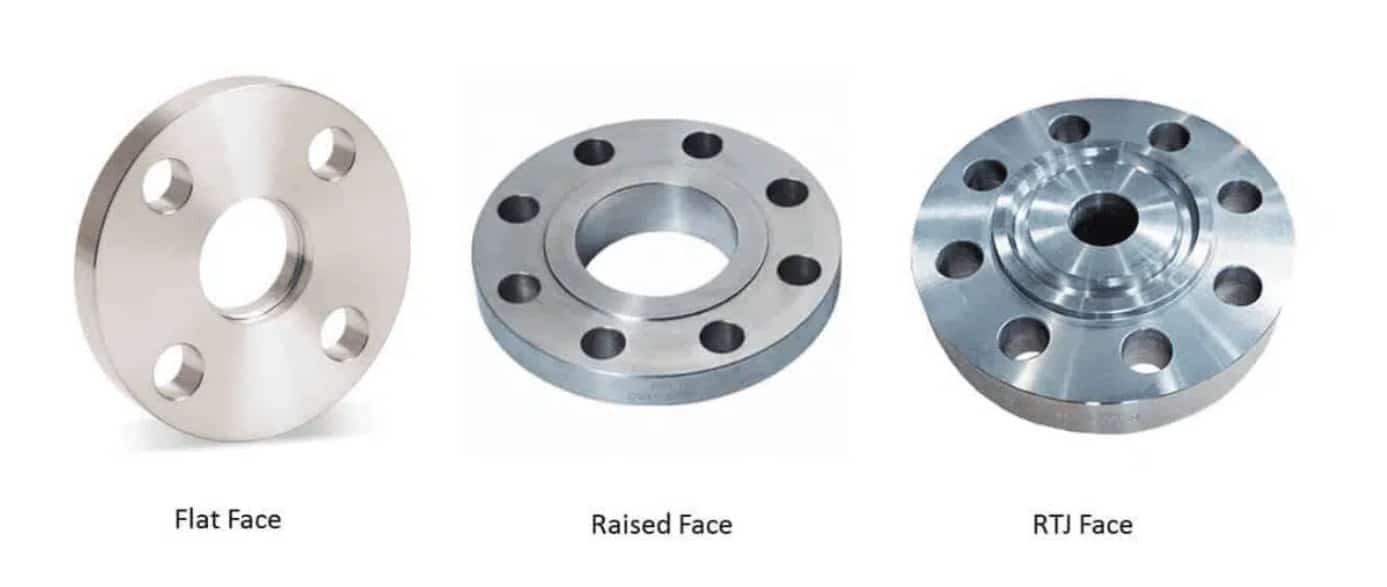
4. Raised Face vs. Flat Face: Quick Cheat Sheet
Mixin' these up can lead to trouble, so know when to use which.
Raised Face vs. Flat Face — ASME B16.5
|
Feature |
Raised Face (RF) |
Flat Face (FF) |
|
Sealing Surface |
Elevated ring (1/16″ for Cl. 150/300, 1/4″ higher classes) |
Flush with bolt circle |
|
Pressure/Temp Suitability |
Medium to high |
Low pressure & temperature |
|
Common Mates |
Steel, stainless, alloys |
Cast iron, ductile iron, plastics |
|
Key Advantage |
Concentrated seal pressure for better hold |
Even pressure distribution prevents cracking brittle parts |
|
Gasket Type |
Ring gaskets (inside bolt circle) |
Full-face gaskets (with matching bolt holes) |
Per ASME B16.5
Safety Must-Know: Never bolt an RF flange to a Flat Face cast iron (or similar brittle) flange. That raised “gap” makes uneven loadin' when torqued – hello, cracks and potential disaster.
The Texas Flange Promise
We get it: Every flange, bolt, and gasket is a critical link in your operation. That’s why we keep massive inventories of ASME B16.5 and B16.47 compliant flanges in multiple face types in every material and class you could need.
Got questions or need a quote? Holler at us and the Texas Flange team… we’re right here and happy to geek out on your project specifics.
Bonus: How to Pick the Right Pressure Class We break down the temperature-pressure relationship per ASME B16.5 in our guide to ASME B16.5 pressure ratings, video included.
Your pipin' system deserves the right fit, and let’s make sure it gets one, y'all.