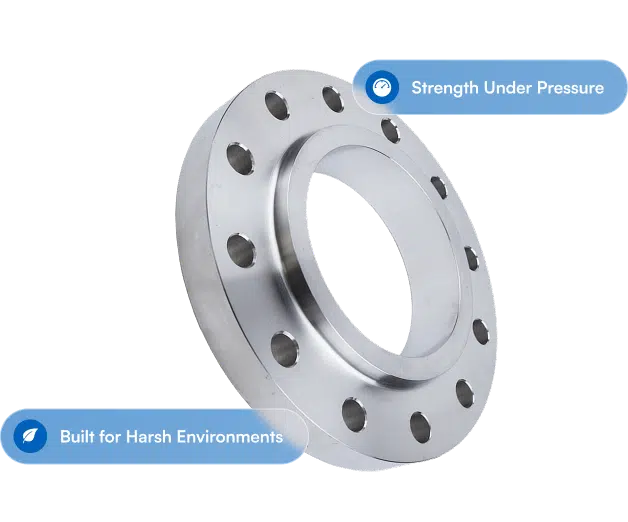
Now, Slip-On vs. Weld Neck flanges are built special for piping systems, and they give you a dependable way to hook up pipes, valves, and other equipment. Out of all the types there is, Slip-On and Weld Neck are two of the most common ones y'all'll run across.
Each one got its own good points and its own jobs, so I tell you what, it's mighty important to pick the right one for what you're doin'.
Understandin' slip-on flanges
Slip-On flanges got their name from the way they “slip” right over the pipe before you weld 'em. Most folks weld 'em inside and outside so they sit good and tight. They're easy to put in, and they're usually used in low-pressure work where you need to get 'em assembled right quick.
Good things about slip-on flanges
- Ease of installation: That simple design makes Slip-On flanges easier and faster to put in than other flange types, I reckon.
- Lower initial cost: Most of the time, Slip-On flanges cost less than Weld Neck flanges 'cause they're simpler and use less material.
- Versatility: Dese flanges work in a whole mess of jobs, like water supply, HVAC, and low-pressure pipelines
Not-so-good things about slip-on flanges
- Less structural integrity: 'Cause they're welded on the outside instead of bein' part of the pipe, they ain't as strong as Weld Neck flanges.
- Limited pressure handling: Slip-On flanges work best in low to moderate pressure, and they might not be the right pick where the stress is high.
- Higher risk of leakage: That double-welding can leave a couple weak spots, so dese flanges can be more likely to leak over time.
Understandin' weld neck flanges
Weld Neck flanges, some folks call 'em WN flanges, got a long, tapered hub that makes a smooth transition between the flange and the pipe. That design spreads the stress out even, which makes 'em mighty fine for high-pressure and high-temperature work.
Good things about weld neck flanges
- Superior strength and durability: That tapered hub spreads the load out better and cuts down on stress concentration, so dese flanges hold up real tough.
- Excellent pressure and temperature resistance: Weld Neck flanges can take extreme conditions, so they're a good fit for oil and gas, power plants, and chemical processing.
- Reduced risk of leaks: That full penetration weld makes a stronger connection and cuts the chance of leaks down the road.
Not-so-good things
- Higher initial cost: With the sturdy design and the extra material, Weld Neck flanges generally cost more than Slip-On flanges.
- More complex installation: Gettin' the weldin' and alignment right takes skilled hands, and that means more installin' time and more cost.
- Space considerations: That long hub takes up more room, which can be a pinch in tight installations.of weld neck flanges
Key differences between slip-on and weld neck flanges
| Feature | Slip-On flange | Weld Neck flange |
| Installation Ease | Easy | Requires skilled welding |
| Cost | Lower | Higher |
| Strength | Moderate | High |
| Pressure Handling | Low to Medium | High |
| Leak Resistance | Moderate | Excellent |
| Applications | Water supply, HVAC, low-pressure pipelines | Oil & gas, high-pressure pipelines, chemical plants |
How to choose between Slip-On vs. Weld Neck flanges
When you're pickin' out the right flange type, y'all want to think on these things:
- Operating pressure and temperature: If your system runs under high pressure or extreme temperatures, Weld Neck flanges are the better pick on account of their superior strength.
- Budget constraints: If cost is a big worry and the system runs at lower pressures, Slip-On flanges might save you some money.
- Long-term durability: If you need a connection that lasts and stays dependable, Weld Neck flanges give you better longevity.
- Installation requirements: If you need a quick, no-fuss installation, Slip-On flanges are easier to work with.
Which flange should you choose?
Both Slip-On and Weld Neck flanges got their place in industrial work, and the best pick depends on what you need. If you want a cost-effective answer for low-pressure systems, Slip-On flanges might be the way to go.
But for high-pressure and high-temperature jobs where toughness and leak resistance come first, Weld Neck flanges are the better choice, no two ways about it.
Find high-quality flanges at Texas Flange
When it comes to high-quality flanges, Texas Flange is a partner y'all can trust. We got decades of experience makin' dependable, long-lastin' flanges, and we carry a whole mess of Slip-On and Weld Neck flanges to fit just about any job. Holler at us today to learn more about what we make and find the perfect flange for what you need!
FAQ’s
What is the difference between Slip-On and Weld Neck Flanges?
Y'all, the main difference between Slip-On and Weld Neck flanges is how they're built and how they hook up to the pipe. Slip-On flanges slide right over the pipe and get welded inside and outside for a snug fit. That makes 'em easier and quicker to put in, but they ain't near as strong as a Weld Neck flange.
Weld Neck flanges, now, got a long tapered neck that gets welded straight to the pipe, and that gives you a stronger, tougher connection, 'specially in high-pressure or high-temperature work.
When should I use a Slip-On flange instead of a Weld Neck flange?
Slip-On flanges mostly get used in low-pressure work, or where cost and easy installin' matter most. They're just right when you need to cut down on weldin' time and material cost.
Weld Neck flanges get used when strength, toughness, and handlin' higher pressures and temperatures are what count. Folks pick 'em for critical jobs in petrochemical, oil, and gas, where you need a good, leak-proof connection.