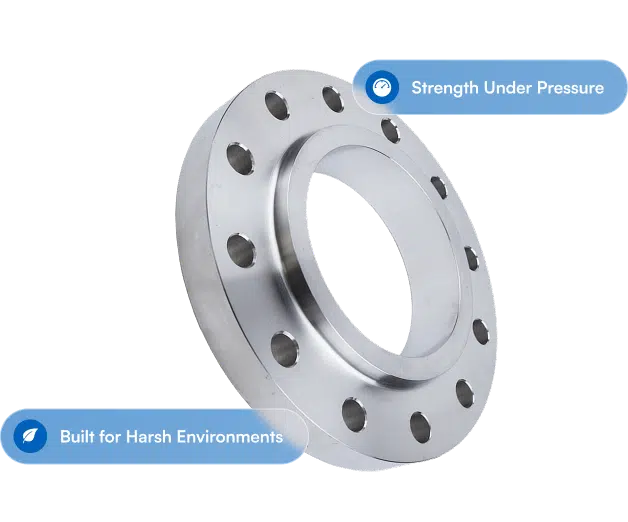
Flange face types tell y'all the shape of a flange's surface right where it meets up with a gasket and another flange or fitting.
How the flange face is set up is mighty important for gettin' a solid, leak-proof seal in your piping system. Which flange face type y'all pick depends on a few things, like pressure, temperature, and what kind of fluid you're movin'.
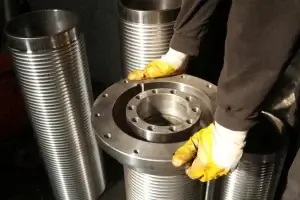
Here's the standard flange face types, y'all:
- Raised face (RF): Dis one's got a slightly raised ring around the bore, givin' you a focused sealing surface. Y'all can find raised face height and flange thickness by size in our Class 150 dimension tables.
- Flat face (FF): The flange's surface sits completely level, so you get full contact with the gasket.
- Ring-type joint (RTJ): Dis one's got a recessed groove to hold a metal ring gasket, which makes it mighty good for high-pressure work. Have a look at our RTJ face dimensions and flange tolerances.
- Tongue and groove (T&G): Got matchin' raised and recessed surfaces dat line up together.
- Male and female (M&F): Looks a lot like T&G, but it's different in size and what it's used for.
Every type of flange face and gasket design got its own job to do, built to meet the different demands of all kinds of piping systems. Pickin' one depends a whole lot on the operatin' pressure, the temperature, what kind of fluid's bein' moved, and how bad y'all need to keep leaks from happenin'.
Engineers take a careful look at all dat to make sure the flange face and gasket combination they pick will give a reliable, long-lastin', safe seal. Pickin' right is critical for keepin' the system sound, stoppin' leaks, and gettin' the best performance out of industrial, chemical, and processin' plants.
So I tell you what, the right choice matters a whole lot for the whole piping system to run right.
What's a raised face (RF) flange?
A Raised Face (RF) flange has a slightly raised area around the bore, usually 1/16 inch (1.6 mm) for pressure classes 150 and 300, and 1/4 inch (6.4 mm) for higher classes. Dat raised surface puts the pressure right on the gasket, which makes the seal work better, yessir.
Where y'all use 'em:
- Oil & gas industry flanges: Folks pick dese a lot because dey can stand up to high pressures and temperatures.
- Petrochemical flanges: Just right for processin' facilities where keepin' the system leak-free is a must.
- Power plant industries flanges: Fit for systems handlin' high-pressure steam and water.
Gaskets dat suit it:
- Gaskets made by windin' a spiral of alternatin' metal and filler materials.
- Gaskets with a metal outer casing wrapped around a softer sealin' material inside.
- Gaskets with a metal core and raised cam-shaped profiles for a better seal.
Dese gaskets are made to take the concentrated pressure from the raised face, so y'all get a seal you can count on.
What's a flat face (FF) flange?
A Flat Face (FF) flange has an even sealing surface dat makes full contact with the gasket. Folks usually use dis design where the other flange or part is made of brittle stuff like cast iron, which can get damaged by the concentrated pressure of a raised face.
Where y'all use 'em:
- Waterworks flanges: Common in water treatment and distribution systems.
- Fire protection systems: Used in sprinkler and hydrant installations.
- HVAC systems: Good for heatin', ventilation, and air conditionin' work.
Gaskets dat work with it:
- Gaskets dat cover the whole face and are made from soft materials like rubber or non-asbestos fiber.
Dese gaskets cover the entire face of the flange, spreadin' the pressure out evenly and keepin' the flange or connected parts from gettin' damaged.
How Raised Face and Flat Face Flanges Stack Up
| Feature | Raised face flange (RF) | Flat face flange (FF) |
| Pressure handling | Suitable for high-pressure applications | Suitable for low-pressure applications |
| Gasket compatibility | Compatible with various gasket types, including metallic and semi-metallic | Typically used with full-face soft gaskets |
| Surface finish | Raised area with a specific finish to enhance sealing | Entire face is flat, requiring full-face gasket |
| Applications | Oil & gas, petrochemical, power plants | Waterworks, HVAC, fire protection systems |
Whether y'all go with RF or FF flanges depends on what your piping system needs, like the pressure, the temperature, and the materials involved.
When Y'all Should Use a Raised Face Flange
Raised Face flanges are the pick for systems with high pressure and temperature. Dey work with different pipe classes, like Class 150, 300, and higher, as set by ASME standards. The design handles a whole mess of gasket types, so y'all got plenty of sealing options.
Rules of thumb:
- Use 'em where keepin' leaks from happenin' is critical.
- Fit for jobs with hazardous or corrosive fluids.
- Mighty good for connections y'all gotta take apart and put back together a lot.
When Y'all Should Pick a Flat Face Flange
Flat Face flanges are mighty good for systems with brittle materials like cast iron, where a raised face could cause damage from uneven pressure. Dey also cost less and are simpler to install, so dey suit the less demandin' jobs.
Why y'all'd want one:
- Keeps brittle materials from gettin' overstressed.
- Easy on the pocketbook for low-pressure systems.
- Makes alignment and installation easier.
Where y'all see 'em:
- Municipal water systems.
- Fire protection piping.
- HVAC installations.
Gaskets and Bolt Torque, Y'all Gotta Get 'Em Right
Pickin' the right gasket and puttin' on the correct bolt torque are absolutely essential for gettin' a reliable, leak-free flange connection in any piping system, I tell you what.
The gasket material and design gotta match the system's operatin' conditions, like pressure, temperature, and the chemical properties of the fluid bein' moved. A wrong gasket can fail early, leadin' to leaks and maybe some dangerous situations.
Just as important is makin' sure the bolts are tightened to the manufacturer's recommended torque specification. Under-torquin' can leave you with a poor seal, while over-torquin' might crush or damage the gasket and ruin it.
When y'all strike the right balance between gasket selection and bolt torque, the flange connection holds its seal under all operatin' conditions, givin' you safety, reliability, and top performance all through the system's life.
Torque things to think about:
- Raised face flanges: Y'all need accurate torque to compress the gasket right without causin' damage.
- Flat face flanges: Torque's gotta be spread out evenly so the flange don't warp or crack, especially with brittle materials.
Best practices:
- Proper gasket compression takes precise torque to keep from damagin' anything.
- Follow the manufacturer-recommended torque specifications.
- Make sure the flanges are lined up right before y'all tighten them bolts.
- Look over the gaskets and flanges for damage before y'all install.
Pickin' the right flange face type is essential for the integrity and efficiency of a piping system, yessir. Raised Face flanges suit high-pressure, high-temperature work, and dey give y'all flexibility with different gasket types.
Flat Face flanges are mighty good for low-pressure systems and connections with brittle materials, givin' y'all a simple solution dat's easy on the wallet. Need help pickin' the right flange? Holler at our experts at Texas Flange today!