Flange O’Clock: Episode 2
Come on and join our host John Barnett while he explains and shows y'all what pipe flange pressure classes are, and what sets each class apart per ASME B16.5: 150#, 300#, 400#, 600#, 900#, 1500# and 2500#.
We thank y'all for watchin' and hope you found our video mighty helpful! If there’s anything else you’d like to know, leave a comment and we’ll get you an answer right quick!
In dis episode of flange o’clock, we’re fixin' to go over pipe flange pressure classes.
Right here in front of me I got one-inch raised face slip-on flanges. All three of dese are 1 inch raised face flanges per B16.5. B16.5 covers class 150, class 300, class 400, class 600, class 900, class 1500, and finally class 2500, which y'all can get up to 12-inch. ASME B16.5 is the standard for pipe flanges from half inch to 24-inch nominal pipe size. B16.47 for 60-inch Series A and Series B got different pressure classes, and we'll run through dem in another video.
Dem Different Pressure Classes for Flanges
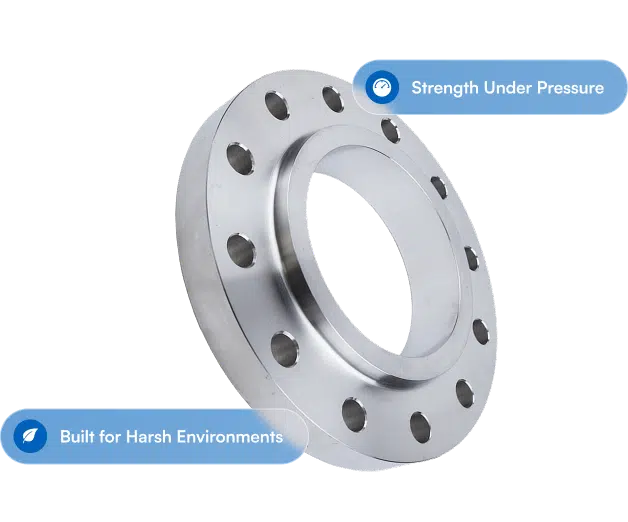
The difference between dese three flanges is the pressure class, I tell you what! Dis one's a class 150, dis one's a class 300, and dis one's a class 600. The differences are in the dimensions, all except the bore! See, it's a one inch pipe dat fits in each one of dem flanges. So tellin' me it’s a one inch 4 bolt flange just ain't enough information. Now, you can see dat 1 inch 150 and 1 inch 300 got raised faces of a 1/16th inch. Compare dat to the 1/4 inch raised face height on the class 600. You can find dese dimensions on pages 3 through 12 of the Texas Flange catalog.
Dem Higher Flange Pressure Classes
Typically speakin', higher pressure classes gonna be heavier flanges. Now, there's a couple exceptions to dat. In class 400, small sizes up to three and a half inch nominal inclusive are identical to class 600 flanges. Likewise, class 900 flanges are identical to class 1500 flanges in all respects for half inch to the two and a half inch inclusive. So in dis case, all three of dese flanges got four bolt holes. Dat ain't enough to describe a flange completely, no sir. You can see the bolting chart on page 14 of our catalog. A 3 inch 150# flange has four bolt holes. Whereas a 3 inch 300# flange has eight bolt holes.
As we move from one pressure class to another we see dey get heavier, and yes, common sense says dey'll be rated for a higher pressure, but the 600 class, for instance, ain't a 600 psi maximum service. When we say 150#, or 300#, or 600#, we’re talkin' about a class, not a maximum working pressure. I got here the A105 pressure temperature chart. So in the case of a 200 degree fahrenheit application, a class 150 flange would be good for 260 psig working pressure. In the case of a 600# flange at 400 degrees, your working pressure would be 1265 psig. Specifyin' the pressure class will help us make sure we get you the flanges you need when you need 'em!
Holler at us today, call or email!
If y'all still need help decidin' which is better for your project, pipeline, or job, go on and call (281-484-8325) or e-mail the Texas Flange sales office anytime from 8 am to 5 pm Monday through Friday, and we'll take care of you.
You can also drop a quick question or inquiry in our quick contact form, easy as pie.
With our decades of know-how, we can help you get the flanges you need, yessir!
If you’d like to learn more about flange specifications, types, uses and more, come on and peruse our informational blog posts, free 3-D and CAD drawings, Class 150 flange dimensions, or Class 300 flange dimensions.