Introduction
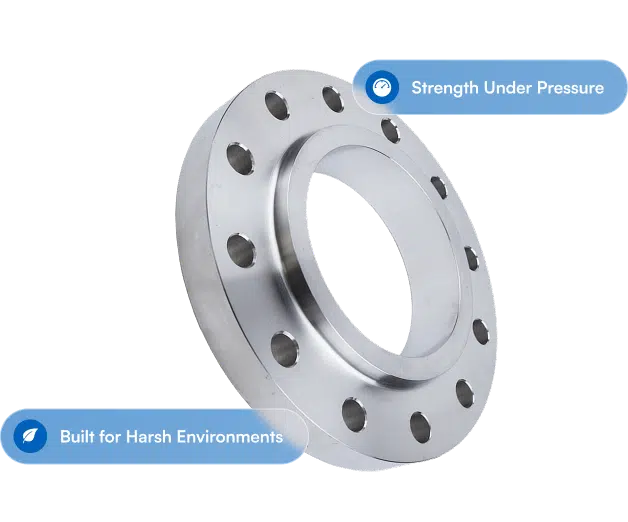
Now in industrial piping systems, failure don’t always come knockin' with a brass band. It starts at the weakest link in your assembly, often at a weld neck flange connection that looked mighty secure until pressure, temperature, or plain old time showed otherwise. Procurement folks spend a heap of attention pickin' the right pipe flange for the job, but the truth is a little trickier: a reliable connection ain’t just about the flange itself. Y'all got to look at the whole assembly, matchin' the right flange type with fasteners and sealin' materials that get along.
This here post walks through the critical pieces of a secure flange assembly, from knowin' when to specify a weld neck versus a companion flange, to pickin' hardware and gaskets that won’t put your system’s integrity at risk. Whether y'all are specifyin' parts for new construction or sourcin' replacements for existin' infrastructure, I reckon understandin' how these pieces fit together can save you costly failures and unplanned downtime.
The Core Foundation: Pickin' the Right Pipe Flange Type
First thing in any flange assembly is choosin' the right flange configuration for your particular job. Now dozens of flange types exist across the various standards, but two of 'em rule the higher pressure industrial piping systems: the weld neck flange and the companion flange. Knowin' when to use each one is the foundation of a reliable connection, I tell you what.
The Weld Neck Flange: Built for Stress
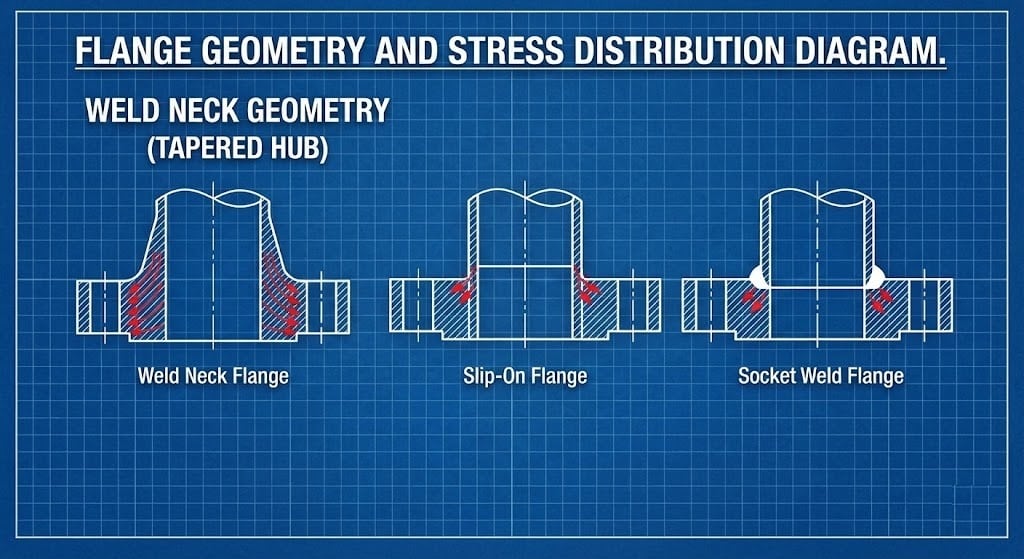
The weld neck flange is the gold standard for high-pressure and critical service work. What sets it apart is a long, tapered hub that eases on down from the pipe wall thickness to the flange end. That shape ain’t just for lookin' pretty; it does a mighty important structural job by movin' stress concentration away from the base of the flange and spreadin' it into the whole body of the flange above it.
When y'all butt-weld a weld neck flange to your piping, you’re makin' a reinforced connection that can stand up to serious bending moments, fatigue cycling, and pressure spikes. That tapered hub works like a stress intensification buffer, so this design is right at home in jobs like:
- High-pressure steam systems
- Critical process lines where a failure would mean a safety incident
- Thermal cycling spots where expansion and contraction keep on stressin' things over and over
- High-temperature service above 400°F
The trade-off for all that performance is cost and a more complicated installation. Weld neck flanges often run more than slip on styles of a similar pressure class, and they need skilled welders and often a required radiographic inspection. But where reliability ain’t up for negotiation, that investment pays you back in operational uptime.
The Companion Flange: Versatility in Connection
The term companion flange confuses a lot of folks 'cause it describes what the flange does, not a particular structural design. A companion flange is simply any flange used to mate up with equipment nozzles, valve bodies, pump casings, or other flanged connections. These flanges can be slip-on, threaded, or even weld neck designs, dependin' on what the job calls for. As a general rule, when folks in the PVF world say companion flange, they usually mean a threaded style connection (NPT, BSPT, etc)
Where companion flanges really shine is hookin' up to equipment. When y'all connect piping to a centrifugal pump with a flanged discharge, you’re usin' a companion flange, plain and simple. Boltin' up to a control valve can count as a companion flange job too. The big thing is matchin' the pressure class, facing type, and bolt circle diameter to the equipment you’re hookin' to.
Threaded companion flanges are mighty handy in smaller diameter work (usually 2 inches and below) where welding costs get out of hand next to the size of the pipe. They let y'all assemble in the field without a hot work permit, and you can take 'em apart for maintenance a lot easier than welded connections. Still, they’re generally limited to somewhat lower pressure service and jobs without much vibration, and weld neck styles will always be considered the better ones.
The Hardware That Holds It Together: Flange Bolts and Nuts
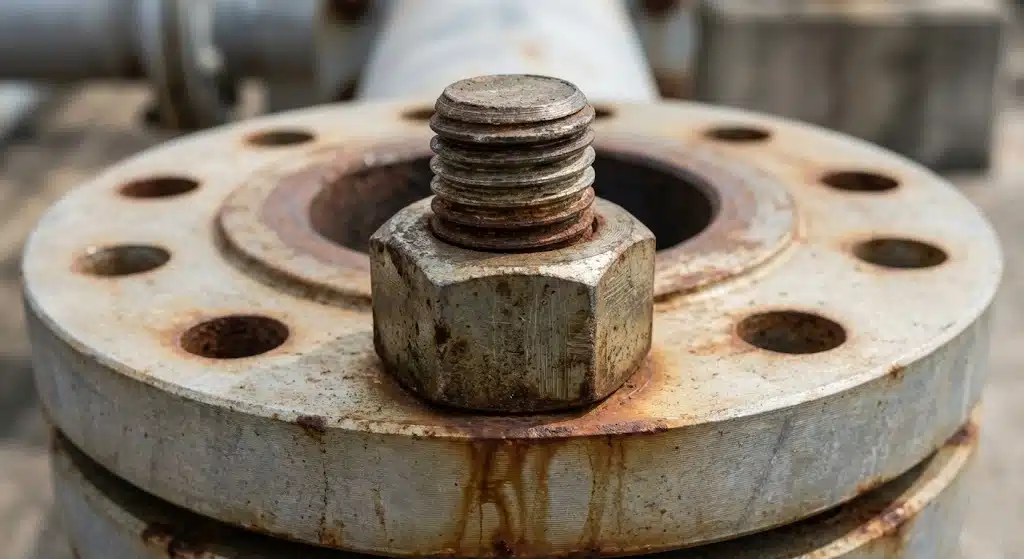
Once y’all have picked the right flange configuration, hardware selection gets mighty important, yet folks treat it like an afterthought in procurement all the time. That oversight can cost you dearly. A flange assembly is only as strong as its weakest part, and mismatched or under-specified hardware is a common failure point in industrial piping systems.
The main rule in hardware selection is material compatibility and grade matchin'. Your flange bolt and its flange nut have to meet or beat the mechanical properties the flange’s pressure rating calls for. For a Class 600 flange assembly, for example, y'all typically need ASTM A193 Grade B7 bolts with A194 Grade 2H heavy hex nuts. Droppin' down to commercial-grade fasteners to save a few dollars a connection is false economy, and it puts risk all through your system. Cuttin' corners might be fine by you when pressure class don't matter, but if a vessel is rated for ASME service, you stick to the standard for a reason.
Material compatibility goes past just strength ratings. When y'all specify stainless steel flanges, you got to use stainless steel fasteners to head off galvanic corrosion. In marine or chemical processing environments, that matters even more. The electrochemical reaction between dissimilar metals speeds up corrosion and can wreck bolt integrity in months instead of years.
Temperature service dictates your hardware too. High-temperature jobs need fasteners built to hold their clampin' force while they’re goin' through thermal cycling. Standard alloy carbon steel bolts can relax at high temperatures, slowly losin' the preload needed to keep a leak-free seal. In that case a set of nickel alloy or Cr-Mo hardware would be a better fit.
Buyin' your flange bolts as part of a complete assembly package means these compatibility issues get handled right up front, not left to chance or to a bunch of vendors pointin' fingers when trouble comes.
The Critical Seal: Don’t Overlook the Flange Gasket
Between your precisely machined flange faces and your carefully torqued bolts sits the part that actually stops the leakin': the flange gasket. Even though it’s usually the cheapest piece in a flange assembly, gettin' the gasket right carries a whole lot of weight in whether your connection stays leak-free for its whole service life.
Gasket material has to account for the particular media flowin' through your piping system. A gasket that works fine in water service can fall apart in a few hours when it meets concentrated acids or organic solvents. Temperature extremes add another wrinkle, materials that stay pliable at ambient temperature can go brittle and crack in cryogenic service, while others break down or lose their sealin' properties at high temperatures.
Common gasket materials include:
- Compressed non-asbestos fiber for general purpose water, air, and mild chemical service
- Spiral wound with graphite filler for high-temperature and pressure applications often up to 1500°F
- PTFE for aggressive chemical resistance where temperatures stay below 400°F
- Metal ring joints for extreme pressure services in oil and gas applications, which include somewhat more pliable soft iron, as well as more robust nickel alloys
The flange gasket also got to match the flange facing type. Raised face flanges need different gasket designs than ring-type joint or flat-face configurations. Usin' a full-face gasket on a raised face flange, for example, can end in gasket blowout as bolt torque crushes that unsupported gasket material out past the raised face perimeter.
Flange surface finish matters to gasket performance as well. Surface roughness has to land inside the specified range. Too smooth and the gasket won’t seat right; too rough and it won’t conform to the surface irregularities. That’s why buyin' gaskets matched to your specific flange specification gets you compatibility that generic gaskets from general industrial suppliers just can’t promise.
Special Applications: Industrial Exhaust Flanges
Industrial exhaust systems throw some unique challenges at y'all that set 'em apart from standard process piping. When you’re dealin' with exhaust from large generators, industrial boilers, or heavy manufacturin' equipment, you’re managin' high-volume gas flow at elevated temperatures that can go past 1000°F. Them conditions call for specialized flange assemblies made for thermal stress and expansion.
An exhaust flange in industrial work has to handle a heap of thermal cycling as equipment starts up and shuts down. The temperature difference between operatin' and ambient conditions makes expansion and contraction that would wear out standard flange connections right quick. Exhaust flanges typically build in features like extended bolt circles or slip-joint configurations that allow controlled movement without hurtin' the seal.
Pickin' the exhaust pipe flange gasket gets mighty critical in these high-heat industrial jobs. Standard compressed fiber gaskets that do fine in lower-temperature service will carbonize and fail quick when they meet exhaust temperatures. Industrial exhaust applications typically need specialized high-temperature gaskets of various material:
- Graphite sheet gaskets for temperatures up to 1500°F in non-oxidizing environments
- Ceramic fiber gaskets where temperatures go past what graphite can handle
- Metal reinforced graphite for applications with pressure pulsation
These industrial exhaust systems ain't nothin' like automotive applications in scale and how hard the service is. Where an automotive exhaust flange might see a temperature spike now and again on the highway, an industrial generator exhaust runs at sustained high temperatures for long run times, often 24/7 in critical power applications. The component specifications and material grades got to reflect them mighty different service conditions.
Gettin' the hardware right for exhaust flanges also takes attention to thermal expansion coefficients and high-temperature strength retention. Fasteners got to hold enough clampin' force across the whole temperature range without gallin' durin' assembly or seizin' up when y'all take 'em apart for maintenance.
Sourcin' Complete Assemblies: The Value of Integrated Procurement
All that complexity I laid out is why buyin' flange assemblies as matched component sets beats piecemeal buyin' from a bunch of vendors by a country mile. When y'all source a weld neck flange from one supplier, hardware from another, and gaskets from a third, you take on the engineerin' responsibility for makin' sure every part works together right.
A complete assembly approach means:
- Material compatibility is verified systematically
- Pressure and temperature ratings are matched across all components
- Bolt length accounts for flange thickness, gasket compression, and required thread engagement
- Gasket dimensions precisely match flange facing geometry
- Documentation packages include material certifications for all components
This integrated approach also keeps your inventory management simple and cuts down on procurement transaction costs. Instead of runnin' a mess of purchase orders and keepin' up with several vendors for one connection, y'all deal with a single source that takes responsibility for how the whole assembly performs.
When a system failure does happen, havin' one vendor responsible for the whole assembly ends the finger-pointin' that goes on when parts come from several sources. That accountability matters when downtime costs thousands of dollars an hour and you need a quick fix, not vendors arguin' over whose part quit first. It is mighty important to get in touch with a reputable source for your material requirements.
Conclusion: Partner with Expertise for Critical Connections
Industrial piping systems need more than individual parts, they need matched assemblies engineered for your particular job. Whether y'all are specifyin' weld neck flanges for a high-pressure steam system or companion flanges for equipment connections, the hardware and sealin' materials got to be picked with the same care as the flanges themselves.
Ready to specify your next flange assembly?
Holler at our sales team with your requests, includin' piping specifications, pressure ratings, and service conditions beyond just your flange selections. We’ll get y'all a full quote for weld neck or companion flanges paired with the hardware you need based on your material requirements. Contact us today and we'll get your quote goin' right quick.