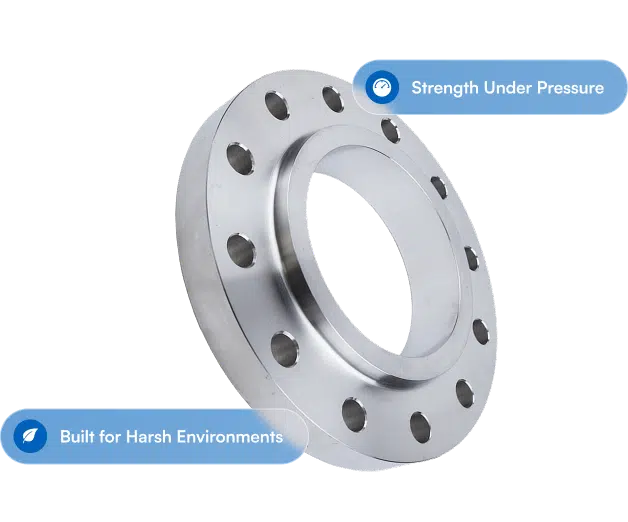
Now, a flange gasket is a mechanical seal; y'all set it between two flanges to keep liquid or gas from leakin' out. Dem gaskets can be made from all kinds of stuff like rubber, cork, fiber, or metal, and they come in just about any shape and size you can reckon.
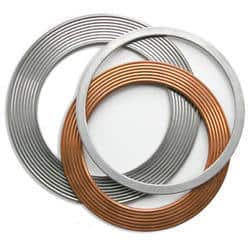 Dem different flange gasket types and where folks use 'em:
Full-face gasket
- Covers the whole face of the flange, every bit of it.
- Comes with bolt holes lined up just right with the flange, yessir.
Ring-type gasket
- Dis one's made to sit inside the bolt circle of a flange.
- Folks make 'em outta metals like stainless steel or carbon steel.
Spiral wound gasket
- It's metal windin' with filler stuff like graphite tucked in between the windings.
- Mighty good for high-pressure and high-temperature work.
Kamm profile gasket
- It's got a serrated metal core with a soft material, like graphite or PTFE, set on either side.
- Y'all use it in high-temperature and high-pressure work.
Jacketed gasket
- It's got a metal casin' wrapped around a soft filler like graphite or PTFE.
- You'll see 'em a lot in heat exchangers and other jobs with high temperatures and pressures.
Corrugated metal gasket
- Made from a thin metal sheet, corrugated or folded up to make a seal.
- Used in high-pressure and high-temperature work, I tell you what.
Rubber gasket
- Rubber gaskets, dey use elastomeric materials and rubber.
- Y'all use 'em in low-pressure work.
Pickin' the Right Flange Gasket- What Y'all Oughta Know
When y'all are pickin' out a flange gasket, dem piping engineers gotta figure on four big things. Dat's the type of fluid, the temperature and pressure of the process, the fugitive emissions laws, and a few other things that matter.
Let's wade right into each one of dem factors:
Fluid Type
Gettin' the right gasket for a pipeline depends on what kinda fluid's gonna be runnin' through it. Y'all can use different gasket materials for different fluids so your flanged joint holds up for a good long while.
Now, sealin' gases is a mite trickier than sealin' liquids, and some fluids get meaner when dey get hotter, I reckon.
So pick a gasket material dat can stand up to the corrosive bite of your system fluid and keep its physical properties.
Process Temperature and Pressure
When y'all are pickin' the proper gasket material, keep in mind the workin' temperature and pressure of the pipeline. So the material's gotta be able to survive the most extreme temperature-pressure scenario in the process (high temperatures for hot jobs, low temperatures for cold ones).
Plus, the gasket can't go creepin' on y'all when it's under the max pressure in the system, which usually is the test pressure and can run more than twice the rating at ambient temperature.
The Flange Load
Every gasket material's gotta feel enough flange pressure to squeeze it down good. It also helps keep the gasket from bustin' and keeps dat seal tight.
Dat flange pressure needs to spread out even, what dey call the “y” factor. But when she's runnin', the most force usually lands near the bolts, and the least is between two bolts, ain't dat somethin'.
So flange designers gotta keep dat in mind when dey're makin' their design decisions.
Flange Gasket Diameter and thickness
The size of a gasket’s outer Diameter plays a mighty big part in how much pressure it can stand; the bigger it is, the more it can handle. But y'all oughta look at the thickness of a gasket too when pickin' the material. Generally,
the thinner the gasket, the more compressive stress it can take, though it'll need a nicer surface finish on dem flange faces. For the best performance, the gasket oughta be four times thicker than the maximum roughness of the faces.
Where y'all got vibrations goin' on, it's smart to go with a thicker gasket than what you first figured you needed.
Gasket Surface Finish
Surface finish is mighty important for makin' a good physical barrier between two flanges. The finish can be machined or pressed right onto the gasket.
It's got grooves or channels in it. If the finish is too fine or too shallow, it won't have the grip it needs to hold together.
A finish dat's too deep makes it hard to get a seal on account of too much bolt load on big flanges.
Stress Relaxation
Dis measures how tough a material stays over a stretch of time, usually shown as a drop in percent per unit of time.
Any gasket material can wear down from the pressure, I tell you what, but the remainin' strain oughta hold steady after dat first relaxation spell.
Fugitive Emissions Laws
When y'all are pickin' a gasket for a process, you gotta think on the fugitive emission laws of the country.
Stricter fugitive emissions rules can end up changin' what type of flange and gasket y'all oughta use on your process's flanged joints.
General Things To Think On When Pickin' A Flange Gasket
-
Pipeline Oscillation and Vibration:
A gasket's expected to stand up to any oscillations and vibrations dat could shake up the pipeline.
-
Fluid Contamination Risk
Sometimes gaskets come in mighty handy. When y'all use 'em right, dey don't taint the fluid travelin' through the pipeline. Dat matters in industrial sectors like food, pharmaceuticals, and gas.
-
Flanges Corrosion
Pickin' the right gasket type and material is a must. Y'all oughta remember dat some flange materials, like austenitic stainless steel, can be prone to stress corrosion crackin'.
-
Integrity
It's essential to keep from hurtin' folks or pollutin' the soil, and toxic fluids need seals dat are completely leak-proof. So y'all gotta go with tighter, stronger gaskets, yessir.
For instance, on dem kinda jobs, y'all can go with a spiral wound gasket with an outer ring instead of non-asbestos gaskets.
-
Financial Risk
Pickin' the wrong gaskets can cost y'all big money, even though dey're cheap next to the other piping materials. Buyin' cheaper gaskets to save a few dollars can be a mighty risky move.
It puts the contractor in a pinch, who may face penalties, and the end-user too. So think hard on what a gasket failure could cost y'all before you make your pick.
Conclusion
Gaskets don't cost much when y'all are buildin' a piping system, but dey're mighty important for keepin' it trustworthy and good quality. So scrimpin' on gaskets can bring y'all a world of trouble down the road, and y'all oughta take care when pickin' 'em for any job.