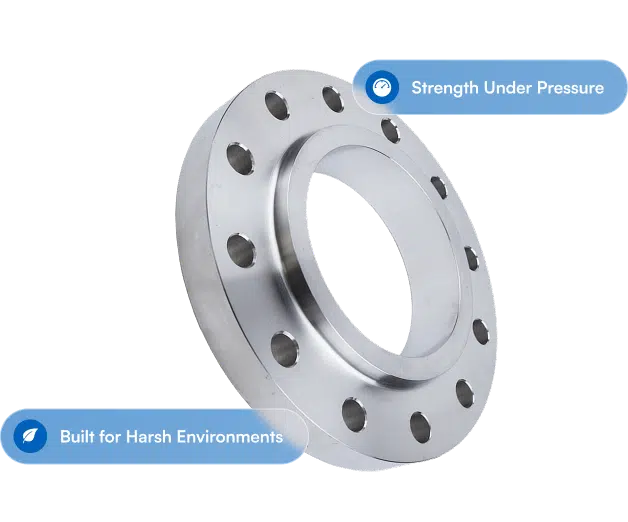
Knowin' how to calculate blind flange thickness is mighty critical for designin' safe and efficient pipin' systems. A blind flange gives y'all a secure, customer-focused closure for pipelines, stoppin' leaks and makin' sure your system holds up under pressure. By understandin' what affects that thickness, applyin' the proper standards, and avoidin' common mistakes, engineers will make sure things stay safe, reliable, and up to code in all applications.
What in the World Is a Blind Flange?
What It Is and What It Does
A blind flange is a solid disc without no central bore, used to completely seal off the end of a pipe or pressure vessel openin'. Its main job is to stop fluid or gas from flowin' while givin' you a durable and reliable stoppin' point.
Where Folks Commonly Use 'Em
Y'all will commonly see blind flanges used in industries like:
- Oil and gas
- Chemical processin'
- Water treatment plants
- Industrial systems that need temporary or permanent closures
They're also mighty essential when you're transitionin' from DIN or ANSI to ASME standards, by designin' your own dimensions and checkin' with an engineer to run them calculations. Come explore the full range of Blind Flanges for large and small orders alike.
Things That Affect Flange Thickness
Operatin' Pressure
The internal pressure of a pipeline tells you how thick it needs to be. Higher pressures are gonna need flanges with a whole lot more strength so they don't bend out of shape.
How Temperature Affects It
When things get hot, it saps the strength right out of the material, which means you gotta bump up that flange thickness to keep the system safe.
Pickin' the Material
The type of material directly changes how thick it needs to be. Carbon steel, stainless steel, and alloy steels all got different allowable stress values accordin' to them ASME/ANSI standards.
Flange Diameter
The pipe diameter messes with your bendin' stress. Only blind flanges that are thick enough will keep from bendin' when you get up to them larger diameters.
Gasket Type and Bolt Load
The type of gasket and your bolt pattern change how the force spreads across the flange face. For ring joints, make sure your calculations reference the ring joint face flange.
Understandin' these factors is mighty key when you're learnin' how to calculate blind flange thickness accurately.
ASME Guidelines for Blind Flange Thickness
Design Standards
ASME BPVC Section VIII, Division 1 gives y'all the primary standards for calculatin' blind flange thickness. These standards make sure your flanges can take the design pressure without failin' on you.
Thinkin' on Material and Dimensions
Always verify your material's allowable stress and flange dimensions accordin' to your specifications. In cases where ASME/ANSI standards don't apply, cast flanges can be designed usin' the same rigorous approach. Go on and review the ASME Flanges section for some technical guidance.
Followin' these standards is essential for engineers who want to master how to calculate blind flange thickness the right way.
Step-by-Step Calculation Method
Step 1: Figure Out Design Pressure and Temperature
Figure out the maximum operatin' pressure and temperature your flange is gonna see.
Step 2: Find the Material Allowable Stress
Use them ASME standards tables to find the allowable stress for the material y'all picked.
Step 3: Measure the Internal Diameter
Measure the pipe or vessel openin' right where that blind flange is gonna be installed.
Step 4: Apply the ASME Formula
Apply that ASME formula, keepin' in mind the pressure, diameter, and material stress. This makes sure the flange thickness meets all your safety and performance requirements.
Step 5: Add a Little Extra for Corrosion
Include a corrosion allowance to make sure it lasts a good long while under operatin' conditions.
This method guarantees that your blind flange is gonna meet all them customer-focused design requirements and perform reliably when it's put to work.
Example Calculation
The Setup
Let's say y'all got a carbon steel blind flange with:
- Design pressure: 300 psi
- Operatin' temperature: 400°F
- Flange diameter: 12 inches
What Y'all Get
Usin' ASME standards and thinkin' on the pressure, temperature, and material properties, the required blind flange thickness comes out to approximately 1.75 inches. This makes sure it performs reliably while stayin' compliant with industry standards. Followin' these steps shows y'all got a proper understandin' of how to calculate blind flange thickness for any system.
Common Mistakes Y'all Oughta Avoid
Gettin' a Slip-On Instead of a Socket Weld
Make sure you pick the right flange type. Mixin' up a blind flange with a slip-on or socket weld flange can cause your whole system to fail.
Ignorin' How Hot It Gets
Material strength drops when the temperature goes up, which is gonna compromise that flange if you ignore it.
Forgettin' the Corrosion Allowance
Always add a little extra thickness for corrosion, 'specially when you're workin' with chemical or water systems.
Usin' the Wrong Material Properties
Verify them allowable stress values usin' ASME tables so you don't end up under-designin' it.
Relyin' Only on Nominal Thickness
Just usin' nominal thickness can cause it to underperform; the actual thickness gotta comply with your design calculations.
Skippin' the Professional Check
Always validate your calculations with an engineer to make sure you're compliant with them ASME/ANSI standards.
🔧 Ready to Specify Your Blind Flange with Confidence?
Masterin' how to calculate blind flange thickness is mighty essential for safety, durability, and efficiency in pipin' systems. By thinkin' on the pressure, temperature, material, diameter, and bolt load—and strictly followin' them ASME/ANSI standards—y'all can ensure reliable performance for large and small orders alike. For some expert guidance, technical resources, or to talk over your specifications, come visit Texas Flange or holler at our team at Contact Us.