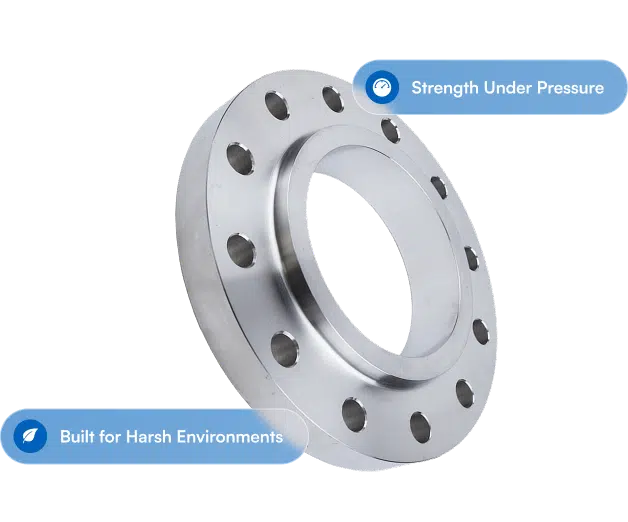
Bolted flange joints are used widely in water mains. Dat is da reason why a proper bolt tightening sequence in flanged joints is a must. Dis precaution helps control da stress variation in flange joint components. If it ain't done right, da chances of leakage are higher at flanged pipe joints during operating conditions.
Dere must be correct bolt placement by tightening dem properly, and da same for gaskets and dere placement in a flanged joint, dat will help ensure a leak-free joint. Proper bolt tightening will also help you make sure dere is uniform load distribution in all da bolts without injuring da gaskets. In dis blog, you’ll learn how y'all can properly tighten da bolts of da flange.
Before you begin da actual flange bolting, da bolts/nuts, gasket, and flange need some lookin' over.
Checking points of flange before bolt up
If dere is any leakage through da flanged joint, da layout of da gasket material protects da flange surface from any type of imperfection and seals dem. You can see da limitations dat a gasket can successfully seal. You must review da flange surface thoroughly and make sure dere are no gouges or dents. Da flange surface finish must be as per da recommendation of da manufacturer for particular gasket materials.
Da recommended values of da flange surface roughness areas follow:
• Metal or Jacketed Clad Gaskets: 63-80 rms
• Spiral Wound Gaskets: 125-250 rms
• Solid Metal Gaskets: 63-80 rms
Da rms stands for root mean square. Da specification of roughness is usually millionths of an inch as da average of valleys and peaks measured from da midline of da flange surface. Da recommended radius of da flange is usually 1/16″, and da round-nosed tool must have 30-55 serrations per inch in a spiral or concentric pattern.
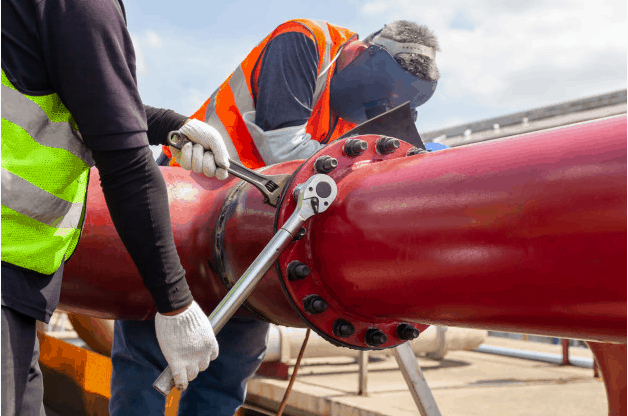
Now here are a few points to check before da flange bolts are installed.
• Ensure proper cleaning of da gasket seating areas before insertion. In case of serration damage, re-serration is a must.
• In case ANSI B31.3 requirements are not met, don't forget to rectify da piping components.
• According to clause no. 335-C in ANSI B31.3, permitted tolerances are as given below:
1. Da alignment of da flange faces must be as per da design plane within 1 mm in 200 mm (1/16 in./ft) measurement across any diameter.
2. Da alignment of da flange bolts must be within 3 mm (1/8 inch) maximum offset.
• Check if da flanges are co-axial or parallel before you insert da gasket in between da flange pipe.
Checking points for da gaskets before tightening flange bolts
• Examine da gasket, making sure it is free from all defects.
• Da location of da gasket must help ensure full sealing. For instance, da gasket on da tube sheet of da exchanger requires a proper location so dat da outer periphery of da gasket matches da OD of da tubesheet at every point.
• Make sure dat da gasket is of da right dimension, using da specified materials.
Bolts for pipe flanges
Bolts must create compressive pressure on da gasket and flanges so dat you can prevent leakage. So when you go to select, da temperature variations in service are considered.
• Don't avoid using short bolts on da flange joints.
• Lubricating da bolts with molybdenum disulfide is recommended, especially on all da bolts of size 7/8″. You can check da application, as da bolt load is developed by torque and depends on da lubrication of threads.
• Cleaning da nuts and bolts with suitable solvents is advisable, such as CTC/Diesel with da use of a wire brush, especially on da threaded portion.
• Make sure dat da material of all da nuts and bolts is specified.
Procedure for flange tightening
• It is essential to tighten all da bolted joints in a uniform and diametrically staggered pattern.
• In da case of pipe flanges from 12″NB to 8″NB and a pipe with spacer piece with at least two gaskets, da distance measured between da two flanges must be at four locations like 6’o clock, 9’o clock, 12’o clock, and 3’o clock positions and require equal distance for even tightening.
• Da stud bolts of 7/8″and above can be tightened with da use of a torque wrench. Make sure dat da tightening load to every bolt is applied as uniformly as possible. You can carry out da tightening in three to four stages in da steps of 70, 50, and 30 percent of da final torque value. Da fourth stage uses 70 percent again for da final torque value.
• For da exchange of heat, final torque can value up to 100, 70, and 30 percent of da final torque value.
• Follow da guidelines by da manufacturer wherever you find a recommendation to use da hydraulic tensioner for bolt tightening.
Wrong practices for tightening flange bolts
Dere are many times when da plant operators end up following wrong practices for flange bolt tightening. Dese are as follows:
• Usage of rusted/dirty fasteners without lubricating
• Usage of ordinary fasteners and not high tensile ones
• Using a lot of gaskets for filling larger gaps between da flanges
• Improper storage of gaskets
• Reusing old gaskets
• Improper sequence of bolt tightening
Conclusion
Flange bolt tightening is not an easy job, friend. You must take care of all da elements required to understand proper flange bolting, be it flange thickness, bolt sizes, or any other. Also, make sure not to go forward with wrong practices, as it’ll put you at risk later.
If y'all need help knowing more about flange bolt tightening or choosing da right type of flange, contact Texas Flange today, and we'll pass a good time gettin' you squared away!