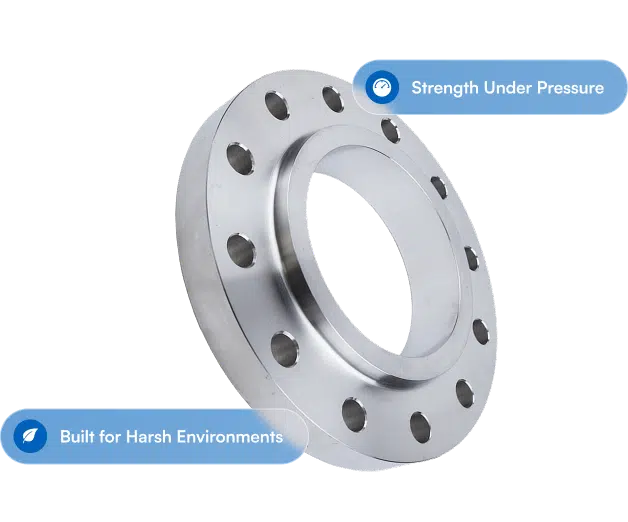
Flange Schedules Demystified: Sch 40 vs Sch 80 and Beyond, Bayou Style
Now, flange schedules might look mighty complicated with all dem options out there, but I tell you what, they’re pretty straightforward once you break ’em down. Whether y’all are specifyin’ flanges for a piping project or troubleshootin’ an assembly that’s already in the ground, understandin’ flange schedules (like Sch 40 and Sch 80) is critical for how your system performs and for pickin’ your PVF right. Let’s cut through the jargon and explain what dese schedules mean, how they hit your wall thickness, your pressure rating, and your flow.
What Are Flange Schedules, y’all?
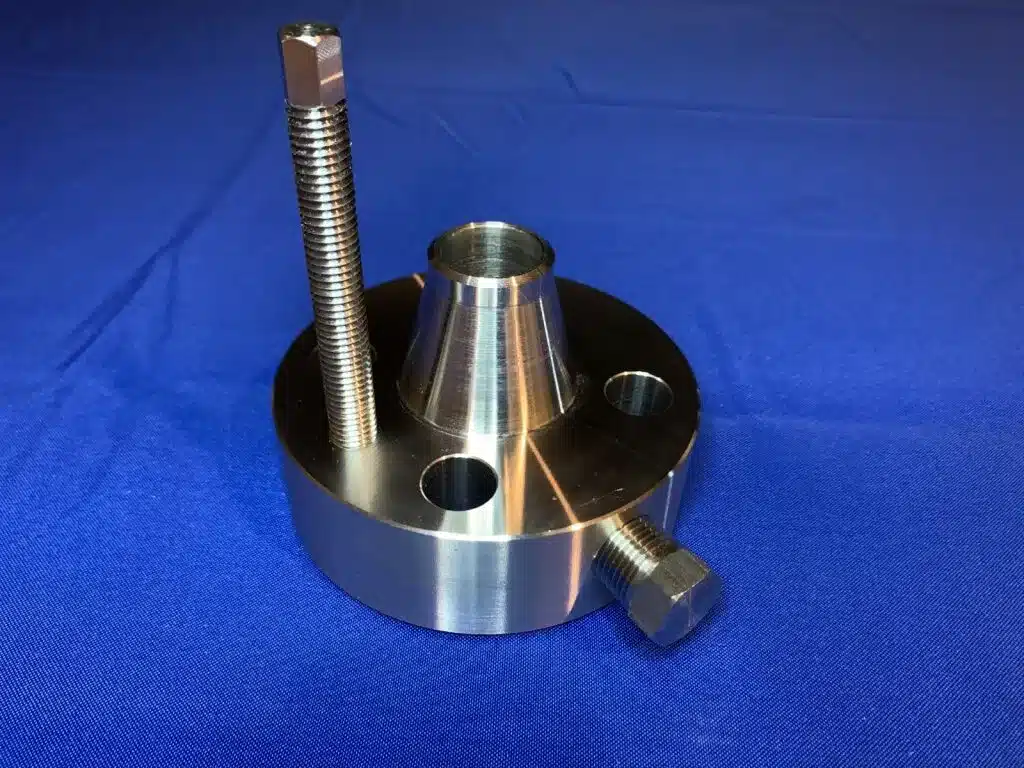
Simply put, a flange schedule tells y’all the wall thickness of the pipe that hooks up to the flange, and so the thickness right where you weld two connectin’ PVF items. It’s a term folks use in piping to line up the dimensions of pipes with their matchin’ weld neck, socket weld, and custom nozzle flanges. Pick the right schedule (like Sch 40 or Sch 80) and you get the right fit and performance out of your components, yessir.
The schedule number / schedule bore (Sch) is really about the pipe’s wall thickness. Here’s how she works:
- Sch 40S (Standard Wall): A common spec in a whole lot of applications. It’s fine for moderate pressure and flow conditions.
- Sch 80S (Extra Strong/Extra Heavy): Built for higher pressure, or when y’all need extra wall thickness to handle wear or stress.
- Note that schedule 40 and schedule 40S is the same in flanges NPS 10” and smaller, whereas schedule 80 and schedule 80S is the same for NPS 8” and smaller. On bigger sizes the match breaks off and we call ’em schedule standard or TRUE schedule 40, for example. It is mighty important to know dis difference so y’all don’t make mistakes in ordering!
Think of the schedule like Goldilocks for your flange weld connections; pick the right schedule and your system ain’t overbuilt and it ain’t underperformin’ neither.
The Formula Behind the Schedule Number
The schedule designation ain’t just some random number; way back it was tied to the pipe’s approximate pressure capacity, though modern practice goes by exact wall thickness measurements.
The original relationship, based on an early formula from the American Standards Association (ASA), connected the schedule number (Sch) to the pipe’s service pressure and allowable stress:
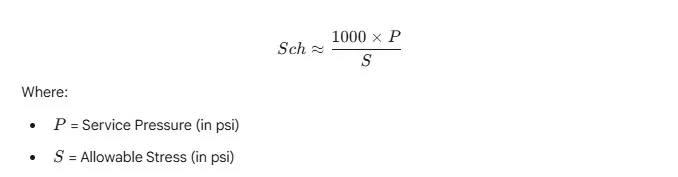
Now, dat formula is mostly history for figurin’ the required thickness (modern methods use more complex design codes), but it shows a higher schedule number goes right along with a thicker pipe wall that can handle higher pressure. That relationship ain’t exactly steady when y’all look at a schedule bore chart, but a higher schedule meanin’ more thickness is plain as day.
Crucially, for any given Nominal Pipe Size (NPS), the pipe’s Outer Diameter (OD) stays the same no matter the schedule. It’s the Inner Diameter (ID) that changes as the wall gets thicker. That goes for weld neck and socket weld flanges, but the schedule don’t touch the bore on other connections like slip on flanges.
Wall Thickness and Pressure Rating
Wall thickness is where flange schedules hit your performance directly. A thicker wall lets the pipe (and flange) handle higher pressures. For example:
- Sch 40 is thinner and works real good on systems where moderate pressure is expected.
- Sch 80, with its thicker walls, can take higher pressures, which makes it just right for industrial plants or oil and gas systems.
- Sch160 and Sch XXS/XXH are for the highest pressure work, which is often class 2500# ANSI/ASME flanges, plus API 6B and 6BX connections.
Choosin’ between Sch 40 and Sch 80 mostly comes down to safety margins, your operatin’ pressure requirements, and what kind of fluid or gas y’all are movin’.
How Flange Schedules Affect Flow
Now here’s the kicker, y’all: wall thickness does more than just handle pressure. Since it sets the internal diameter of the pipe, it ends up changin’ the flow rate and velocity of the gas or fluid runnin’ through that pipeline.
A thicker wall (like in Sch 80) shrinks the internal diameter (ID). That smaller ID does two things:
- Reduced Flow Capacity: The smaller cross-sectional area means a slight squeeze on how much fluid or gas can get through, compared to the thinner-walled Sch 40 pipe.
- Increased Fluid Velocity: To keep a certain mass flow rate, the fluid’s gotta move faster through that narrower Sch 80 pipe. That higher velocity can raise your pressure drop from friction and maybe lead to troubles like cavitation or more erosion down the road.
This tradeoff matters, I tell you what. If system efficiency and maximum flow rate are your top priorities in a low-to-moderate pressure job, a thinner wall (Sch 40) might be the way to go. On the other hand, high-pressure systems must have the toughness and integrity of a thicker-walled pipe (Sch 80 or higher), even if it costs a little flow. Sometimes y’all can make up dat flow by designin’ the assembly with a bigger NPS (nominal pipe size) on all the PVF items involved.
Sch 40, Sch 80, and Beyond
Sch 40 and Sch 80 are the ones folks use most, but there’s a whole range of other options made for mighty specific operatin’ needs:
- Sch 10 is even thinner than Sch 40, good for lightweight, low-pressure systems, though it ain’t always as easy to find as schedule 40 or 40S/Standard.
- Sch 160 and SchXXH/XXS sit on the opposite end, givin’ y’all extreme wall thickness for heavy-duty, high-pressure environments.
Knowin’ your schedules beyond the standard or extra heavy walls most folks pick is a big help. Y’all ought to widen your options and tailor your systems to your own project’s needs when pressure or temperature matter.
Installation and Material Implications
The schedule you pick also changes how y’all install and fabricate the piping system:
- Welding: Thicker walls (Sch 80+) take more weld material, longer weldin’ times, and often more specialized weldin’ procedures and pre-heatin’ to get a full penetration weld, which runs up your labor costs.
- Weight: Heavier schedule pipes need sturdier supports and hangers. The total weight of the piping system can change your structural design a whole lot.
- Material: Schedules are mostly independent of material (y’all can have Sch 40 Carbon Steel or Sch 40 Stainless Steel), but the material combined with the schedule sets your final pressure and temperature rating. For example, a high-strength alloy in Sch 40 might still outperform a lower-grade carbon steel in Sch 80 for certain corrosive applications.
Why Flange Schedules Matter
Pickin’ the right flange schedule is more than a technicality – it’s about gettin’ the best performance, keepin’ folks safe, and makin’ your system last. The wrong schedule can cause everything from leaks to early system failure, so it’s worth gettin’ it right the first time.
Like I said, y’all will notice a higher flange schedule number goes with a thicker wall, which works opposite to the size of a flange bore/ID. But some of these schedules even overlap on the same nominal pipe size, so it ain’t an exact science (for example, on a 20” flange, a schedule 20 bore is the same as a schedule standard bore). That’s exactly why y’all should check dese dimensions careful durin’ selection and before ordering.
For your convenience, y’all can visit our website and download a copy of our online catalog to keep this information handy, or look at the wall thickness chart under the “Flange Dimensions” drop-down menu on our home page. And remember, socket weld flanges are a whole lot less popular than weld neck flanges, but the same rule applies for pickin’ schedule bore/wall thickness on socket welds.
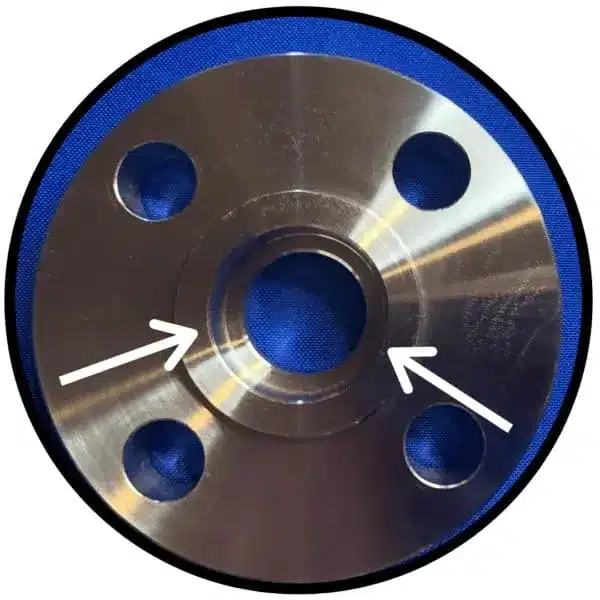
If y’all ain’t sure which flange schedule is best for your application, don’t sweat it. At Texas Flange, we’re happy to help you figure it out. Holler at us when you’re ready.
Got Questions? We’ve Got Answers!
For more insights on everything flange-related, check out our detailed section. Whether y’all are dealin’ with DIN, ANSI, or custom components, we’ve got answers to your toughest flange questions.
Flange schedules don’t have to be a headache. Armed with the basics, y’all can make confident decisions that keep your projects runnin’ like they should.