Flange Maintenance 101: Everything Y'all Need to Keep Rust and Corrosion Off Your Flanges
Now, critical piping in oil & gas, petrochemical, waterworks, and process plants leans on industrial flange assemblies, I tell you what. But corrosion can cut their life mighty short and put safety at risk. Today’s operators are starin' down bigger and bigger downtime bills, and NACE reckons global corrosion losses run a staggerin' USD 2.5 trillion. So knowin' how flange rust gets started and puttin' good prevention to work pays you right back. This guide walks y'all through the different kinds of corrosion that go after flanges, lays out the fixes that hit the target, covers how to inspect and repair, talks about the maintenance headaches in each industry, and shows what you save in dollars and safety when you take care of things ahead of time. Along with the expert know-how, we'll show y'all how Texas Flange’s ANSI, API, and AWWA carbon steel, stainless steel, and alloy flanges keep on performin' year after year. Holler at us for a custom quote on our corrosion-resistant flanges.What Are the Most Common Types of Flange Corrosion?

What Kinds of Corrosion Go After Industrial Flanges?
Flange corrosion comes in several forms, and ever' one of 'em eats away at your sealing surfaces and weakens the joint. Learnin' to spot pitting, crevice, galvanic, and stress corrosion cracking is mighty important for inspectin' and fixin' the right way, so you head off leaks and long downtime. Each of dese comes from its own electrochemical or mechanical goings-on right at the flange interface.
What Is Pitting Corrosion and How Does It Hurt Flanges?
Pitting corrosion shows up as small, deep holes on a flange face, usually when chlorides or sulfides break down the protective oxide film. Dem pits gather stress and get cracks started under load, and that can ruin your seal and cause leaks in one spot. Keep a regular eye out for pits and pick alloys with a higher Pitting Resistance Equivalent Number (PREN), and y'all will cut that risk and keep your flanges workin' right.
How Does Crevice Corrosion Get Started on Industrial Flanges?
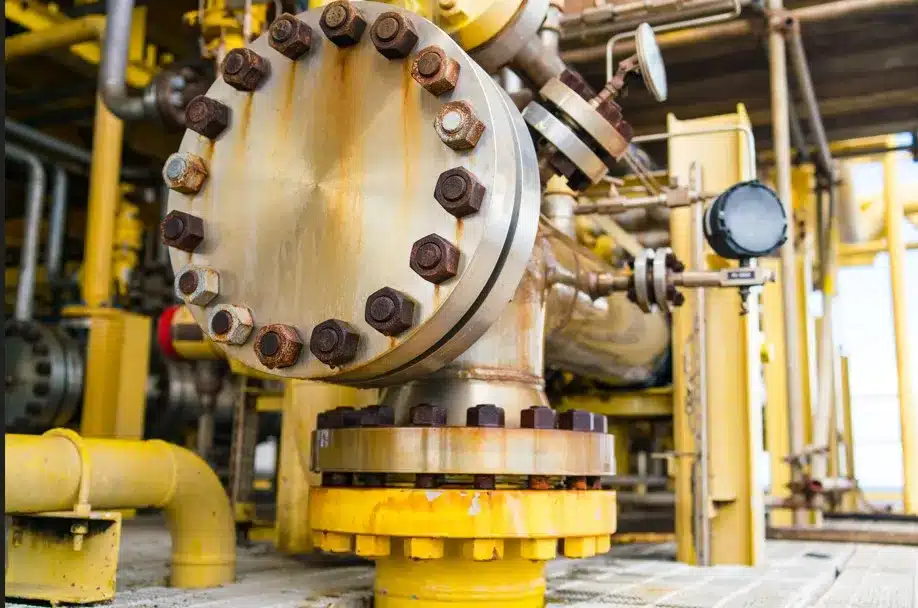
Crevice corrosion loves a narrow gap, like between flange surfaces, gaskets, or bolt heads, where fluid sits still, the oxygen runs out, and the nasty ions pile up. That closed-in spot eats through the passive film and speeds up the attack on the metal, especially carbon steel. To head it off, close up them tight gaps, use gasket materials that stand up to corrosion, and clean real good so nothin' builds up.
Gasket Materials and Crevice Corrosion in Stainless Steel Flanges
Both carbon and graphite are employed in gasket manufacturing. The study investigates the influence of gasket material and other variables on the crevice corrosion process, without specifically qualifying any particular gasket.
Gasket materials and other factors influencing the crevice corrosion resistance of stainless steel flanges, 1998
Research says gasket materials play a mighty big part in how crevice corrosion shows up on stainless steel flanges.
What Causes Galvanic Corrosion Between Flange Materials?
Galvanic corrosion happens when two different metals touch through an electrolyte, and that sets up an electrochemical cell where the less noble metal rusts away faster. Say you got a carbon steel flange hooked up to a stainless steel gasket stud with nothin' insulatin' in between, well, it's gonna corrode quicker, no two ways about it. Keep them mismatched metals apart with non-conductive washers and coatings and you'll stop that reaction cold.
Which Other Corrosion Types Threaten Flange Integrity?
Besides the spot attacks and galvanic kind, flanges can suffer chemical corrosion from acids or alkalis, atmospheric corrosion out in humid weather, stress corrosion cracking when there's tensile stress in corrosive media, and microbiologically influenced corrosion from bacteria or fungi. Ever' one of dese wears down flange surfaces its own way, so y'all need inspection and fixes made to fit.
How Do You Pick Corrosion-Resistant Flange Materials?
Pickin' the right flange material means takin' a careful look at the corrosive media, the operatin' temperature, and the pressure. The goal is to balance cost, mechanical properties, and corrosion resistance so you need less maintenance and less downtime. Stainless steels (grades 304, 316) work fine in mildly acidic or chloride-rich spots, while duplex and alloy steels do mighty better in high-stress, high-chloride work. Nickel alloys and titanium are what y'all reach for when the chemicals get extreme and the heat runs high. The table below lays out the key material properties for common situations.
| Material | Corrosion Resistance | Typical Applications |
|---|---|---|
| Stainless Steel | Moderate to high in acids | Water treatment, chemical piping |
| Duplex Stainless | Very high in chlorides | Desalination, offshore, process |
| Nickel Alloys | Excellent in hot acids | Refining, acid regeneration |
| Titanium | Superior in oxidizing media | Seawater, sulfuric acid |
Matchin' your flange material right to the service conditions, dat's the whole secret to reliability dat lasts and no early failures.
What Are the Advantages of Stainless Steel Flanges in Corrosive Environments?
Stainless steel flanges get a passive chromium oxide film that acts like a shield against corrosion in mildly acidic or chloride-containin' fluids. Grades 304 and 316 weld real nice and hold their strength up to 600 °F, so they're mighty handy for waterworks, food processin', and light chemical work. Keep an eye out for pitting and crevice startin' up, and y'all will get the most service life out of 'em.
When Should You Choose Alloy Steel or Duplex Stainless Steel Flanges?
Alloy steels and duplex stainless steels are the ones to pick when you need plenty of mechanical strength and top-notch chloride resistance. Duplex grades, such as 2205 and 2507, mix ferritic and austenitic structures to give you real toughness and corrosion resistance in hard-workin' high-pressure, high-temperature jobs, includin' petrochemical cracking units and offshore modules.
How Do Nickel Alloys and Titanium Flanges Resist Corrosion?
Nickel alloys (e.g., 625, 825) stand up strong to concentrated acids and high heat, thanks to alloyin' elements like molybdenum and chromium. Titanium, with its steady passive film, performs mighty fine in both oxidizing and reducing media. Dese fancy materials let y'all run safe in tough spots like sulfuric acid plants, petrochemical units, and seawater systems up to 800 °F, though I'll tell you, they cost more up front.
How to Match Flange Materials to Corrosive Media, Temperature, and Pressure?
The compatibility chart below is your guide for pickin' flange materials based on your service conditions. Use it to line up the alloy properties with your operatin' parameters.
| Media Type | Suitable Materials | Max Temp/Pressure |
|---|---|---|
| Seawater | Titanium, Duplex Stainless | 400 °F / 1500 psi |
| Sulfuric Acid | Nickel Alloys, Titanium | 300 °F / 1000 psi |
| Chlorinated | Duplex Stainless, 316 SS | 600 °F / 2000 psi |
| General Water | 304 SS, Carbon Steel (coated) | 400 °F / 1500 psi |
Good service data and some expert advice, dat's what it takes to get your material pick right.
What Are the Best Ways to Inspect and Clean Industrial Flanges?
Good flange maintenance comes down to inspectin' and cleanin' the same way ever' time. A solid program ought to mix routine visual checks, non-destructive testing (NDT), careful surface prep, and a thorough look at each component. Visual inspections are mighty important for spottin' rust, scale buildup, and places a leak might start. Non-destructive methods, like ultrasonic thickness measurements and magnetic particle testing, are how y'all find hidden corrosion and cracks. Cleanin' flange faces before you put 'em back together gets rid of deposits that trap moisture, and lookin' over the bolts, nuts, and gaskets helps stop corrosion right where it seals. Stick to these practices and you'll cut way down on surprise shutdowns and make your flanges last a whole lot longer.
How to Do Routine Visual Inspections for Rust and Corrosion?
Do your visual inspections on a schedule, and look real careful at the flange faces and bores for any discoloration, pitting, or loose scale. Use magnification or a borescope to see into them hard-to-reach crevices. Write down everything you find, includin' the date, the spot, and how bad it is. Catchin' surface trouble early is the key to fixin' it before a leak ever happens.
Non-Invasive Measurement of Flange Sealing Surface Corrosion
The project focused on examining the integrity of the flange sealing surface. Non-destructive inspection techniques can assist the corrosion engineer in confirming the integrity of pipe flanges.
Non-Invasive Measurement of Corrosion of Flange Sealing Surfaces, 2003
Non-destructive inspection is mighty worth its weight for checkin' flange sealing surfaces without doin' any damage.
How Should You Clean Flange Faces and Prep Surfaces Right?
Clean your flange faces with solvent degreasers, stiff brushes, and low-pressure water jets to get the oil, scale, and rust off. Now, it’s important not to go grindin' too hard, 'cause that can throw off the flatness of the sealing surface. After cleanin', put on a rust inhibitor or a temporary coatin' till you reassemble. Good surface prep is how y'all get a gasket to seal right and keep crevices from formin'.
Why Is Inspecting Bolts, Nuts, and Gaskets So Important for Stoppin' Corrosion?
Bolts, nuts, and gaskets are critical pieces that got a whole lot to do with your seal, and they can feed galvanic corrosion too. Check the fasteners for any thread corrosion, put on the right anti-seize compound, and always swap out worn gaskets for materials that suit the service conditions. Tightenin' to the right torque spec is mighty important to keep moisture out and stop electrochemical attack at the flange interface.
How Do Gasket and Bolting Strategies Keep Corrosion Off Flanges?

Gettin' your gasket and bolting right is the cornerstone of keepin' corrosion off a flange. Pick the right gasket material so it gets along with your process media, temperature, and pressure. Proper bolt tightenin' sequences and torque values are how y'all get the load spread even, and that stops leaks and keeps corrosive crevices from formin'. Anti-seize compounds and lubricants protect your fasteners from rust and make 'em easier to take apart come the next maintenance job. Insulatin' washers and coatings can keep different metals apart so you don't get galvanic cells. All together, dese steps keep the seal tight, make flanges last longer, and cut corrosion risk in just about any service condition.
Which Gasket Materials Work Best for Corrosive Media and Operating Conditions?
In real corrosive spots, polytetrafluoroethylene (PTFE) and expanded graphite gaskets hold up mighty well against strong acids. Spiral-wound gaskets with stainless steel cores and flexible fillers are just right for high-pressure, high-temperature work. Elastomeric gaskets, like the ones made from Viton, do fine for moderate chemical jobs and dynamic sealing. Always match your gasket to your process parameters, so y'all don't get embeddin' and crevices formin'.
Influence of Gasket Material on Flange Face Corrosion Behavior
This study examines the impact of three gasket materials on the corrosion behavior of 321 stainless steel flange material, employing a novel setup specifically engineered for…
Effect of gasket material on flange face corrosion, S Hakimian, 2024
What gasket material you pick makes a big difference in how flange faces corrode, just like them stainless steel studies showed.
What Is the Right Bolt Tightening Sequence and Torque Spec?
When y'all torque flange bolts, always go in a star or crisscross pattern, and bring the torque up in stages, usually 30%, 60%, and then 100% of the final torque spec. That way the gasket squeezes even and the flange face don't get distorted. Use calibrated torque wrenches and check the manufacturer specs for the right preload values.
How Do Anti-Seize Compounds and Lubrication Help Stop Corrosion?
Puttin' copper- or molybdenum-based anti-seize on your bolt threads and nuts makes a protective barrier against moisture and corrosive chemicals. It not only cuts the risk of galling, it lets y'all get more consistent torque and makes takin' 'em apart later a whole lot easier. Good lubrication is key to keepin' fasteners from seizin' up in rough operatin' conditions, too.
How Can You Stop Galvanic Corrosion at the Gasket Interface?
Stop galvanic corrosion by keepin' different metals from touchin'. Y'all can do it with non-conductive washers, polymeric gasket materials, or dielectric coatings on the fasteners. Dem barriers break up the electrochemical path, so the less noble metal don't get attacked for no reason and your flange assembly stays in good shape.
What Protective Coatings and Encapsulation Methods Make Flanges Last Longer?
Protective coatings and encapsulation systems give you one more mighty important layer of defense against weather and chemical attack. Coatings like epoxy, urethane, and zinc-rich primers shield the outside surfaces of flanges, while temporary rust inhibitors protect 'em in storage and during planned shutdowns. Encapsulation uses flexible polymer membranes or cementitious fillers to seal up a flange joint all the way around. Dese methods slow down moisture gettin' in, stop underfilm corrosion, and mean y'all got to go out and fix things less often. Work good coatin' processes into your regular maintenance cycles and you'll protect your assets and keep things runnin' reliable for the long haul.
| Coating Type | Performance Benefit | Application Method |
|---|---|---|
| Epoxy Primer | High chemical resistance | Spray or brush |
| Urethane Finish | UV and abrasion protection | Airless spray |
| Temporary Inhibitor | Short-term rust prevention | Dip or spray |
| Encapsulation Membrane | Full joint sealing | Hand-applied or injection |
What Types of Flange Protective Coatings Can Y'all Get?
Epoxy primers stick mighty well and resist chemicals, so they're a fine choice for process and marine settings. Urethane topcoats give extra UV stability and abrasion resistance for flanges sittin' out in the open. Zinc-based primers give good cathodic protection in outdoor work. Temporary inhibitors are just right for maintenance pauses to keep flash rust from settin' in.
How Do Flange Encapsulation Systems Keep Corrosion Away?
Flange encapsulation systems use two-part polymer or cementitious compounds that get injected between the flange faces or put on around the bolting to make one continuous, moisture-tight barrier. That shuts out the oxygen and stops underfilm corrosion in them hard-to-reach spots.
What Are the Best Practices for Puttin' On Protective Coatings?
Make sure y'all clean the surfaces real careful to a near-white metal standard, usin' abrasive blasting or solvent cleanin'. Put the coatings on within the recommended temperature and humidity ranges, and stick right to the manufacturer’s guidelines on dry film thickness. Check the coatin' every so often and put on more when you need to, to keep the protection up.
What Are the Benefits of External Flange Protection in Harsh Environments?
External protection can cut on-site corrosion rates by as much as 90 percent, which means a whole lot fewer surprise repairs and longer stretches between maintenance. It shields flanges from salt spray, chemical splashes, and UV, so they keep performin' in rough offshore, chemical processin', and water treatment plants.
When Should You Repair or Replace Corroded Flanges?
Whether y'all repair or replace a corroded flange depends on a careful look at how much damage there is, what your safety requirements are, and what it's gonna cost overall. Minor surface corrosion or shallow pitting can often be handled with on-site machinin', abrasive cleanin', or fixin' it up with polymer composites. But severe wall thinnin', cracking, or distortion, especially in pressure-critical systems, means you gotta replace the whole flange. Compare the wall thickness you got left, the corrosion depth, and what the job demands against your detailed inspection data, and you'll make safe, sensible calls that keep your system sound and stay on the right side of regulations.
How to Judge Flange Damage: Repair vs. Replacement Criteria?
Compare the corrosion depth you measured against the allowable corrosion limits in the relevant codes, like ASME or API standards. If the wall thickness you got left falls below 90 percent of the original, or if the cracks run longer than allowed, you'll usually need to replace it. Otherwise, on-site machinin' or composite repairs can get it workin' right again.
What On-Site Machining and Surface Restoration Techniques Can Y'all Use?
Portable flange facers take off surface irregularities and bring the flatness back. Controlled machinin' can get rid of minor pitting. For deeper defects, things like metal spraying or epoxy fillers can build the flange faces back up to original tolerances without takin' the whole thing apart.
How Are Polymer Composite Materials Used for Flange Repairs?
Fiber-reinforced epoxy compounds get bonded to prepared flange faces to fill pits and seal cracks. Dese composites cure at ambient temperatures, bring back the mechanical strength, and resist chemicals mighty well, givin' you a cost-effective alternative to replacin' the metal in lower-pressure systems.
When Is Welding or Full Replacement Necessary for Severely Corroded Flanges?
Welding overlays or makin' new flange components becomes necessary when corrosion has eaten into the bolt holes or thinned the wall clean through. Full flange replacement is a must if cracks ruin the pressure-containin' integrity of the flange or if the repair cost gets close to what a new piece would run.
How Can Flange Management Systems Keep Corrosion Away for the Long Haul?
A well-built flange management program pulls together good documentation, careful trackin', smart inspection schedules, and predictive analytics to keep your flanges sound over the long haul. The key pieces are a detailed asset register, clear inspection protocols, accurate NDT records, thorough torque analysis logs, and plans for keepin' up your coatings. Trackin' flange assemblies and their performance history digitally makes lifecycle planning and risk control a whole lot easier. Predictive maintenance uses corrosion rate trends and environmental monitorin' to schedule the work ahead of time, so you stop failures before they ever happen. Teamin' up with a specialized flange provider like Texas Flange, which offers custom corrosion-resistant flanges and expert technical support, means y'all get solutions made to fit and a fast response for any system changes or replacements you need.
How Does Documentation and Tracking Make Flange Maintenance Better?
Writin' down detailed flange specs, inspection results, torque readings, and coatin' histories builds you a complete audit trail. That paperwork helps y'all spot problems that keep comin' back, guides your efforts to do better, makes your budget go further, and keeps unexpected failures from sneakin' up on you.
What Part Does Predictive Maintenance Play in Flange Integrity?
By studyin' corrosion rate data, vibration patterns, and the environmental factors that matter, predictive maintenance can forecast real accurate how much service life you got left and schedule the work right before you hit the critical limits. That proactive way of doin' things cuts downtime and stretches your service intervals.
How Does Texas Flange’s Houston-Based Expertise Support Custom Flange Solutions?
Texas Flange brings deep industry know-how, a big inventory of corrosion-resistant materials, and advanced custom manufacturin' to get flanges out fast, built for the most demandin' environments. Their expert technical guidance and solid traceability services make sure ever' flange meets the exact specs and long-term performance you need.
Makin' flanges last longer and stoppin' corrosion for real takes a mix of material know-how, strict inspection protocols, smart sealin' strategies, and steady management. Put dese best practices to work and lean on the specialized solutions from an experienced flange supplier, and y'all engineers and maintenance crews can run reliable, leak-free and save a whole lot of money over the life of your assets. For personal recommendations on corrosion-resistant flanges and to request a quote, holler at the Texas Flange technical team today.