Pickin’ the right flange gasket ain’t just about matchin’ parts, it’s about stoppin’ costly downtime, dangerous leaks, and system failures. Whether y’all are workin’ in oil and gas, petrochemical processin’, or power generation, the gasket you pick hits your safety, your efficiency, and your bottom line right where it counts.
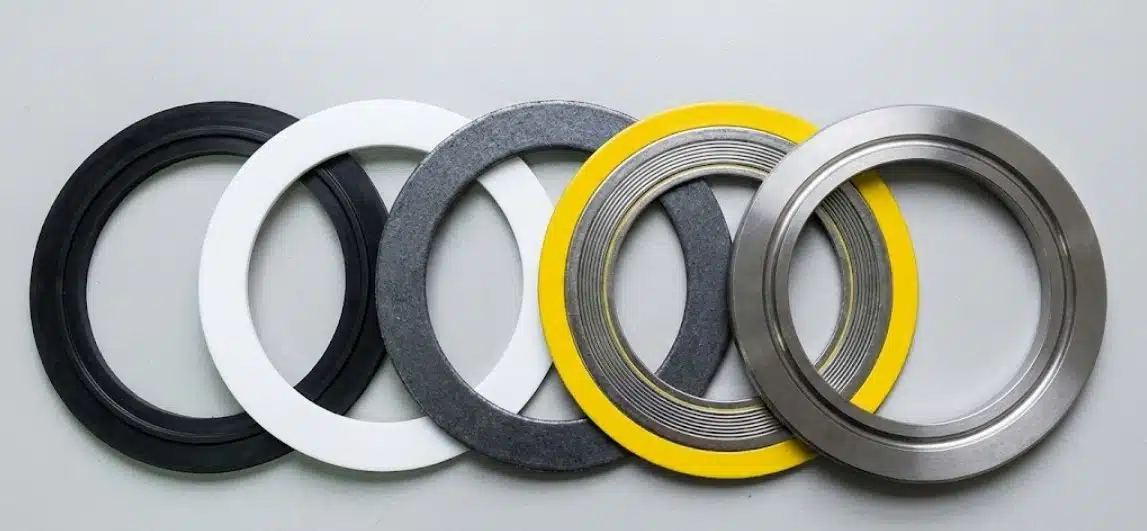
In this here guide, we’re fixin’ to break down five essential gasket types: elastomer, PTFE, graphite, spiral-wound, and ring-type joint (RTJ). Armed with this, you can make a smart buyin’ decision and keep your systems runnin’ smooth as a bayou in July.
Why Your Flange Gasket Pick Matters
A flange gasket makes a mighty important seal between two mating surfaces, keepin’ fluid or gas from leakin’ out under pressure. Pick the wrong material, and I tell you what, you’re lookin’ at:
- Unplanned shutdowns and production losses, and dat’s money right down the drain.
- Safety hazards from chemical or pressure leaks, and nobody wants dat.
- Expensive emergency repairs, and you’ll be payin’ through the nose.
- Environmental compliance headaches, too.
The key? Matchin’ your gasket material to your operatin’ conditions: temperature, pressure, and the chemical environment in your pipe, valve, and fittin’ assembly.
-
Elastomer Gaskets: The Workhorse for Standard Jobs
What They’re Made Of: Rubber-based compounds like EPDM, NBR (Nitrile), Viton, and neoprene.
What’s Good About ’Em:
- Mighty flexible and squishy makes installin’ easy as pie, even for a hand who ain’t been at it long.
- Easy on the wallet without givin’ up performance where it fits the job.
- Holds up fine against water, petroleum oils, and mild chemicals.
- Good seal recovery makes up for minor flange imperfections.
Where It Falls Short:
- Temperature ceiling usually tops out around 250°F, dependin’ on the compound.
- Chemical vulnerability when it meets aggressive acids, solvents, or caustic stuff – I wouldn’t recommend it for chemically sensitive work.
- Ain’t rated for extreme pressure jobs, friend.
Best Jobs for ’Em:
Water treatment plants, HVAC systems, low-pressure oil and gas work, food and beverage processin’, and general industrial piping where the operatin’ conditions stay mild.
-
PTFE Gaskets: The Chemical Resistance Champ
What They’re Made Of: Virgin PTFE (Teflon®) or glass-filled or carbon-filled PTFE kinds.
What’s Good About ’Em:
- Mighty fine chemical resistance, handles nearly every aggressive acid, alkali, and solvent when your application engineer signs off on it.
- High-temperature capability up to 500°F in most jobs.
- Non-contaminating and FDA-compliant for several pharmaceutical and food-grade processes, so it keeps things clean.
- Low-friction surface keeps stuff from stickin’ and makes maintenance a whole lot simpler.
Where It Falls Short:
- Higher cost compared to them elastomer gaskets.
- Cold flow susceptibility under steady bolt load can make it slowly deform on you.
- Requires proper bolt torque management to keep that seal tight.
Best Jobs for ’Em:
Chemical processin’ plants, pharmaceutical manufacturin’, semiconductor fabrication, food and beverage industries, and any system haulin’ corrosive or ultra-pure fluids.
-
Graphite Gaskets: Masters of Extreme Heat
What They’re Made Of: Flexible expanded graphite sheets, often with metal inserts or foil reinforcement.
What’s Good About ’Em:
- Exceptional heat resistance performin’ reliable up to 3000°F in non-oxidizing environments.
- High-pressure capability for demandin’ industrial work.
- Outstanding thermal cycling performance keeps its seal through several rounds of heatin’ and coolin’.
- Conformable to flange surfaces and makes up for minor irregularities.
Where It Falls Short:
- Oxidation concerns in air or oxygen-rich environments at high temperatures.
- Brittle characteristics mean you gotta handle ’em careful durin’ installation.
- Not suitable for strong oxidizers like nitric acid or concentrated hydrogen peroxide.
Best Jobs for ’Em:
Steam systems, exhaust manifolds, refinery piping, power generation equipment, and high-temperature thermal oil systems where oxidizin’ conditions are minimal.
-
Spiral-Wound Gaskets: The Jack-of-All-Trades
What They’re Made Of: Alternatin’ layers of V-shaped metal windings (usually stainless steel) with soft filler material (graphite, PTFE, or mica).
What’s Good About ’Em:
- Extreme versatility handles wide temperature ranges (-400°F to 1800°F+) and high pressures.
- Thermal cycling resilience keeps its seal through several expansion and contraction cycles.
- Accommodates flange imperfections better than solid metal gaskets do.
- Industry-standard reliability for critical jobs across plenty of sectors.
Where It Falls Short:
- Premium pricing reflects the fancy construction and materials compared to elastomer.
- Installation precision required, and proper centerin’ and bolt torque are mighty critical.
- Potential for filler erosion in high-velocity fluid work.
Best Jobs for ’Em:
Oil and gas production, petrochemical refineries, power generation plants, pipeline systems, and anywhere ASME B16.20 compliance is required. The spiral-wound gasket is often the default pick for critical flange connections and is most associated with ASME B16.5 flanges.
-
Ring-Type Joint (RTJ) Gaskets: Built for the Hard Stuff
What They’re Made Of: Solid metal construction in soft iron, carbon steel, stainless steel, Inconel, Monel, or other specialty alloys.
What’s Good About ’Em:
- Extreme pressure rating, routinely handles pressures over 10,000 psi.
- Metal-to-metal seal gives you leak-proof performance in the harshest conditions.
- Temperature extremes, and the right material lets it run from cryogenic on up to 1500°F+.
- Proven reliability in safety-critical work.
Where It Falls Short:
- Single-use design, ’cause RTJ gaskets can’t be reused after compression.
- Requires precision-machined ring grooves in the flange faces (ASME B16.20 specifications).
- Higher initial cost for both the gaskets and the specialized flanges.
- Professional installation recommended to make sure it seats proper.
Best Jobs for ’Em:
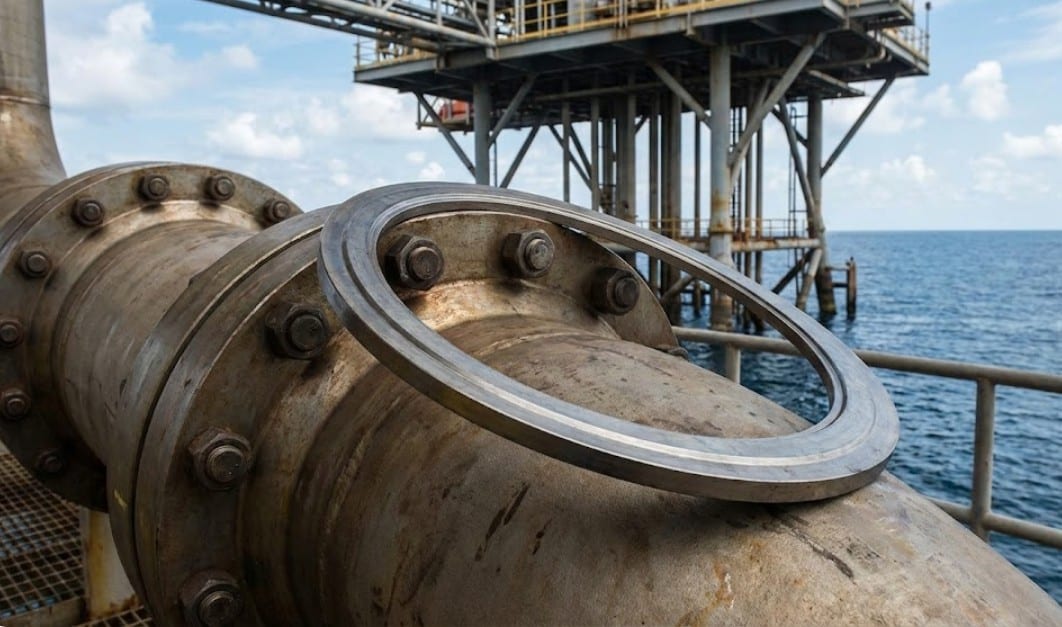
Offshore oil platforms, API flange wellhead equipment, high-pressure gas transmission, subsea pipelines, and critical refinery processes. When failin’ ain’t an option, the ring joint gasket delivers.
How to Pick Your Flange Gasket: The Decision Framework
Step 1: Figure Out Your Operatin’ Conditions
- Temperature range: What’s the lowest and highest temperature y’all are runnin’?
- Pressure requirements: Operatin’ pressure and any pressure cyclin’?
- Fluid/gas characteristics: Chemical makeup, pH, viscosity, and what particles are in there.
Step 2: Size Up Your Flange Configuration
- Flange type: Raised face, flat face, ring-type joint groove?
- Surface finish: Smooth machined versus rough or banged-up surfaces.
- Bolt loading: What bolt torque and loadin’ pattern you got to work with.
Step 3: Think On Your Operational Factors
- Thermal cycling: Temperature swingin’ up and down a lot?
- Maintenance accessibility: How often can y’all inspect and replace?
- Regulatory compliance: Industry-specific standards (API, ASME, ANSI)?
- Budget constraints: Upfront cost versus lifecycle cost.
Step 4: Match the Material to the Job
Quick Pickin’ Guide:
|
Condition |
Recommended Gasket Type |
|
Low pressure, ambient temp |
Elastomer |
|
Chemical resistance needed |
PTFE |
|
High temperature (>500°F) |
Graphite or Spiral-Wound |
|
Extreme pressure (>2000 psi) |
Spiral-Wound or Ring Joint |
|
Thermal cycling |
Graphite or Spiral-Wound |
|
Ultra-high pressure (>5000 psi) |
Ring-Type Joint |
Common Flange Gasket Mistakes to Steer Clear Of
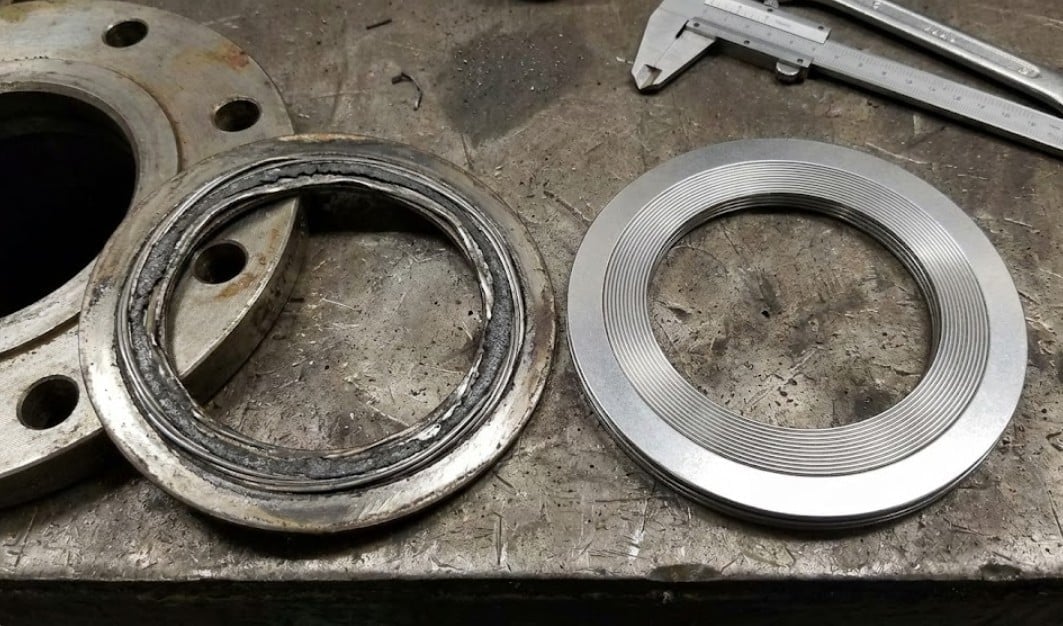
Over-torquin’: Crushin’ a gasket hurts the sealin’ surfaces and cuts down its effectiveness, so always follow the manufacturer’s torque specifications.
Reusin’ single-use gaskets: Ring joint and plenty of metallic gaskets lose their sealin’ ability after compression.
Ignorin’ chemical compatibility: Even a short dip in the wrong chemicals can eat a gasket up quick.
Poor surface prep: Cleanin’ off old gasket material, rust, and debris ain’t optional if you want a reliable seal.
Mismatched materials: Usin’ standard materials in high-temperature or chemical environments is a guarantee of early failure, I tell you what.
Ring Joint vs. Standard Gaskets: When to Step Up
The ring-type joint gasket is the premium answer for extreme conditions. Think about steppin’ up to RTJ groove flanges and gaskets when:
- Your operatin’ pressures stay above 5,000 psi, day in and day out.
- Y’all got high-pressure hydrogen service.
- Subsea or offshore installations where you just gotta have absolute reliability.
- Temperature extremes give regular gasket materials a hard time.
- The regulations call for metal-to-metal sealin’.
Now, ring joint flanges cost more up front ’cause of the precision machinin’, but the long-term reliability in critical work is worth every penny.
Get Some Expert Help Pickin’ Your Flange Gasket
Still weighin’ your options? Pickin’ a gasket gets a whole lot simpler with some experienced guidance. Things like flange class rating, bolt material compatibility, and industry-specific requirements all play into your best choice.
At Texas Flange, our technical folks got decades of real-world experience in oil and gas, petrochemical, and industrial work. We don’t just sell flanges – we help y’all figure out reliable sealin’ solutions and can point you the right way.
Holler at our flange specialists today for flange and hardware information based on your applications. Pickin’ the right hardware ain’t just about dodgin’ leaks – it’s about maximizin’ uptime, safety, and operational efficiency.