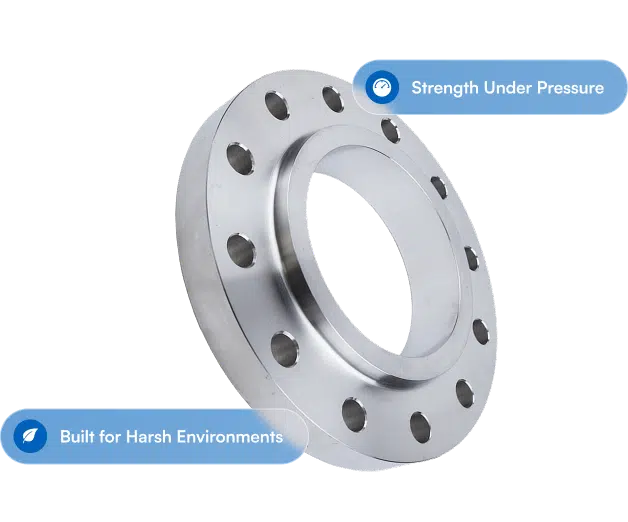
When pickin' out flanges, one of the first things y'all gotta think on is whether you're followin' European or American flange standards.
Ever' one of them standards got its own specs, perks, and rules for fittin' together. Understandin' the difference 'tween 'em is mighty vital for keepin' your system safe, sound, and runnin' smooth.
Why European vs. American flange standards matter
'Fore you decide which flange standard to go with, it's mighty important to understand the main rules governin' how flanges are made and used over in Europe and right here in the United States.
European flange standards
Now, dem European flange standards are governed by the EN (European Norm) and DIN (Deutsches Institut für Normung) standards. Some of the most common European flange standards folks use include:
- EN 1092-1: This here standard applies to circular flanges made from all sorts of materials, includin' steel, stainless steel, and cast iron. It sorts flanges based on pressure ratings (PN) like PN6, PN10, PN16, PN25, PN40, and so on.
- DIN 2501: A standard folks used a whole lot in older European systems, replaced by EN 1092-1 but still poppin' up in some industries.
- BS 4504: A British standard folks commonly use right alongside EN and DIN standards.
European flanges are known for usin' metric measurements and specific pressure rating classifications, which ain't quite the same as their American cousins.
American flange standards
Over here in the United States, flange standards are mostly set by the American National Standards Institute (ANSI) and the American Society of Mechanical Engineers (ASME). The most recognized American flange standards include:
- ASME B16.5: Covers pipe flanges and flanged fittings rangin' from ½” to 24″ in diameter, with pressure classes like 150, 300, 600, 900, 1500, and 2500.
- ASME B16.47: Applies to them bigger flanges (above 24 inches) and includes Series A and Series B flanges.
- MSS SP-44: Governs steel pipeline flanges used in high-pressure work.
American flanges use the imperial measurement system and are mostly specified in inches and pounds per square inch (psi) 'stead of metric units.
Main differences 'tween European vs. American flange standards
Measurement system and pressure ratings
I tell you what, one of the biggest differences is how they measure 'em. European standards use metric measurements (like millimeters and PN ratings), while American standards use imperial units (like inches and Class ratings). That there difference can make it mighty tough to swap flanges 'tween systems.
Bolt hole patterns and dimensions
European and American flanges ain't the same when it comes to bolt hole patterns, facin' types, and dimensions. Even if two flanges got similar diameters and pressure ratings, the bolt hole setups and gasket compatibility might be different, meanin' you can't just swap 'em out.
Material specs
While both standards call for similar materials, y'all might see variations in material grades, heat treatment needs, and how well they fight off rust. It's mighty important to double-check that material compatibility when you're pickin' out flanges.
Application and industry preferences
Different industries and parts of the world got their own preferences for specific standards. European standards are used all over the EU and in plenty of international projects, while American standards rule the roost in the U.S., Canada, and certain global industries like oil and gas.
Which flange standard should y'all follow?
Decidin' whether to follow European or American flange standards depends on a few things, like where your project's at, what your industry needs, and what your current system can handle. Here's a few things to chew on:
- Project location
If your project's sittin' over in Europe, it's a good idea to follow EN/DIN standards to make sure you're playin' by the local rules. On the flip side, in the U.S. and North America, ASME/ANSI standards are the way to go.
- Industry-specific needs
Certain industries got their own set rules. For instance, American flange standards are a whole lot more common in the oil and gas sector, while European flanges are used a bunch in water treatment and general manufacturin' over in Europe.
- Existing system compatibility
If your pipin' system is already followin' a specific standard, it's usually best to keep it consistent so you don't run into fittin' issues and gotta make unnecessary tweaks.
- International projects and global trade
For them international projects, y'all might need to juggle multiple standards. When that happens, workin' with a flange supplier that provides both European and American standard flanges can make buyin' and complyin' a whole lot easier.
Make sure you get quality and compatibility with Texas Flange
Pickin' the right flange standard is mighty essential for keepin' your system safe, sound, and runnin' efficient. Whether y'all need European or American standard flanges, it's crucial to work with a supplier you can trust to deliver quality and compliance.
Down here at Texas Flange, we been a direct source manufacturer since 1986, and we offer a mighty fine selection of high-quality flanges that meet both ASME/ANSI and EN/DIN standards. Our products are made to the highest industry standards, ensurin' they're tough and reliable for your pipin' systems.
Holler at Texas Flange today to learn more 'bout European vs. American flange standards and find the perfect fit for your project!