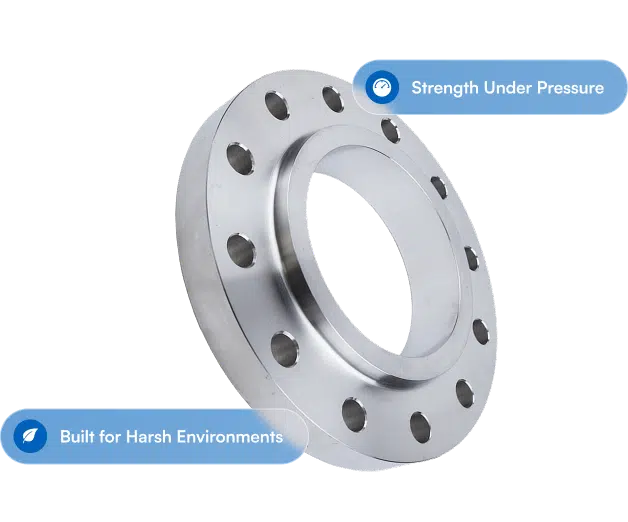
Y'all fixin' to start your construction project? If so, you best know the difference between mild steel and high-yield flanges. Dem's two kinds of carbon steel. Carbon steel comprises up to 0.90% carbon by weight.
Both these flange materials got a whole mess of benefits. If you don’t know the difference between the two, pickin' the right one for your industrial work is gonna be tough, I tell you what.
Let’s dive in right quick and get some good knowledge about these flange’s material.
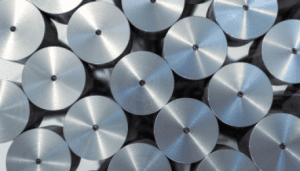
High Yield Steel
High-yield steel flanges are tough as nails and more fatigue-resistant, which makes 'em a mighty good pick when you need higher tensile strength. In the construction business, they play a big part in buildin' bridges and load-bearin' structures.
High-yield steel flanges are abrasion and corrosion-resistant, and they'll do fine in corrosive places or applications. They're easier to weld on account of their higher carbon content.
Mild Steel
Mild steel has a low carbon content, which makes it ductile and malleable. That makes it perfect for joinin' parts together with screws, nuts, or bolts, and for weldin' and formin' too. 'Cause they're cheaper than metals like aluminum or stainless steel, such as steel and mild steel are also used a whole lot in the buildin' trade.
Mild steel is handy where strength ain't the main thing, like fence or pipin' systems, because it's mighty corrosion resistant but not as strong as high-yield steel.
Difference between Between High Yield Steel And Mild Steel Flanges
Resilience
The most noticeable difference between high-yield steel and mild steel flanges is how strong they are.
High-yield steel flanges are like the heavyweight champions of the flange world, boastin' a whole lot higher tensile strength than mild steel flanges.
That makes 'em ideal when you need extreme durability and mechanical stress resistance, yessir.
Now mild steel flanges, while sturdy, just don't quite measure up to the raw strength of their high-yield cousins. They're better suited for jobs with lower mechanical stress requirements.
Corrosion Resistance
High-yield steel flanges often work in alloys and elements like chromium and molybdenum, which give 'em excellent corrosion resistance. That property makes high-yield steel flanges ideal for industries where corrosion is a worry.
Mild steel flanges, though, are more prone to corrosion on account of their lower alloy content. They might need extra protective coatin's or regular upkeep to keep off rust and breakdown in corrosive conditions
Fabrication and Weldability
When it comes to fabricatin' and weldability, mild steel flanges got the clear edge. Mild steel is fairly easy to work with, so it's a favorite for projects that need a lot of shapin', cuttin', or weldin'. Its malleability makes fabricatin' simpler and cuts down on labor costs.
High-yield steel, while strong, can be more of a chore to work with on account of its higher carbon content and alloyin' elements. Y'all need specialized equipment and know-how for fabricatin' and weldin' high-yield steel flanges.
Expensive
Like I said above, high-yield steel has more carbon content, which makes it cost more than mild steel. But high-yield steel’s unmatched strength and hardness make it ideal for critical jobs where failure ain't somethin' you can afford.
Composition
Carbon Steel has numerous components, for instance, Carbon, Manganese, Phosphorus, Sulphur, and Silicon. The high-yield steel has 0.60 – 0.80% Carbon, Silicon 0.20%, Sulphur 0.05%, Manganese 0.60%, and Phosphorus 0.05%. Mild steel, on the other hand, has 0.15 – 0.25% carbon content.
Applications
Choosin' between high-yield steel and mild steel flanges boils down to what your project really needs.
Mild steel is useful in jobs where low strength and hardness work just fine. For instance, automotive bodies or pipin'. Plus, dem are easy to join by weldin' usin' various techniques, such as rivetin' or boltin'.
High-yield steel is a good fit in oil and gas, construction and infrastructure, aerospace and aviation, and heavy machinery and equipment.
In a nutshell
Both high-yield and mild steel got their good points and their drawbacks, so knowin' how they differ will help you make a smart choice when pickin' the right material for your project. High-yield steel might be the best way to go if strength is your top priority, but mild steel might be the better pick if savin' money is what you're after.
Whatever you need, knowin' about these two materials can help you get the most out of your buildin' project! For more help from the folks who know, contact us right now at Texas Flange
FAQ
Q.1 What specific mechanical properties distinguish high-yield steel from mild steel flanges?
Answer: The key mechanical properties that set high-yield steel apart from mild steel are higher tensile strength, yield strength, and hardness, I reckon.
High-yield steel can take a whole lot more mechanical stress than mild steel without deformin' or failin'.
Q.2 Is there a significant cost difference between high-yield steel and mild steel flanges?
Answer: Yessir, there's often a notable cost difference between high-yield steel and mild steel flanges.
High-yield steel, with its superior properties, tends to cost more.
Mild steel flanges, on the other hand, are easy on the wallet and get picked when cost-effectiveness is the main concern.
Q.3 Are there specific applications where mild steel flanges outperform high-yield steel flanges?
Answer: Yes, mild steel flanges come in handy in jobs where cost-effectiveness and easy fabricatin' matter more than extreme strength and durability.