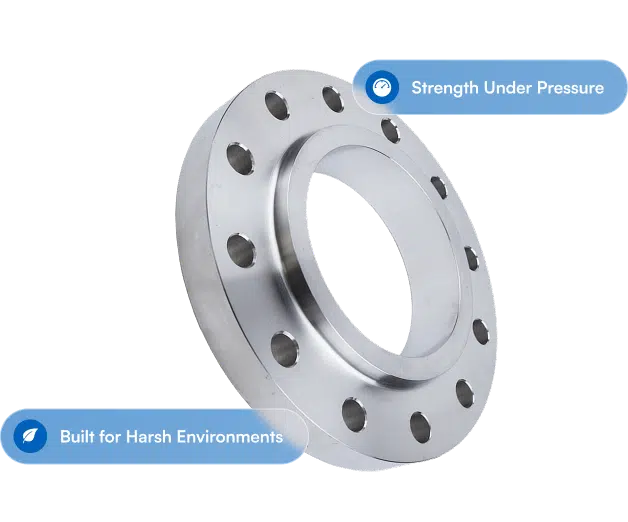
Now, when y’all are pickin’ out a flange, one of the most important things to study on is its pressure class. You gotta know the difference ’tween a Class 150 flange and a Class 300 flange, ’cause dey differ in strength, pressure ratings, and where you put ’em to work. Get a handle on dat and you’ll make the right pick for your job, I tell you what.
Gettin’ to Know Flange Classes
Flange classes get handed out based on the pressure-temperature ratings set by the American National Standards Institute (ANSI) and the American Society of Mechanical Engineers (ASME). Dem ratings tell you the most pressure a flange can stand up to at a given temperature. The higher the class number, the more pressure dat flange can take, plain and simple.
Class 150 and Class 300 flanges are two of the most used ratings around, ’specially in industrial and commercial work. Both classes do mighty similar jobs, but they’re different as night and day when it comes to strength and where you use ’em.
Strength Differences: Class 150 vs. Class 300
The big difference ’tween Class 150 and Class 300 flanges is how much pressure they can handle. Class 300 flanges are built to stand up to a whole lot more pressure than Class 150 flanges. Here’s what makes the difference:
- Wall Thickness: Class 300 flanges got a thicker wall than Class 150 flanges, so they can take on higher pressure from the inside, yessir.
- Bolt Circle and Bolt Size: Class 300 flanges run a bigger bolt circle diameter and use bigger bolts, which gives ’em more strength and a better seal. Take a look at bolt sizes for each class.
- Gasket Seating Surface: Class 300 flanges got more surface for the gasket to sit on, which helps ’em seal up tight when the pressure’s runnin’ high.
- Material Strength: Now both classes can be made from the same kinda materials, like carbon steel, stainless steel, or alloy steel, but Class 300 flanges get some extra design work to beef up their structural integrity.
For example, a standard Class 150 flange made from ASTM A105 carbon steel has a pressure rating of approximately 285 psi at 100°F, while a Class 300 flange of the same material can handle about 740 psi at the same temperature. All dat extra pressure capacity makes Class 300 flanges a mighty good fit for the tough jobs.
Application Differences: Where Each Flange Gets Used
Pickin’ ’tween a Class 150 and a Class 300 flange depends on what your job calls for, like the pressure, the temperature, and what kinda fluid you’re movin’ down the line.
Where We Use Class 150 Flanges
Class 150 flanges are mostly used in low-pressure, moderate-temperature work. Here’s where y’all usually see ’em:
- Water Treatment Plants: Just right for water distribution systems where the pressure ain’t too demandin’.
- HVAC Systems: Used in heatin’ and coolin’ pipelines where extreme pressure ain’t a worry.
- Food and Beverage Industry: Works fine for non-corrosive, moderate-pressure piping systems.
- Oil and Gas Pipelines (Low-Pressure Sections): Put to work in non-critical spots where the pressure stays under 285 psi.
Where We Use Class 300 Flanges
Class 300 flanges are used where the pressure and temperature run higher, like:
- Petrochemical and Refining Facilities: Mighty necessary for handlin’ high-pressure steam, gases, and corrosive fluids.
- Power Plants: Used in high-pressure steam and boiler feed systems.
- Industrial Process Piping: Fits right in at chemical processing plants that need connections dat are tough and tight.
- High-Pressure Oil and Gas Systems: Put to work in pipelines haulin’ high-pressure crude oil, natural gas, and other energy products.
Generally speakin’, folks who need more durability and safety under high pressure reach for Class 300 flanges, ’cause they seal better and fight off leaks.
Pickin’ the Right Flange for Your Needs
Want ’em side by side? The numbers are in our Class 150 dimension tables and our Class 300 dimension tables.
When you’re decidin’ ’tween Class 150 and Class 300 flanges, you gotta study on some key things, like:
- Make sure the flange you pick meets the pressure and temperature conditions of your system.
- Think on what kinda fluid you’re movin’ and what the flange is made of, so you don’t end up with corrosion or a chemical reaction.
- Follow the right ANSI/ASME standards so you’re squared away with industry requirements.
- Buyin’ a higher-class flange might cost you more up front, but it’ll give you better reliability and safety down the road.
Gettin’ Quality Flanges from Texas Flange
you need Class 150 or Class 300 flanges, pickin’ high-quality, durable, properly rated parts is mighty important for keepin’ your piping system safe and runnin’ right.
Texas Flange is a trusted supplier of industry-leading flange products, offerin’ a whole mess of sizes, materials, and pressure classes to fit what your project needs. We stand behind our quality and our customers, so you get the best solutions for your piping systems, I tell you what.
Now you know the difference ’tween Class 150 and Class 300 flanges, so come on and look over our selection today and let Texas Flange get you the dependable, high-performance flanges you need for your next project!
Check Out Our Class 300 Solutions
Look Over Our Class 150 Flanges
Questions Folks Ask Us
What is the difference between Class 150 and Class 300 flanges?
Class 150 flanges are rated for lower pressure and temperature jobs, while Class 300 flanges can take on the higher pressure and temperature conditions.
Which is stronger, Class 150 or Class 300 flange?
Class 300 flanges are stronger, y’all, ’cause they’re built to stand up to higher pressure and temperature than Class 150 flanges.
When should I use a Class 150 flange instead of a Class 300 flange?
Class 150 flanges are just right for lower-pressure systems, and you oughta use Class 300 flanges for the higher-pressure work.
Can I use a Class 300 flange in place of a Class 150 flange?
Yessir, a Class 300 flange can stand in for a Class 150 flange, but it might be more than you need and cost you more on a low-pressure job.