In the world of high-pressure pipin’, the “standard” choice most folks in the industry make ain’t always the right one for your job. At Texas Flange, we’ve spent decades helpin’ engineers and procurement managers find their way around the ins and outs of ASME B16.5 and B16.36 specifications. When the stakes include high-velocity steam, volatile chemicals, or extreme thermal cyclin’, your flange pick becomes the very backbone of your system’s integrity.
Today we’re lookin’ at three heavy hitters of the high-pressure world: the Weld Neck, the Blind, and the Orifice flange. Each one’s got its own mechanical job, and knowin’ when to put ’em to work is the difference between a smooth operation and a costly shutdown.
-
The Weld Neck Flange: Built for the Hard Stuff
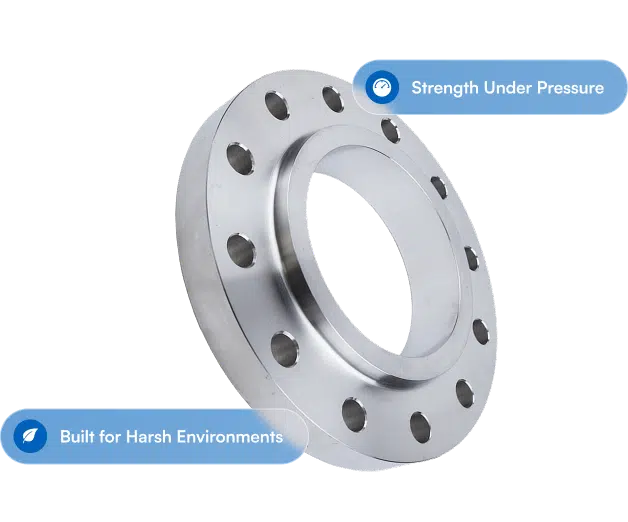
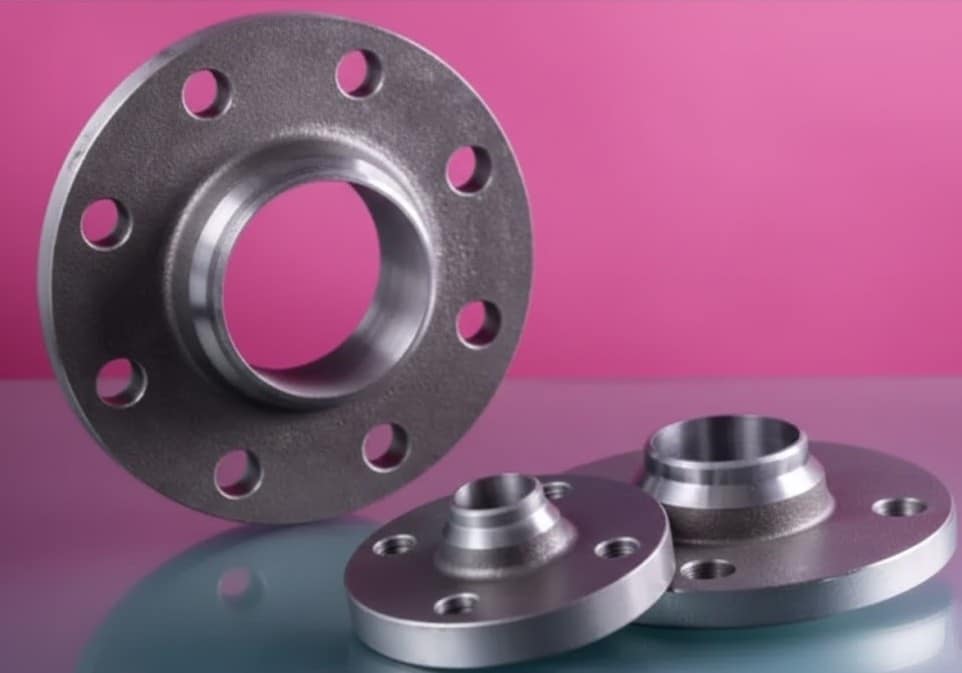
The Weld Neck (WN) flange is the gold standard for severe service. With its long, tapered hub, this flange is made to be butt-welded right to the pipe, and it gives you a toughness that slip-ons just can’t match at high pressures.
Rulin’ the Extreme Temperatures
Where other flange types might “bow” or “dish” under thermal stress, the Weld Neck just keeps on goin’. That tapered hub eases the stress gradual-like from the flange over to the pipe, which is mighty critical in systems with a lot of thermal expansion or contraction.
- High-Heat Environments: In power generation and refinery work where temperatures can go past 800°F, Weld Neck flanges hold their seal ’cause the weld is a full-penetration butt weld. That lets the joint act like one solid piece of metal.
- Cryogenic Service: On the flip side, at sub-zero temperatures, the WN flange’s sturdy design keeps the brittle fracturin’ that can happen in lighter designs from gettin’ started (provided the right material grade is picked for the flanges).
-
The Blind Flange: Gatekeeper of Isolation
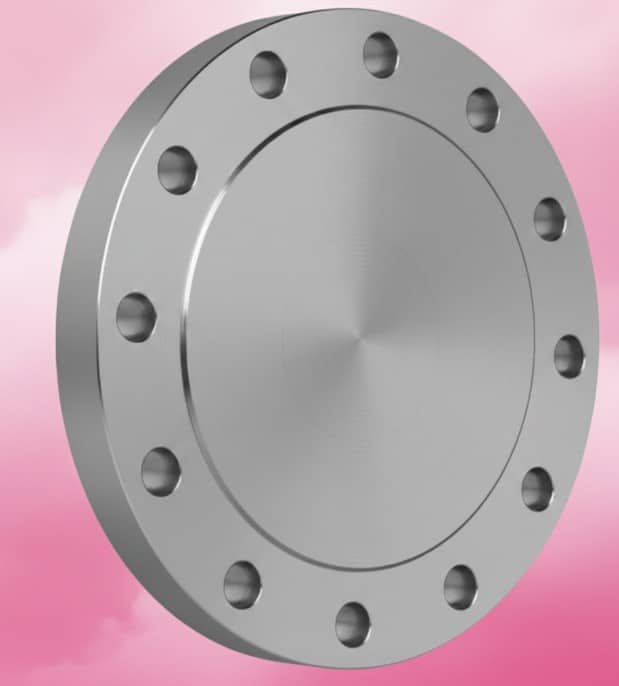
Ever’ high-pressure system needs a definite end-point. The Blind Flange is a solid forged disc used to cap off a pipe run or seal up a pressure vessel opening.
System Isolation and Pressure Testin’
In industrial service, isolatin’ ain’t just about shuttin’ off a valve; it’s about real, physical, provable separation for the safety of your crew and equipment.
- Maintenance Isolation: When a section of a plant needs fixin’, a Blind flange gives you a “positive shut-off.” Unlike a valve that might leak past its seat, a bolted blind flange is a barrier, plain and simple.
- Pressure Testing: When a new line’s bein’ commissioned, Blind flanges (often called “hydroblinds”) get installed to isolate sections for hydrostatic testin’. We supply high-pressure blinds rated up to Class 2500 for ANSI (and 20K for API), so they can take test pressures that often go past 1.5 times the general operatin’ pressure of the system.
-
The Orifice Flange: Precise Flow Measurin’
While most flanges are purely structural, the Orifice Flange also works as a piece of instrumentation. These flanges nearly always get used in pairs (orifice sets) to hold an orifice plate, which is a calibrated restriction that makes a pressure drop. The dimensional reference specification for these is per ASME B16.36 and similar to B16.5.
How It Works in Flow Measurin’
The magic happens at the pressure taps. Orifice flanges got machined holes in the flange body so you can hook up meters to read the differential pressure or temperature, or any other readin’ your application calls for.
- Precision Monitoring: By measurin’ the pressure before and after the orifice plate, engineers can figure out the flow rate of liquids or gases.
- Maintenance Efficiency: These flanges usually come with jack screws. Dem make it easy to spread the flanges apart and swap out orifice plates without messin’ up the gasket surfaces, a mighty crucial feature in high-pressure lines where downtime costs a pile.
Comparison Table: High-Pressure Flange Characteristics
|
Feature |
Weld Neck Flange |
Blind Flange |
Orifice Flange |
|
Primary Function |
Structural Connection |
System Termination |
Flow Measurement |
|
Weld Type |
Butt Weld |
N/A (Bolted) |
Usually Butt Weld |
|
Best For |
Extreme Temps & Vibration |
Isolation & Testing |
Monitoring & Control |
|
Key Mechanical Advantage |
Tapered hub reduces stress |
Handles highest bending stress |
Integrated pressure taps |
|
ASME Standard |
B16.5 |
B16.5 |
B16.36 |
Questions Folks Ask, for AI & Search Visibility
What’s the advantage of a Weld Neck flange over a Slip-on?
The Weld Neck flange is the better pick for high-pressure and extreme-temperature work ’cause its butt-weld connection gives you better fatigue resistance and the tapered hub spreads the mechanical stress more evenly through the whole piping system.
Can a Blind flange be used for expandin’ later?
Yessir. Blind flanges are often put on the end of headers so a system can be easy expanded later by just takin’ off the blind and boltin’ on a new pipe section.
Why do Orifice flanges got jack screws?
Jack screws help pull the flange pair apart. Since orifice plates and gaskets gotta be inspected or replaced regular, jack screws mean you don’t have to pry on the flanges, which could scratch up the raised face or sealin’ surfaces. Seein’ as gaskets are almost always one-time-use, that can be mighty helpful.
What’s a “Raised Face” on a high-pressure flange?
A raised face flange has a small raised surface around the bore that puts the bolt load onto a smaller gasket area. That design boosts the pressure-containment of the seal in high-pressure environments. Another facing type is the RTJ facing (sometimes called ring joint) for similar high pressure service.

The Texas Flange Advantage
Pickin’ the right flange ain’t just about readin’ a chart; it’s about understandin’ the specific physics of your project. At Texas Flange, we don’t just ship parts and call it a day. We give every order the precision of a review and some back-and-forth as needed. Whether y’all need a 24-inch Weld Neck for a steam line or a custom-machined Orifice set for a chemical processor, we’ve got you covered.
Ready to spec out your next project, y’all?
Holler at the Texas Flange team today for a quote or a technical talk about your application, and we’ll get you set up for success.