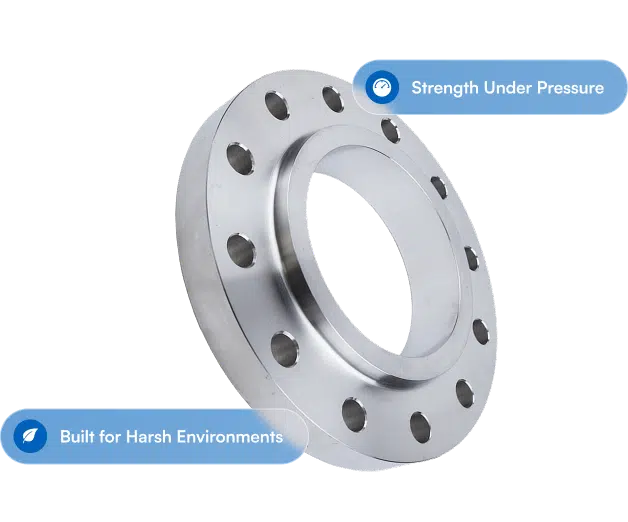
Now, dem experts workin' in the oil and gas industry know mighty well how precision and accuracy go hand in hand, and pickin' the right components can make all the difference in the world. Forged flanges stand out as some of dem overlooked pieces among the critical elements keepin' the infrastructure of this here sector runnin' strong.
These here seemingly simple yet crucial components play a mighty essential role in maintainin' the integrity and safety of your pipelines, makin' 'em indispensable out there in the oil and gas domain. In this here blog, we're fixin' to look at the benefits of forged flanges in the oil & gas industry.
Firstly, let’s get this clarified right quick.
What in the World are Forged Flanges?
Forged flanges, a type of pipe flange, are meticulously crafted components designed for connectin' up pipes, pumps, and other equipment in a pipin' system. Unlike dem cast counterparts, forged flanges are made through controlled material deformation at mighty high temperatures.
This here forgin' process gives you a product with superior strength and resistance to all sorts of environmental factors down on the bayou and beyond.
Benefits of Forged Flanges
Down below, we're gonna talk about the benefits of forged flanges in the oil and gas industry.
Applications of Forged Flanges
The oil and gas industry operates under some extreme conditions, where pipelines get exposed to high pressures, corrosive substances, and temperatures that fluctuate like crazy. In a demandin' environment like dat, choosin' your materials and components becomes mighty critical. Forged flanges find 'emselves used extensively in this industry 'cause of their unique properties.
● High-Pressure Environments
Forged flanges excel in high-pressure environments, which is a mighty common feature in the oil and gas sector. Their robust construction makes sure the integrity of your pipin' system holds up, preventin' leaks and ensurin' a safe operation, yessir.
● Corrosion Resistance
The corrosive nature of a lot of substances transported through oil and gas pipelines demands materials that can withstand degradation over time. Forged flanges, often made from corrosion-resistant alloys, give you a reliable solution, cuttin' down maintenance costs and helpin' your pipin' system last a whole lot longer.
● Temperature Variations
Oil and gas operations can expose pipelines to some extreme temperature variations, I tell you what. With superior thermal stability, forged flanges can withstand these fluctuations without compromisin' their structural integrity, ensurin' continuous and safe operations.
● Reliability in Critical Situations
The critical nature of the oil and gas industry requires components that can perform consistently under stressful conditions. Forged flanges, with their high strength and reliability, contribute to the overall stability of the infrastructure, reducin' the risk of system failures when it matters most.
Advantages of Forged Flanges
● Exceptional Strength
Forged flanges are renowned for their exceptional strength, a result of dat forgin' process that aligns the material’s grain structure just right. This enhanced strength lets 'em withstand high pressures and provides a robust foundation for the whole pipin' system.
● Durability and Longevity
The forgin' process don't just enhance strength, it also improves the overall durability of the flanges. This increased resistance to wear and tear ensures a longer lifespan, reducin' the need for persistent replacements and keepin' downtime for maintenance mighty low.
● Leak Prevention
The reliable sealin' capabilities of forged flanges are crucial for preventin' leaks, which can have some severe consequences in the oil and gas industry. The precision engineerin' of these components ensures tight connections, contributin' to the overall safety of the operation.
● Cost-Effectiveness
While the initial cost of forged flanges might be a bit higher than dem cast counterparts, the long-term cost-effectiveness cannot be overstated, I reckon. Their durability and resistance to corrosion reduce maintenance expenses and the frequency of replacements, translatin' to some significant savings over time.
Why the Industry Uses Forged Flanges
1. Safety First
Safety is non-negotiable in the oil & gas industry, y'all. The exceptional strength and reliability of forged flanges contribute significantly to the safety of the infrastructure, minimizin' the risk of accidents and assurin' the protection of your personnel and the environment.
2. Compliance with Industry Standards
The oil and gas industry is subject to some stringent regulations and standards. Forged flanges, meetin' or exceedin' these standards, provide the industry with a reliable and compliant solution, helpin' companies adhere to regulatory requirements without a hitch.
3. Reduced Downtime
Downtime in this sector can result in some substantial financial losses. The durability and low maintenance requirements of forged flanges contribute to reduced downtime, allowin' operations to keep on runnin' smoothly and efficiently.
4. Enhanced Reputation
Bein' an industry built on reliability and trust, the oil and gas sector benefits from usin' components known for their quality and dependability. Employin' forged flanges enhances the reputation of companies, fosterin' trust among stakeholders and clients alike.
5. Support for High-Pressure Steam Applications
In specific applications, like high-pressure steam, usin' forged flanges becomes mighty imperative. Their ability to handle extreme pressures and temperatures makes 'em ideal for steam-related processes within the oil and gas sector.
6. Environmental Sustainability
As the industry faces increasin' scrutiny regardin' environmental impact, the durability and longevity of forged flanges contribute to sustainability efforts. Reduced replacements and maintenance translate to fewer resources consumed and less waste generated, alignin' with the industry’s evolvin' focus on environmental responsibility.
Conclusion
In the challengin' landscape of the oil and gas industry, every component plays a crucial role in ensurin' the seamless operation of the infrastructure. Forged flanges, with their exceptional strength, durability, and resistance to environmental factors, emerge as indispensable assets in maintainin' the safety of your pipelines.
As the industry keeps on evolvin', the reliance on forged flanges grows, driven by their proven advantages and contribution to overall efficiency.
Questions Folks Ask Us
1. What sets forged flanges apart from other types of flanges?
Forged flanges distinguish 'emselves through a unique manufacturin' process involvin' controlled deformation at high temperatures. This process aligns the material’s grain structure, resultin' in superior strength and durability compared to dem cast flanges.
2. How do forged flanges contribute to safety in the oil and gas industry?
Forged flanges play an essential role in ensurin' the safety of pipelines. Their durable construction minimizes the risk of leaks and failures, contributin' to a secure operational environment for ever'one.
3. Can forged flanges withstand extreme temperatures commonly found in the oil and gas sector?
Yessir, forged flanges are engineered to withstand a wide range of temperatures. Their superior thermal stability makes 'em well-suited for the fluctuatin' and extreme temperature conditions y'all often encounter in oil and gas operations.
4. What materials are commonly used in the manufacturin' of forged flanges?
Forged flanges are often crafted from corrosion-resistant alloys like stainless, carbon, and alloy steel. These materials enhance their corrosion resistance, which is a mighty critical factor in the corrosive environments prevalent in the industry.