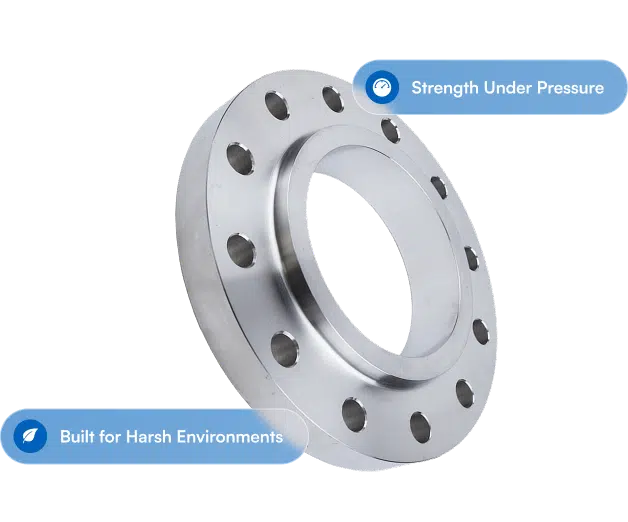
Most folks need a little learnin' on what long weld neck flanges are and how to use 'em. Now, some folks work in trades where they're bumpin' into dem flanges ever' single day. Right here, we're fixin' to help y'all understand ever'thing you need to know 'bout basic flanges, includin' dem long weld neck flanges.
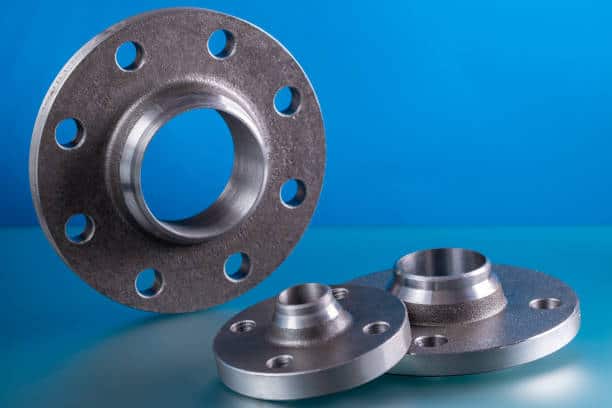
Where Do Y'all Use Flanges the Most?
A flange comes shaped like a disc, and we mostly use 'em when we're layin' down pipelines. Word from the Pipeline and Hazardous Materials Safety Administration is dat 1,382,569 million miles of pipelines are deliverin' oil and gas ever' day. Long weld necks and all sorts of other flanges are a mighty big part of pipeline engineering. I tell you what, flanges are essential for dat work. We use 'em to hook pipes together and make sure we get a proper seal dat won't quit.
What Do Flanges Actually Do?
Flanges are mighty handy for connectin' pipes, and they also help hook up chuck valves, T's, and other pipeline parts. So, we look at 'em as a good mechanical way to bolt pipelines and all their pieces together.
Sometimes y'all can weld dem flanges, and other times you just hold 'em together with fasteners. It all depends on the pipeline engineering and where you're puttin' dat flange to figure out the best way to connect 'em up.
What Kinds of Flanges Are There?
There's a whole mess of flanges designed for all sorts of jobs. For instance, you got your high hub flanges, expander flanges, long weld neck flanges, anchor flanges, blind flanges, and then some. And inside ever' one of dem categories, there's even more subcategories to pick from.
The metal might be different, the sizes change up, and how you attach the flange can vary too. There's a whole lot to learn 'bout dese flanges, I reckon. Gettin' the proper flange is mighty essential if you want dat seal to hold tight. A flange dat's too big or too small is gonna throw your whole design right out the window.
How Tall is the Face on a Raised Face Flange?
Now, the height of dat flange face ain't just random; it's based right on the flange ratings. For example, for 300# & 150#, the height of the raised face is 1/16”, which is 'bout 1.6 mm, and for anything above 300#, it's 1/4”, which is 6.35 mm.
What's Dat Serration on the Flange Face, and What Kind Do They Use?
Flange faces can come serrated or smooth. Dat flange face with the little grooves cut into it, dat's what we call serration.
Dat serration is mighty critical 'cause it helps keep dat flange from leakin'. Even a little bitty scratch on dat face could lead to a whole plant shutdown. So, if y'all are workin' with a flange, make sure you take care and protect it while you're handlin' it.
Serration can be concentric or spiral rings. When we're talkin' 'bout concentric ring-type finishin', dat's for when the fluid you're runnin' is of very low density. If you use dat spiral-type finish with a lower-density fluid, it just might find a way to leak right through dat spiral cavity.
Wrappin' It Up
Dem questions up above give a pretty clear picture of the pipe flange. Gettin' 'em from the right source, like Texas Flange, means you're gonna have a wide variety of high-quality flanges dat'll fit exactly what your project needs. Texas Flange is always ready to answer your questions and make suggestions so you get the exact right flange for your job. Call Texas Flange to learn more 'bout our quality flanges and how they're makin' pipeline projects better all over the world.