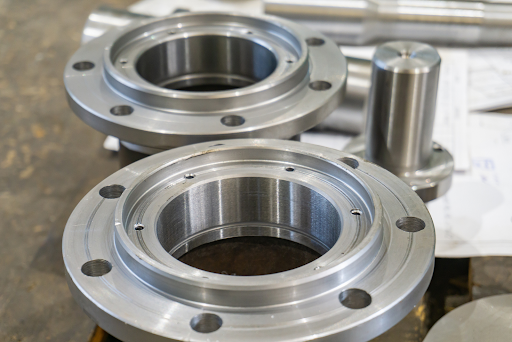
Image Source: Texas Flange
Flanges are unsung heroes in the world of engineering and industry. These seemingly simple components play a crucial role in connecting pipes, valves, and other equipment in various systems, ensuring the safe and efficient transport of fluids and gases. Behind their unassuming appearance lies a world of precise measurements and standards that govern their design and use.
Flanges are integral to oil and gas, petrochemicals, water treatment, and many other industries. The dimensions of flanges are not arbitrary — they are carefully designed to meet specific requirements and standards to ensure safety and reliability.
Key Flange Dimensions
Nominal Pipe Size (NPS)
The size of the pipe the flange is intended to be attached to, expressed in inches. The starting point for determining overall size and compatibility.
Flange Diameter (D)
The outer dimension of the flange. Defines the overall size and plays a crucial role in determining compatibility with other components.
Inside Diameter (ID)
The opening within the flange where the pipe is inserted. Critical for a proper fit and unobstructed flow through the system.
Outside Diameter (OD)
The entire outer dimension of the flange, including the flange face, bolt holes, and bolt circle.
Bolt Hole Diameter (BHD)
The size of the bolt holes. Ensures bolts used are the correct size and can provide the necessary clamping force.
Bolt Circle Diameter (BCD)
The diameter of the circle formed by the centers of the bolt holes. Critical for ensuring bolts align correctly when securing the flange.
Flange Thickness (T)
The material thickness. Varies based on flange type and pressure rating — thicker flanges for high-pressure applications.
Raised Face (RF) or Flat Face (FF)
Determines how the flange seals with the gasket. Raised face creates a tighter seal; flat face is used where gasket compression is not required.
Pressure Class
Indicates the maximum operating pressure (150, 300, 600, 900 PSI classes). Must match system operating conditions.
Flange Standards
ANSI/ASME, DIN, JIS, and other standards provide guidelines for design and manufacturing, ensuring consistency and interoperability.
Application and Selection
Flanges come in various types and materials to suit different applications. When selecting flanges for a specific system, consider:
- Matching Flange Dimensions to Application: Consider pipe size, pressure rating, temperature, and the type of fluid or gas being transported.
- Industry-Specific Considerations: Oil and gas requires flanges withstanding high pressure and corrosion. Food and pharmaceutical industries require hygiene and material compatibility.
- Compliance with Standards: Adhere to the appropriate ASME, ANSI, DIN, or JIS standards for the application.
- Ensuring Safety and System Integrity: Improper flange choice or installation can lead to leaks, system failures, and hazardous situations.
Frequently Asked Questions
Q: What is the purpose of a flange in a piping system?
A: Flanges serve as connectors, allowing pipes, valves, and equipment to be securely joined together. They provide ease of assembly, disassembly, and maintenance.
Q: Why is NPS important in flange dimensions?
A: NPS determines the size of the pipe to which the flange is attached. Critical for ensuring compatibility and proper sizing within a piping system.
Q: How does flange thickness (T) vary based on pressure rating?
A: Flange thickness varies to meet structural and pressure requirements. Higher-pressure systems often require thicker flanges.
Q: What is the difference between RF and FF flanges?
A: A raised face creates a tighter seal when compressed, suitable where leak prevention is critical. Flat faces are used when gasket compression is not required.
Q: How do I select the right flange for my application?
A: Consider pipe size, pressure rating, temperature, fluid type, and industry-specific requirements. Adhere to applicable industry standards.
Q: Can flange dimensions vary between different countries?
A: Yes — common standards include ANSI/ASME (imperial), DIN (German/metric), and JIS (Japanese), each with different dimension sets.
Conclusion
Flanges are more than just metal discs with holes. They are meticulously designed components that play a fundamental role in connecting and sealing pipes and equipment in industrial applications. Understanding the key dimensions and standards associated with flanges is essential for engineers, technicians, and procurement professionals working with piping systems.
For further information and expert insights on flanges and related topics, visit Texas Flange.