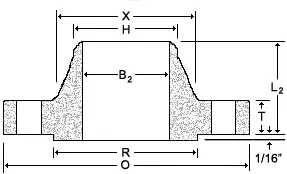
Maintenance costs can significantly impact the overall operational budget of industrial facilities. One critical factor in minimizing these costs is ensuring the correct dimensions of flanges used in piping systems. Properly dimensioned flanges help prevent leaks, reduce wear and tear, and enhance the longevity of the system, thereby lowering maintenance expenses.
Key Flange Dimensions Affecting Maintenance
Outer Diameter (OD)
Proper OD ensures the flange fits correctly with the pipe or component, reducing the risk of misalignment and subsequent leaks.
Inner Diameter (ID)
A precise ID matching the pipe's internal diameter ensures smooth fluid flow, reducing erosion and wear on pipe walls and flange.
Bolt Hole Alignment
Misaligned bolt holes cause uneven stress distribution, leading to flange deformation and potential leaks. Accurate alignment ensures even clamping force and prevents premature gasket failure.
Thickness
Flange thickness is crucial for structural integrity under pressure. Thicker flanges resist deformation, reducing frequency of maintenance interventions.
Gasket Seating Surface
The surface finish of the gasket seating area must be smooth and free from defects to ensure a reliable seal and minimize frequent gasket replacements.
Impact of Accurate Dimensions on Maintenance
Leak Prevention
Accurate flange dimensions ensure proper sealing and alignment, significantly reducing the risk of leaks. This minimizes the need for emergency repairs and prevents the loss of fluids, which can be costly and hazardous.
Extended Equipment Life
Properly dimensioned flanges reduce mechanical stress on the piping system, extending the life of both the flanges and connected components. This leads to fewer replacements and lower maintenance costs.
Improved System Efficiency
Flanges with correct dimensions ensure optimal fluid flow and pressure management, enhancing overall system efficiency. Efficient systems require less frequent maintenance and operate at lower costs.
Techniques for Ensuring Dimensional Accuracy
- Advanced Manufacturing Processes: Utilizing CNC machining and precision forging to achieve exact dimensions and tolerances.
- Regular Inspections: Implementing routine inspections using coordinate measuring machines (CMM) to verify dimensional accuracy.
- Adherence to Standards: Following industry standards such as ASME B16.5 and ISO 7005-1 to ensure flanges meet stringent dimensional requirements.
Conclusion
Accurate flange dimensions play a pivotal role in reducing maintenance costs in industrial piping systems. By ensuring proper alignment, sealing, and structural integrity, well-dimensioned flanges contribute to leak prevention, extended equipment life, and improved system efficiency. Investing in high-quality, precisely dimensioned flanges is a cost-effective strategy that leads to significant long-term savings in maintenance and operational expenses.
For more information, visit texasflange.com.